
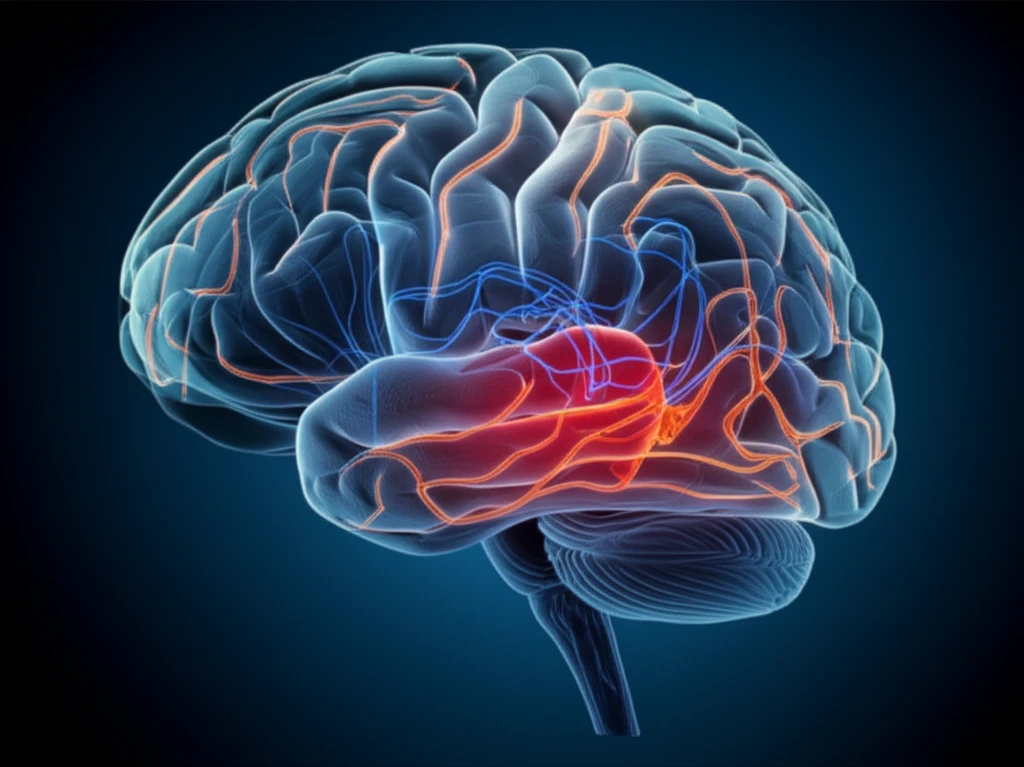
Illustration of interconnected ganglion cells and pituitary gland in brain.

Rare Cell Tumors Linked to Pituitary Issues: What You Need to Know

"Discoveries in Sella Turcica Tumors Could Refine Diagnostic Approaches"


Ganglion cell tumors in the sella turcica, a region near the pituitary gland, are relatively rare. These tumors sometimes occur with pituitary adenomas, which are more common. When these two types of tumors appear together, it can create diagnostic and treatment challenges.

New research has shed light on the connection between ganglion cell tumors and pituitary adenomas. This article explores the study's findings, what they mean for individuals diagnosed with these conditions, and how they might influence future diagnostic and treatment strategies.

We will delve into the specifics of the study, making it accessible to a broad audience, and emphasize the importance of understanding these rare conditions.

The Ganglion-Pituitary Connection: Untangling Tumor Development

Illustration of interconnected ganglion cells and pituitary gland in brain.

The study examined five cases of ganglion cell tumors in the sella turcica. Four of these were 'mixed' or 'collision' tumors, consisting of both gangliocytoma and pituitary adenoma. The fifth case was an isolated ganglioglioma, unrelated to adenoma. Understanding how these tumors interact is crucial for diagnosis and treatment.

Here's what the researchers uncovered:

  • Acromegaly Link: Two patients with mixed tumors had acromegaly, a hormonal disorder caused by excessive growth hormone.
  • Non-Functioning Adenomas: Three cases were initially diagnosed as non-functioning adenomas, highlighting the diagnostic challenges.
  • Cellular Intermingling: Microscopic examination showed that the adenoma and ganglion cell components were closely intermixed, suggesting a close relationship.
  • Hormone Production: The adenomas secreted growth hormone, and electron microscopy identified somatotroph cells.
  • Gangliocytic Cells: Neoplastic neuronal lesions included mature ganglion cells, often with multiple nuclei.
One unique case involved a low-grade ganglioglioma with no endocrine symptoms or evidence of pituitary adenoma. This case underscores the importance of considering a broad range of diagnostic possibilities in the sellar region.

Implications and Future Directions

This study emphasizes the complex relationship between ganglion cell tumors and pituitary adenomas. Recognizing that these tumors can occur together and closely interact is essential for accurate diagnosis.

Further research is needed to fully understand the development and progression of these tumors. Uncovering the underlying causes could lead to more targeted treatments.

For individuals diagnosed with sellar region tumors, a comprehensive diagnostic approach is crucial. This approach should include advanced imaging and hormonal assessments. Consulting with specialists in neuro-oncology and endocrinology is highly recommended.

About this Article -

This article was crafted using a human-AI hybrid and collaborative approach. AI assisted our team with initial drafting, research insights, identifying key questions, and image generation. Our human editors guided topic selection, defined the angle, structured the content, ensured factual accuracy and relevance, refined the tone, and conducted thorough editing to deliver helpful, high-quality information.See our About page for more information.

This article is based on research published under:

DOI-LINK: 10.5114/fn.2015.54421, Alternate LINK

Title: Ganglion Cell Tumours In The Sella Turcica In Close Morphological Connection With Pituitary Adenomas

Subject: Neurology (clinical)

Journal: Folia Neuropathologica

Publisher: Termedia Sp. z.o.o.

Authors: Ewa Matyja, Maria Maksymowicz, Wiesława Grajkowska, Grzegorz Zieliński, Jacek Kunicki, Wiesław Bonicki, Przemysław Witek, Ewa Naganska

Published: 2015-01-01

Everything You Need To Know

1

What are ganglion cell tumors in the sella turcica, and how do they relate to pituitary adenomas?

Ganglion cell tumors located in the sella turcica are rare tumors that sometimes occur alongside pituitary adenomas, which are more common. When they appear together, especially as 'mixed' or 'collision' tumors, diagnosis becomes more complex because symptoms and imaging might primarily suggest a pituitary adenoma. The presence of both types of tumors requires specific diagnostic approaches to differentiate and understand the characteristics of each component.

2

How is acromegaly linked to ganglion cell tumors and pituitary adenomas in the sella turcica?

Acromegaly, a hormonal disorder resulting from excessive growth hormone, was observed in two patients with mixed ganglion cell tumors and pituitary adenomas. The adenomas secreted growth hormone, which was confirmed through electron microscopy identifying somatotroph cells. This secretion led to acromegaly, highlighting the functional impact of these mixed tumors.

3

What does the cellular intermingling of ganglion cell tumors and pituitary adenomas suggest about their relationship?

The research suggests that the close intermingling of adenoma and ganglion cell components within the sella turcica indicates a potential relationship or interaction between these two tumor types. Microscopic examination revealed that these tumors were closely intermixed, hinting at possible shared developmental pathways or local environmental influences that promote the co-occurrence of these distinct tumor types.

4

What are the implications of this research for diagnosing tumors in the sella turcica?

The study's findings emphasize the necessity for clinicians to consider the possibility of ganglion cell tumors when evaluating pituitary adenomas, especially in cases with unusual clinical presentations or imaging results. Recognizing the potential for mixed tumors or isolated gangliogliomas can refine diagnostic accuracy and influence treatment planning, ensuring that both tumor components are appropriately addressed. The differential diagnosis should also include other rare sellar lesions to avoid misdiagnosis.

5

Why is it important to consider a broad range of diagnostic possibilities when dealing with tumors in the sella turcica?

The unique case of a low-grade ganglioglioma without endocrine symptoms or evidence of pituitary adenoma highlights the importance of maintaining a broad differential diagnosis for sellar lesions. This case suggests that not all ganglion cell tumors in this region are associated with pituitary adenomas or hormonal imbalances, emphasizing the need for thorough evaluation and consideration of various diagnostic possibilities in the sellar region to ensure accurate management and avoid unnecessary interventions.

Newsletter Subscribe

Subscribe to get the latest articles and insights directly in your inbox.