
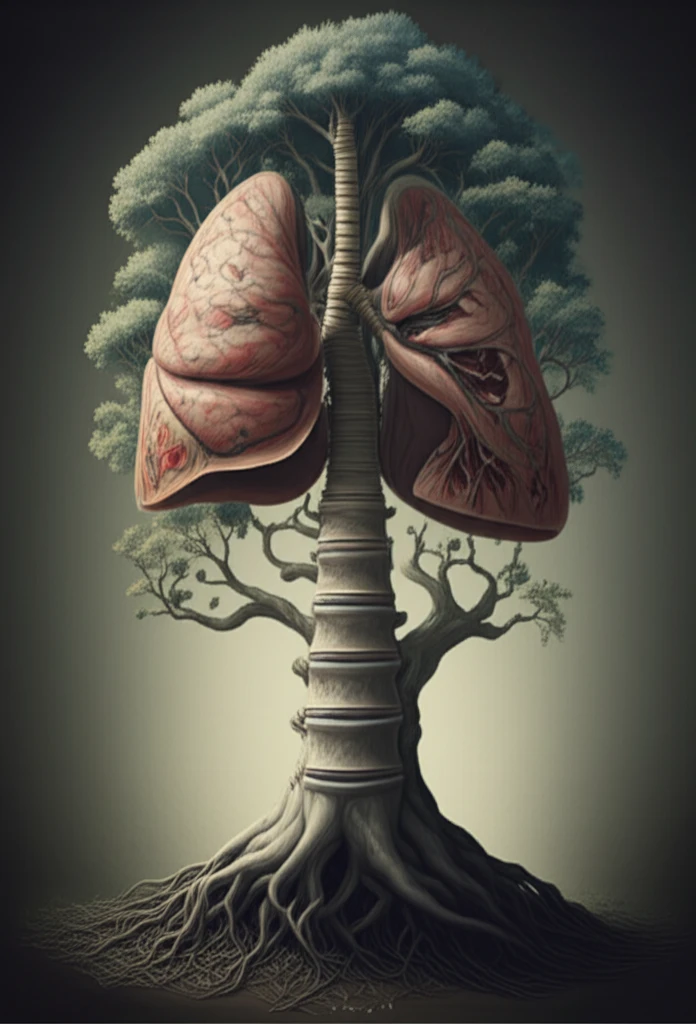
Spine transforming into a tree with lungs as leaves, symbolizing cancer spread.

Rare Cancer Mystery: How a Sacral Tumor Led to Lung Disease

"A groundbreaking case study reveals how a sarcomatoid chordoma in the sacrum transformed into a conventional chordoma in the lungs, challenging current understanding of cancer metastasis."


Chordomas are uncommon tumors that originate in the bone and are malignant, meaning they can spread to other parts of the body. What makes chordomas particularly challenging is that they're often slow-growing and can be difficult to treat, especially once they've metastasized. These tumors are considered low- to intermediate-grade, reflecting their variable behavior and the challenges in predicting their progression.

These tumors arise from remnants of the notochord, a structure important in the development of the spine during embryonic development. Chordomas appear primarily in the axial skeleton, with the most common locations being the skull base (clivus) and the sacrum, which is at the base of the spine. There are several subtypes of chordomas, including conventional, chondroid, sarcomatoid, and dedifferentiated, each with its own unique characteristics and behavior.

Typically, these tumors are diagnosed in adults between 40 and 60 years old, affecting more men than women. Symptoms vary depending on the tumor's location but can include pain, neurological issues, and bowel or bladder dysfunction. While chordomas are generally slow-growing, they can be locally aggressive, invading nearby tissues and causing significant problems.

Decoding the Sarcomatoid to Conventional Chordoma Shift

Spine transforming into a tree with lungs as leaves, symbolizing cancer spread.

Metastasis, the spread of cancer cells from the primary tumor to distant sites in the body, is a complex process with a lot of challenges. When cancer metastasizes, the cancer cells must detach from the original tumor, invade surrounding tissues, enter the bloodstream or lymphatic system, travel to a new location, and then establish a new tumor. Sometimes, during this process, cancer cells can change their characteristics, leading to a different form of the disease in the secondary location.

A medical case highlighted a rare instance of cancer transformation. A 24-year-old man was diagnosed with sarcomatoid chordoma in his sacrum. Sarcomatoid chordoma is an aggressive subtype characterized by spindle-shaped cells and rapid growth. The patient underwent surgery and radiation therapy, achieving complete remission.

  • Initial Diagnosis: Sarcomatoid Chordoma of the Sacrum.
  • Treatment: Surgery and radiation therapy.
  • Outcome: Complete remission of the primary tumor.
  • Recurrence: Years later, the patient developed lung tumors.
  • New Diagnosis: Conventional Chordoma in the lungs.
The emergence of conventional chordoma in the lungs years after the successful treatment of the primary sarcomatoid tumor suggests a transformation from one subtype to another during metastasis. This type of transformation is extremely rare, so this case marks a significant finding in understanding cancer behavior.

Implications for Future Research

This unique case underscores the complexity of cancer and the potential for tumors to evolve and change over time. While treatments like surgery and radiation are effective, this case highlights the importance of continued monitoring and research to understand how cancer cells adapt and transform. Further studies are needed to explore the mechanisms driving subtype transformation in chordomas, which could lead to new therapeutic strategies to target these tumors more effectively and improve patient outcomes.

About this Article -

This article was crafted using a human-AI hybrid and collaborative approach. AI assisted our team with initial drafting, research insights, identifying key questions, and image generation. Our human editors guided topic selection, defined the angle, structured the content, ensured factual accuracy and relevance, refined the tone, and conducted thorough editing to deliver helpful, high-quality information.See our About page for more information.

This article is based on research published under:

DOI-LINK: 10.3892/ol.2014.2100, Alternate LINK

Title: Secondary Pulmonary Conventional Chordoma Arising From Primary Sarcomatoid Chordoma Of The Sacrum: A Case Report

Subject: Cancer Research

Journal: Oncology Letters

Publisher: Spandidos Publications

Authors: Jia-Hong Chen, Kuan-Yu Chen, Dueng-Yuan Hueng, Jong-Shiaw Jin

Published: 2014-04-28

Everything You Need To Know

1

What is a chordoma?

A chordoma is a rare, malignant tumor that originates from remnants of the notochord, a structure involved in spinal development during embryonic stages. These tumors are typically found in the axial skeleton, most commonly in the skull base (clivus) and the sacrum. Chordomas are generally slow-growing but can be locally aggressive, potentially invading surrounding tissues. They have several subtypes, including conventional, chondroid, sarcomatoid, and dedifferentiated, each with unique characteristics and behaviors. Understanding the origin and subtypes is important to properly diagnose and treat these tumors.

2

What is a sarcomatoid chordoma?

Sarcomatoid chordoma is an aggressive subtype of chordoma characterized by spindle-shaped cells and rapid growth. It represents one of several subtypes of chordoma, each with its unique characteristics. The case study involved a patient initially diagnosed with sarcomatoid chordoma in the sacrum. This subtype's aggressive nature and behavior highlight the challenges of diagnosis and treatment. This is significant because it transformed into a conventional chordoma during metastasis, which provides critical insights into cancer transformation.

3

What is metastasis?

Metastasis is the process where cancer cells spread from the primary tumor to other parts of the body. This is a complex process that involves the cancer cells detaching from the primary tumor, invading nearby tissues, entering the bloodstream or lymphatic system, traveling to a new location, and forming a new tumor. In the context of the case study, the sarcomatoid chordoma in the sacrum metastasized, changing into a conventional chordoma in the lungs. This understanding of metastasis is critical because it reveals how cancer can transform over time, leading to potentially different forms of the disease in different locations.

4

Why is this case important?

The case is significant because it showed that the sarcomatoid chordoma transformed into a conventional chordoma in the lungs. This highlights the potential for cancer cells to change their characteristics during metastasis, resulting in a different form of the disease in a secondary location. The patient initially had a sarcomatoid chordoma in the sacrum. Years later, conventional chordoma appeared in the lungs, which suggests a transformation from one subtype to another during metastasis. This unique case underscores the complex nature of cancer and the potential for tumors to evolve.

5

What are the implications for future research?

This case highlights the need for ongoing research and monitoring of cancer. This unusual case underscores the importance of understanding how cancer cells adapt and change over time. The case suggests that treatments like surgery and radiation can be effective initially. However, because the tumor may transform, there's a need for continued research to develop new therapies and improve patient outcomes. Further studies into the mechanisms driving subtype transformation in chordomas could lead to new therapeutic strategies to target these tumors more effectively.

Newsletter Subscribe

Subscribe to get the latest articles and insights directly in your inbox.