
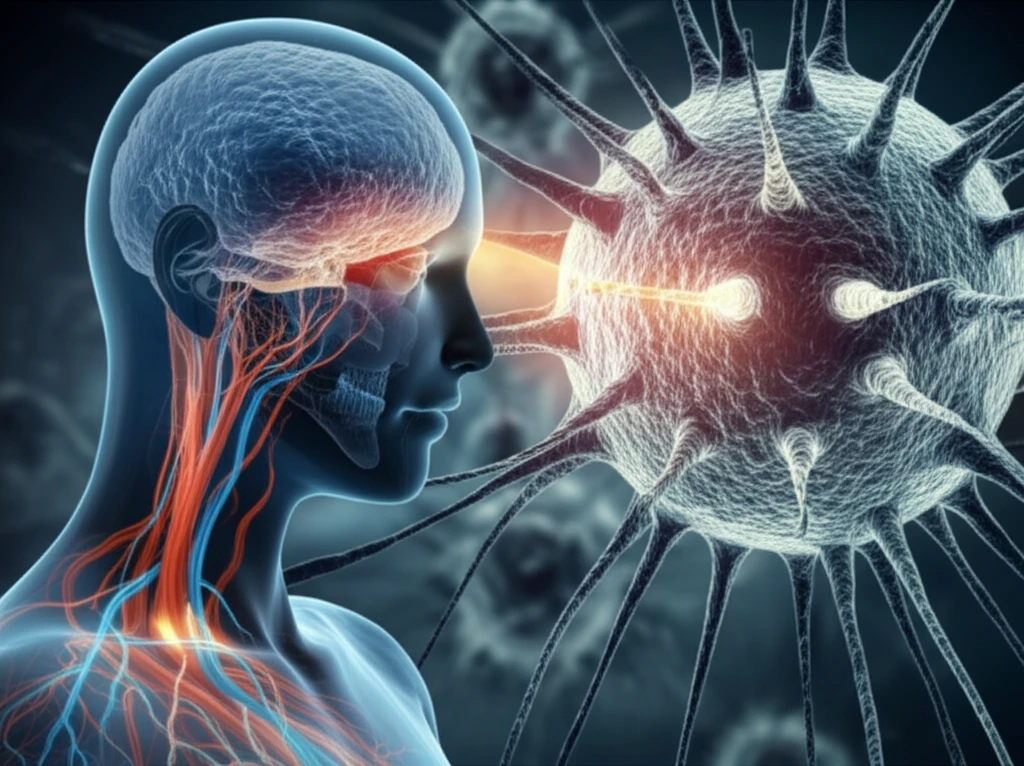
Illustration of head and neck cancer treatment with radiation and targeted therapy.

Radiation and Beyond: New Hope in the Fight Against Head and Neck Cancer

"Combining cutting-edge cancer treatment with precision medicine for better outcomes."


Head and neck cancer, a disease affecting hundreds of thousands worldwide, poses a significant challenge in modern medicine. Despite advancements in surgery and radiation, treatment outcomes have remained stagnant for years, leaving patients with limited options. However, exciting new research offers a beacon of hope, suggesting a significant shift in how we approach this disease.

This article delves into a groundbreaking study exploring a novel approach to treating head and neck cancer. Researchers have been exploring the potential of combining traditional radiation therapy with targeted drugs. This strategy has shown promising results in early trials, offering the hope of more effective and less toxic treatments.

We'll explore the science behind this new approach, the specific drugs being used, and the encouraging results seen in early studies. This research not only sheds light on the potential of new treatments, but also underscores the importance of personalized medicine – tailoring treatments to the specific characteristics of each patient's cancer.

Understanding the Dual Threat: Radiation and Targeted Therapy

Illustration of head and neck cancer treatment with radiation and targeted therapy.

At the heart of this new approach lies the strategic combination of two powerful weapons: radiation therapy and targeted drugs. Radiation therapy, the cornerstone of cancer treatment for decades, uses high-energy rays to destroy cancer cells. However, radiation can also damage healthy cells, leading to side effects.

Targeted therapy, on the other hand, focuses on specific molecules and pathways involved in cancer growth. By zeroing in on these targets, these drugs can disrupt cancer cell activity while minimizing harm to healthy cells. The ideal scenario involves combining these two approaches to maximize cancer-killing effects while minimizing harm.

  • Radiation Therapy: Uses high-energy rays to destroy cancer cells.
  • Targeted Therapy: Focuses on specific molecules and pathways involved in cancer growth.
  • Combined Approach: Aims to maximize cancer-killing effects while minimizing side effects.
The study's findings suggest that the combination of radiation and PF-04691502 can lead to significantly better outcomes in specific types of head and neck cancer. This represents a leap forward in the ongoing effort to improve cancer treatments, offering a more effective and potentially less toxic approach for patients.

A Brighter Future for Head and Neck Cancer Patients

The path forward for head and neck cancer treatment is looking brighter, with new treatments showing promise. The combination of radiation and targeted drugs offers a more effective and potentially less toxic approach for patients. This is a new chapter in the fight against cancer. Continued research and collaboration are essential to build on these findings and bring even better treatments to patients in the years to come.

About this Article -

This article was crafted using a human-AI hybrid and collaborative approach. AI assisted our team with initial drafting, research insights, identifying key questions, and image generation. Our human editors guided topic selection, defined the angle, structured the content, ensured factual accuracy and relevance, refined the tone, and conducted thorough editing to deliver helpful, high-quality information.See our About page for more information.

This article is based on research published under:

DOI-LINK: 10.1016/j.radonc.2017.08.001, Alternate LINK

Title: Antitumor Activity Of The Dual Pi3K/Mtor Inhibitor, Pf-04691502, In Combination With Radiation In Head And Neck Cancer

Subject: Radiology, Nuclear Medicine and imaging

Journal: Radiotherapy and Oncology

Publisher: Elsevier BV

Authors: Nathan Tonlaar, Sandra Galoforo, Bryan J. Thibodeau, Samreen Ahmed, Thomas G. Wilson, Paola Yumpo Cardenas, Brian Marples, George D. Wilson

Published: 2017-09-01

Everything You Need To Know

1

What are the main challenges in treating head and neck cancer, even with advancements in surgery and radiation?

Despite progress in surgery and radiation therapy, treatment outcomes for head and neck cancer have remained stagnant, presenting limited options for patients. This is because traditional treatments can lack precision, affecting both cancerous and healthy cells. The goal is to improve these outcomes using methods like targeted therapy and personalized medicine that addresses the specifics of the disease at the molecular level.

2

How does the combination of radiation therapy and targeted drugs work in treating head and neck cancer?

The approach combines radiation therapy, which uses high-energy rays to destroy cancer cells, with targeted drugs that focus on specific molecules and pathways involved in cancer growth. Radiation aims to eradicate cancer cells, while targeted drugs disrupt cancer cell activity while minimizing harm to healthy cells. Combining both maximizes cancer-killing effects while reducing side effects.

3

What is targeted therapy, and how does it differ from traditional radiation therapy in cancer treatment?

Targeted therapy is a type of cancer treatment that focuses on specific molecules and pathways involved in cancer growth. Unlike traditional radiation therapy, which uses high-energy rays to destroy cancer cells, targeted therapy aims to disrupt cancer cell activity by zeroing in on particular targets, minimizing harm to healthy cells. Radiation therapy doesn't have as much precision, so it can damage healthy cells, while targeted therapies such as PF-04691502 , offer a more specific approach.

4

What specific benefits have been observed by combining radiation with PF-04691502 in treating head and neck cancer?

Combining radiation with PF-04691502 has demonstrated significantly improved outcomes in specific types of head and neck cancer. It offers a potentially less toxic and more effective approach. While the specifics of these improved outcomes would be detailed in the full study, the implication is a higher likelihood of successful treatment and fewer side effects for patients, leading to a better quality of life during and after treatment. This shows a promising step towards personalized approaches for head and neck cancer.

5

In the context of head and neck cancer, what does the term personalized medicine mean, and why is it important?

Personalized medicine involves tailoring treatments to the specific characteristics of each patient's cancer. Instead of a one-size-fits-all approach, treatments are customized based on the unique genetic and molecular makeup of the tumor. This is important because cancer varies from person to person, and understanding these differences allows doctors to select the most effective treatments while minimizing unnecessary side effects. For example, the use of PF-04691502 and radiation may be more effective in tumors with certain genetic markers.

Newsletter Subscribe

Subscribe to get the latest articles and insights directly in your inbox.