
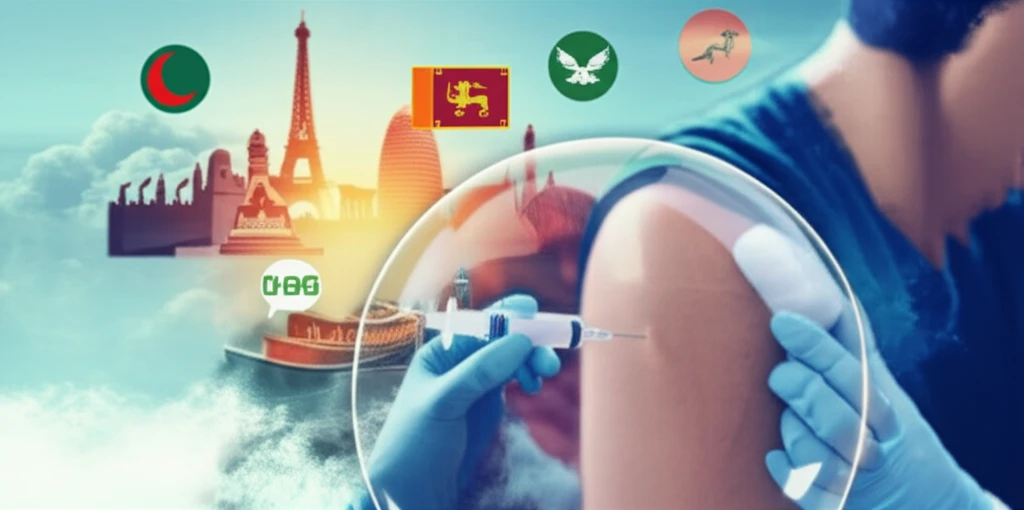
Person receiving rabies vaccine with Asian landmarks in background

Rabies PEP Access: Are You Protected?

"A comparative look at rabies prevention in Asia reveals crucial insights for travelers and pet owners."


Rabies is a terrifying threat – a virus that's almost always fatal once symptoms appear. But here's the good news: it's preventable with timely post-exposure prophylaxis (PEP). This means immediate wound washing and a series of rabies vaccinations. In some cases, rabies immunoglobulin (RIG) is also needed. However, access to this life-saving treatment isn't equal around the world.

A recent study looked at how four Asian countries – Bangladesh, Bhutan, Cambodia, and Sri Lanka – handle rabies PEP. The goal? To understand the different approaches to procurement, distribution, monitoring, and reporting of PEP, and to identify ways to improve access.

Whether you're an avid traveler, a pet owner, or simply want to be informed, understanding the landscape of rabies prevention can empower you to make the right decisions and seek timely treatment when needed.

Rabies PEP: A Tale of Four Countries

Person receiving rabies vaccine with Asian landmarks in background

The study revealed significant differences in how each country manages rabies PEP:

Bangladesh: Rabies PEP is available at 66 public District Rabies Prevention and Control Centers (DRPCCs) and at a National Rabies Prevention and Control Center (NRPCC). While treatment is free, patients pay a small fee for a disposable syringe. A significant step is the phasing out of nerve-tissue based vaccines and the introduction of cell-culture or embryonated egg-based rabies vaccines (CCEEV).

  • Key takeaway: relatively wide access, but supply can be an issue.
Bhutan: Rabies vaccine is provided free of charge at BHU-II or higher health facilities and is administered using the ID route. However, RIG is provided free of charge on a more limited basis at BHU-I or higher facilities due to high costs. While aiming to provide RIG to all Category III patients, supply limitations mean most don't receive it. Rabies vaccine is given by the same staff as EPI vaccines, trained by both programs and is unavailable in the private sector.

What This Means for You

The variations in rabies PEP systems highlight the importance of being informed and prepared, especially when traveling in areas where rabies is a concern. Here's what you should keep in mind:

Know Before You Go: Research the rabies PEP availability and protocols for the countries you plan to visit. Understand where treatment is accessible and if there are any costs involved.

Advocate for Your Health: If bitten by an animal, seek immediate medical attention. Ensure proper wound washing and advocate for appropriate PEP based on WHO guidelines, even if access to RIG is limited.

About this Article -

This article was crafted using a human-AI hybrid and collaborative approach. AI assisted our team with initial drafting, research insights, identifying key questions, and image generation. Our human editors guided topic selection, defined the angle, structured the content, ensured factual accuracy and relevance, refined the tone, and conducted thorough editing to deliver helpful, high-quality information.See our About page for more information.

This article is based on research published under:

DOI-LINK: 10.1016/j.vaccine.2018.10.011, Alternate LINK

Title: Descriptive Assessment Of Rabies Post-Exposure Prophylaxis Procurement, Distribution, Monitoring, And Reporting In Four Asian Countries: Bangladesh, Bhutan, Cambodia, And Sri Lanka, 2017–2018

Subject: Infectious Diseases

Journal: Vaccine

Publisher: Elsevier BV

Authors: Anyie J. Li, Nandini Sreenivasan, Umme Ruman Siddiqi, Sanya Tahmina, Kinley Penjor, Ly Sovann, Amila Gunesekera, Jesse D. Blanton, Lea Knopf, Terri B. Hyde

Published: 2019-10-01

Everything You Need To Know

1

What exactly is Rabies Post-Exposure Prophylaxis, and why is it so important?

Rabies Post-Exposure Prophylaxis, or PEP, involves immediate and thorough wound washing followed by a series of rabies vaccinations. In some instances, Rabies Immunoglobulin, or RIG, is administered, especially for severe exposures. Rabies PEP is critical because rabies is almost always fatal once symptoms manifest. Timely PEP can prevent the virus from progressing into a deadly infection.

2

What were the key objectives of the Rabies PEP study in the four Asian countries?

A recent study compared Rabies Post-Exposure Prophylaxis approaches in Bangladesh, Bhutan, Cambodia, and Sri Lanka. It examined the specifics of procurement, distribution, monitoring, and reporting of PEP. The goal was to pinpoint differences and identify strategies to improve access to rabies prevention across these nations. Other approaches include pre-exposure vaccination, animal control, and public awareness campaigns.

3

How is Rabies PEP handled in Bangladesh, and what are some of the challenges they face?

In Bangladesh, Rabies PEP is accessible at 66 public District Rabies Prevention and Control Centers and a National Rabies Prevention and Control Center. Although the treatment itself is free, a nominal fee is charged for a disposable syringe. Bangladesh is phasing out nerve-tissue based vaccines in favor of cell-culture or embryonated egg-based rabies vaccines. Supply availability remains a concern.

4

What are the specific details regarding Rabies PEP availability and administration in Bhutan?

In Bhutan, the rabies vaccine is provided without charge at BHU-II or higher health facilities, administered via the ID route. Rabies Immunoglobulin is also provided free, but is more limited to BHU-I facilities due to high costs. While the aim is to give Rabies Immunoglobulin to all Category III patients, supply limitations mean that most do not get it. The same staff administer the rabies vaccine and EPI vaccines, after training by both programs. This service is unavailable in the private sector.

5

What are cell-culture or embryonated egg-based rabies vaccines and why are they important?

Cell-culture or embryonated egg-based rabies vaccines (CCEEV) represent an advancement over nerve-tissue based vaccines because they are safer and more effective. Nerve-tissue vaccines can carry a higher risk of adverse reactions. Phasing in CCEEV promises to improve the safety and efficacy of rabies prevention efforts, though availability and cost can impact the transition. However, more information is needed about Cambodia and Sri Lanka.

Newsletter Subscribe

Subscribe to get the latest articles and insights directly in your inbox.