
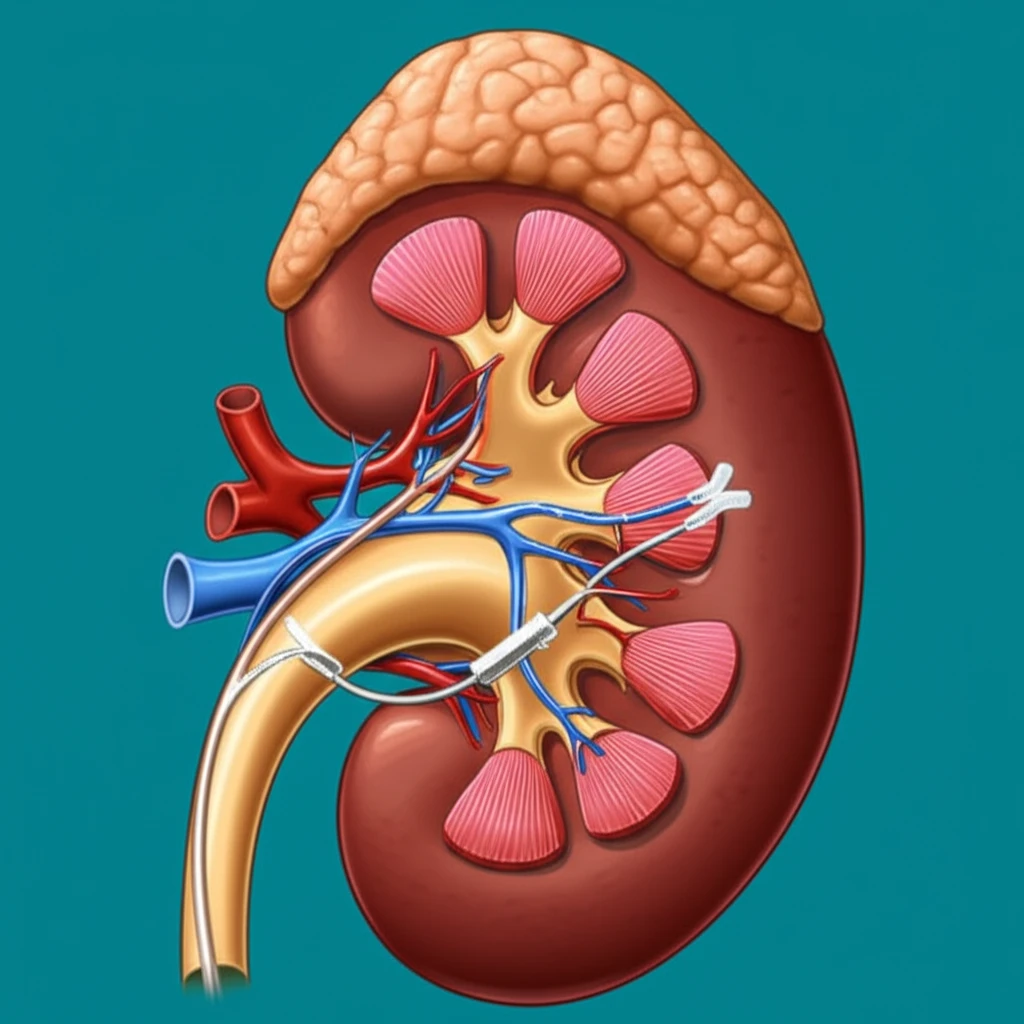
Pyeloplasty Showdown: Double-J Stents vs. Externalized Stents – Which Wins?

"Unveiling the Best Approach for Pediatric Kidney Drainage: A Comparative Analysis"
When it comes to pediatric urology, the health and well-being of our youngest patients are always the top priority. One common procedure, pyeloplasty, addresses a condition known as ureteropelvic junction (UPJ) obstruction, where the connection between the kidney and ureter is blocked. A critical aspect of this surgery involves drainage, and two primary methods have emerged: Double-J (DJ) internal stents and externalized uretero-pyelostomy (EUP) stents. This article dives deep into the comparative analysis of these two approaches, offering a comprehensive overview for parents and medical professionals alike.
The choice between DJ and EUP stents involves understanding the advantages and disadvantages of each. DJ stents, placed internally, have been a long-standing method, while EUP stents, which drain externally, offer a different set of considerations. This article aims to provide clarity on both, helping you grasp the essentials of each technique and their impacts on pediatric patients.
Our focus will be on a recent study that provides a comparative analysis of these two drainage techniques. By examining the surgical outcomes, complication rates, and overall effectiveness, we'll help you understand the nuances of each approach. This information is invaluable for anyone looking to gain insights into pediatric pyeloplasty and make informed decisions about the best care for children.
Double-J Stents vs. Externalized Stents: A Detailed Comparison
Both DJ and EUP stents play a crucial role in the success of pyeloplasty. DJ stents, placed internally, help keep the ureter open while the surgical site heals. They are typically removed in a second procedure. EUP stents, on the other hand, drain urine externally, offering an alternative method with its own set of considerations. Let's delve into a detailed comparison.
- Operative Time: The study found no significant difference in the time it took to perform the surgery between the two groups.
- Length of Stay: The length of hospital stay was also similar, indicating that neither method resulted in a longer recovery period.
- Complication Rates: The overall complication rates were comparable, suggesting that both methods are relatively safe.
- Specific Complications: The study further analyzed the types of complications, differentiating between those occurring during surgery, shortly after, and later on. There were no significant differences in these subgroups.
- Patient Demographics: EUP group patients were younger (40 ± 54 months) than DJ group patients (80 ± 78 months)
- Surgical Approach: EUP group saw a greater proportion of open pyeloplasties, while DJ group more laparoscopic approaches.
Making Informed Choices in Pediatric Urology
The choice between Double-J stents and externalized stents in pediatric pyeloplasty is a complex one. This article provides a concise overview of the study's findings, highlighting the key differences between these methods. By understanding the pros and cons of each approach, medical professionals and parents can collaborate to make well-informed decisions. Continued research and clinical experience will further refine these techniques, leading to enhanced outcomes and a brighter future for children undergoing pyeloplasty. Always consult with a qualified urologist to determine the best course of action for your child's specific needs.