
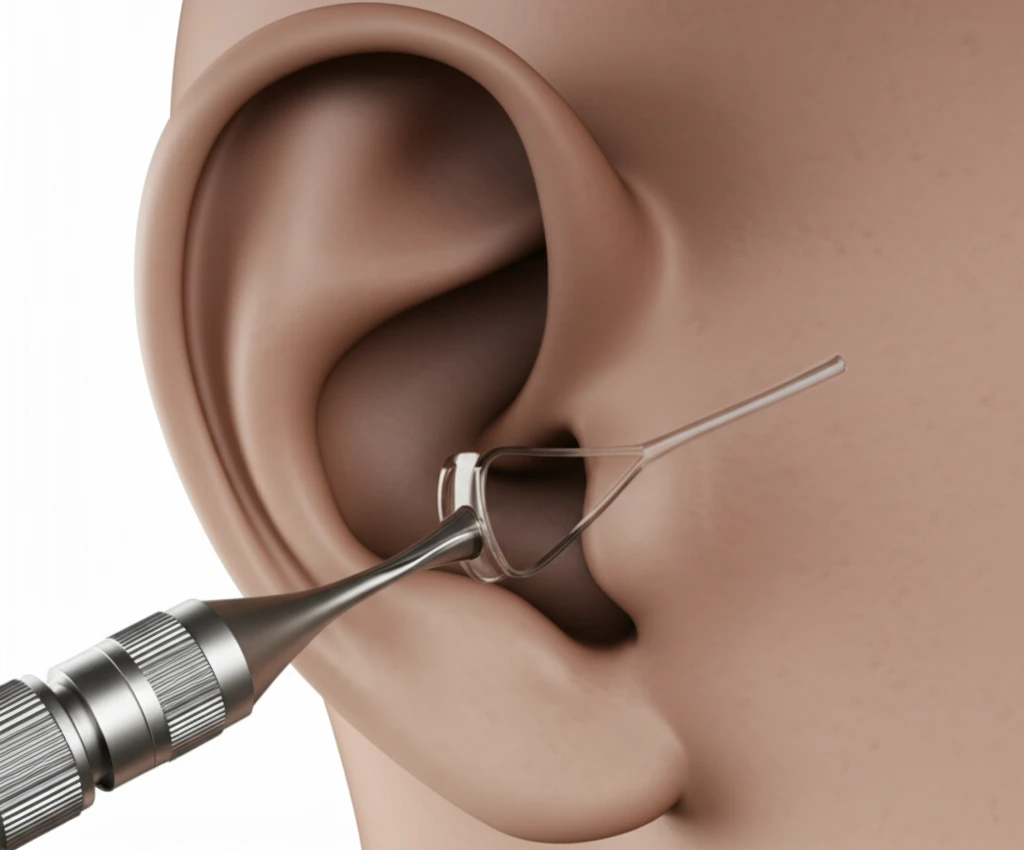
Punching Through: A Minimally Invasive Revolution in Bone-Anchored Hearing Devices?

"Discover how a refined surgical technique is improving patient satisfaction and stability in bone-anchored hearing solutions."
For individuals with hearing loss, bone-anchored hearing devices (BAHDs) offer a life-changing solution. Traditionally, the implantation process involved more invasive surgical techniques. However, a revolutionary method known as Minimally Invasive Ponto Surgery (MIPS) is changing the landscape, promising improved outcomes and enhanced patient experiences.
MIPS, first described in 2011 by Hultcrantz et al., utilizes a small 5mm dermal punch to create space for the Ponto abutment, minimizing soft tissue disruption. This approach contrasts sharply with traditional open surgery, which involves greater tissue removal. The key advantages of MIPS include shorter procedure times, better soft tissue preservation, and the potential for faster recovery.
Recognizing the potential benefits of MIPS, clinicians have been keen to adopt this technique. A recent study published in the Journal of Otolaryngology - Head & Neck Surgery explores the long-term stability and patient satisfaction associated with MIPS, providing valuable insights for those considering BAHDs.
MIPS: A Closer Look at Stability and Satisfaction
The study, conducted by Sardiwalla, Jufas, and Morris, followed 12 adult patients who underwent MIPS between 2016 and 2017. The researchers aimed to assess device stability and gather patient feedback on their surgical experience and overall satisfaction. This was achieved through prospective research clinics, implant site assessments, and patient interviews and surveys.
- Soft Tissue Status: Evaluated using the Inflammation, Pain, Skin Height (IPS) Scale.
- Patient Experiences: Assessed via the Surgical Satisfaction Questionnaire (SSQ-8) modified for MIPS.
- Device Stability: Monitored through follow-up examinations and patient reports.
The Future of BAHDs: MIPS as the Preferred Approach
This study provides compelling evidence for the long-term stability and patient satisfaction associated with MIPS. The findings suggest that MIPS is not only a safe and effective technique but also offers significant advantages over traditional open surgery.
Clinicians are encouraged to carefully assess and evaluate new developments in patient treatment. As the study demonstrates, MIPS offers a refined approach to BAHD implantation, potentially leading to better patient outcomes and experiences. This is particularly relevant given the increasing demand for less invasive and more patient-centered surgical solutions.
With its proven stability, high patient satisfaction, and minimal complications, MIPS is poised to become the procedure of choice for percutaneous BAHD placement, marking a significant step forward in the treatment of hearing loss.