
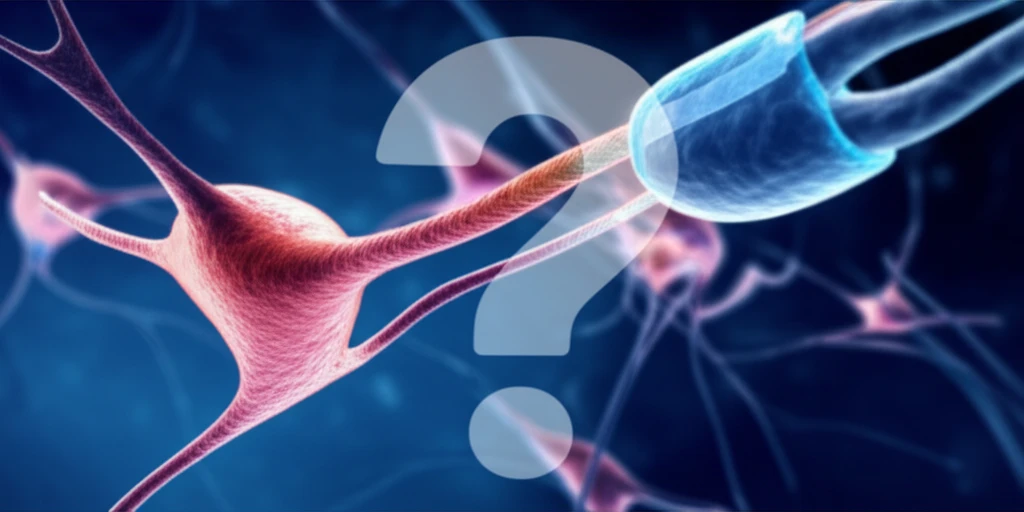
Illustration depicting prostate cancer cells invading nerve fibers, representing the diagnostic uncertainty of perineural invasion.

Prostate Cancer: Does Nerve Invasion Really Predict Recurrence?

"A large study questions whether perineural invasion in prostatectomy specimens is a reliable indicator of biochemical recurrence."


One of the biggest challenges in managing prostate cancer is differentiating between aggressive and indolent forms of the disease. This distinction is crucial for deciding which patients need further treatment to prevent relapse. Perineural invasion (PNI), where cancer cells invade the nerves surrounding the prostate, has long been considered a potential indicator of aggressive prostate cancer.

Doctors often find PNI when they examine radical prostatectomy (RP) specimens under a microscope. The theory is that PNI might signal a higher risk of the cancer returning. However, the research on this topic has been conflicting, with some studies suggesting a link between PNI and recurrence, while others don't. Many of these studies have also been relatively small, making it difficult to draw firm conclusions.

A new study published in the Canadian Urological Association Journal aimed to clarify this issue by looking at a large group of men who had undergone radical prostatectomy for localized prostate cancer. The researchers wanted to determine if PNI could accurately predict biochemical recurrence (BCR), defined as a rising PSA level after surgery, and ultimately, whether routine reporting of PNI is even necessary.

The Study's Findings: PNI Isn't an Independent Predictor

Illustration depicting prostate cancer cells invading nerve fibers, representing the diagnostic uncertainty of perineural invasion.

The researchers analyzed data from 1497 men who had radical prostatectomies. They looked at various factors, including the presence of PNI, Gleason score (a measure of cancer aggressiveness), the stage of the cancer, and whether surgical margins were clear of cancer cells. They then tracked which patients experienced biochemical recurrence (BCR), indicated by a PSA level greater than 0.2 ng/mL.

The study revealed that PNI was indeed linked to several indicators of more aggressive disease. Patients with PNI were more likely to have:

  • Higher Gleason scores
  • More advanced pT3 stage disease
  • Positive surgical margins (cancer cells at the edge of the removed tissue)
  • Larger cancer volume
However, while PNI was associated with BCR on initial analysis, it didn't hold up as an independent predictor when other factors were considered. In other words, once the researchers accounted for Gleason score, cancer stage, and surgical margin status, PNI no longer significantly contributed to the prediction of BCR. This suggests that PNI may simply be a marker of more aggressive disease, rather than a direct cause of recurrence.

What Does This Mean for Prostate Cancer Management?

The study's findings suggest that routine reporting of PNI in radical prostatectomy specimens may not be necessary. Because PNI doesn't appear to be an independent predictor of BCR, it doesn't provide additional information beyond what's already available from Gleason score, cancer stage, and surgical margins.

However, the authors emphasize that this doesn't mean PNI is completely irrelevant. It highlights the need for more research into the biology of PNI. Understanding how cancer cells interact with nerves could reveal new targets for therapy and improve our ability to predict and prevent prostate cancer recurrence.

Future studies should focus on exploring more nuanced measures of PNI, such as the diameter of nerve involvement or the number of nerves affected. Ultimately, a deeper understanding of PNI's role in prostate cancer progression could lead to more personalized and effective treatment strategies.

About this Article -

This article was crafted using a human-AI hybrid and collaborative approach. AI assisted our team with initial drafting, research insights, identifying key questions, and image generation. Our human editors guided topic selection, defined the angle, structured the content, ensured factual accuracy and relevance, refined the tone, and conducted thorough editing to deliver helpful, high-quality information.See our About page for more information.

This article is based on research published under:

DOI-LINK: 10.5489/cuaj.2619, Alternate LINK

Title: Does Perineural Invasion In A Radical Prostatectomy Specimen Predict Biochemical Recurrence In Men With Prostate Cancer?

Subject: Urology

Journal: Canadian Urological Association Journal

Publisher: Canadian Urological Association Journal

Authors: Fairleigh Reeves, Christopher M. Hovens, Laurence Harewood, Shayne Battye, Justin S. Peters, Anthony J. Costello, Niall M. Corcoran

Published: 2015-05-13

Everything You Need To Know

1

What exactly is perineural invasion (PNI) in the context of prostate cancer, and why has it been considered important?

Perineural invasion, or PNI, refers to the presence of cancer cells invading the nerves surrounding the prostate gland. It's identified during microscopic examination of radical prostatectomy specimens. Doctors have considered PNI as a potential sign of aggressive prostate cancer, suggesting a higher risk of the cancer returning after surgery. The idea was that if cancer cells are invading nerves, the cancer might be more likely to spread beyond the prostate.

2

What does biochemical recurrence (BCR) mean after prostate cancer surgery, and how is it measured?

Biochemical recurrence, or BCR, is defined in this context as a rising PSA level after a radical prostatectomy. Specifically, a PSA level greater than 0.2 ng/mL indicates that there is a recurrence. BCR is an important indicator because it often precedes clinical recurrence, where the cancer can be detected through imaging or other clinical signs. Monitoring PSA levels is a standard practice after prostate cancer surgery to detect any signs of the cancer returning.

3

Besides perineural invasion, what other factors are commonly used to predict the risk of prostate cancer recurrence after surgery?

The Gleason score, cancer stage, and surgical margin status are all factors used to assess the risk of recurrence after radical prostatectomy. The Gleason score indicates how aggressive the cancer cells look under a microscope. The cancer stage describes how far the cancer has spread. Surgical margin status indicates whether cancer cells were found at the edge of the tissue removed during surgery. These factors are used to make decisions about additional treatments, such as radiation or hormone therapy.

4

According to the research, how well does perineural invasion predict the return of prostate cancer after surgery when considered alongside other known risk factors?

The study found that while perineural invasion was associated with indicators of aggressive disease, it was not an independent predictor of biochemical recurrence. This means that once factors like Gleason score, cancer stage, and surgical margin status were taken into account, perineural invasion did not provide significant additional information about the risk of recurrence. This suggests that perineural invasion may simply be a marker of more aggressive disease, rather than a direct cause of recurrence.

5

If perineural invasion isn't an independent predictor of recurrence, what are the implications for how prostate cancer is managed and reported after surgery?

Since perineural invasion doesn't appear to be an independent predictor of biochemical recurrence, routine reporting of PNI in radical prostatectomy specimens may not be necessary. The information provided by PNI may already be captured by other factors like Gleason score, cancer stage, and surgical margins. Reducing unnecessary reporting can streamline the pathology process and focus attention on the most important factors for predicting recurrence and guiding treatment decisions. However, the implications could change with new research, and the role of PNI might need to be re-evaluated if new data emerges.

Newsletter Subscribe

Subscribe to get the latest articles and insights directly in your inbox.