
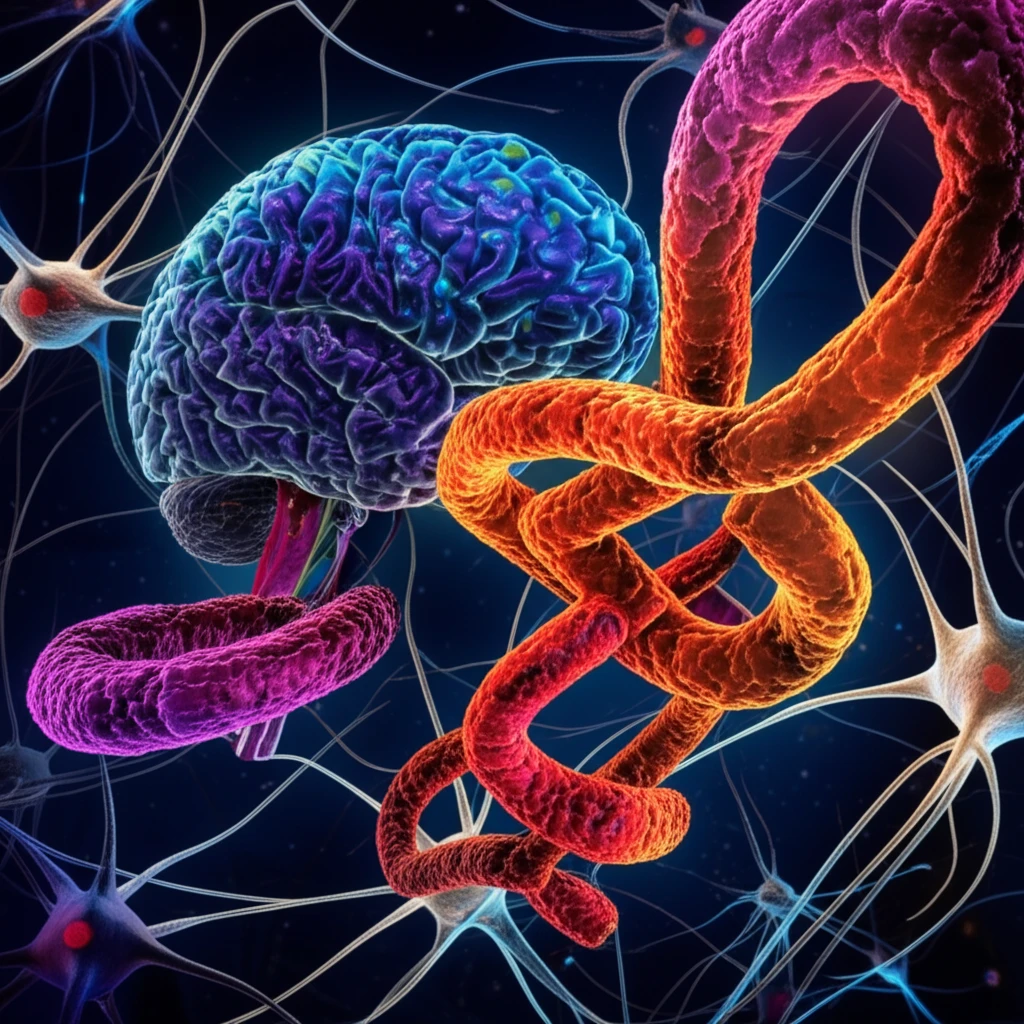
Prion Diseases: Unraveling the Mystery of Misfolded Proteins

"Exploring the causes, symptoms, and potential treatments for prion diseases, a class of rare and devastating neurological disorders."
Prion diseases, also known as transmissible spongiform encephalopathies (TSEs), are a group of rare and fatal neurodegenerative disorders. What makes these diseases unique is that they are caused by prions – misfolded proteins that can induce normal proteins to misfold in a similar way. This chain reaction leads to the accumulation of abnormal proteins in the brain, causing severe damage.
Unlike diseases caused by viruses or bacteria, prion diseases are associated with infectious, inherited, and spontaneous origins, making them a complex and challenging area of research. The "protein-only" hypothesis suggests that the conversion of a normal prion protein (PrPC) into an aggregated scrapie form (PrPSc) is the primary cause of TSEs. This PrPSc accumulates and inflicts damage, leading to the diseases' characteristic symptoms.
These diseases manifest in various forms, including Creutzfeldt-Jakob disease (CJD), fatal familial insomnia, Gerstmann-Sträussler-Scheinker syndrome, and kuru in humans, as well as bovine spongiform encephalopathy (BSE) in cattle and scrapie in sheep. Each of these conditions presents unique challenges and symptoms, but they all share the underlying mechanism of prion-induced protein misfolding.
Understanding the Structure and Function of Prion Proteins
The human prion protein, denoted as PrP, is a glycoprotein encoded by the PrP gene. This gene resides on the short arm of chromosome 20. PrP exists in two primary isoforms: PrPC (cellular) and PrPSc (scrapie). While both isoforms share an identical chemical composition, their three-dimensional conformations differ significantly. This structural divergence is key to understanding prion diseases.
- It's a transmembrane glycoprotein typically found on the surface of cells, particularly neural and hematopoietic stem cells.
- Its secondary structure is dominated by alpha helices, likely three in number, contributing to its flexible and soluble nature.
- PrPC is easily soluble and readily digested by proteases, enzymes that break down proteins.
- Encoded by the PRNP gene on chromosome 20, PrPC may function as an acetyl-choline receptor inducer, playing a crucial role in nerve signal transmission.
The Future of Prion Disease Research
Although prion diseases remain a significant challenge, ongoing research efforts offer hope for future treatments. Scientists are exploring various strategies, including developing drugs that can prevent the misfolding of prion proteins, therapies that target and clear existing prions, and gene therapies that could correct the underlying genetic mutations. By continuing to unravel the mysteries of prion diseases, researchers aim to develop effective therapies that can improve the lives of those affected by these devastating conditions.