
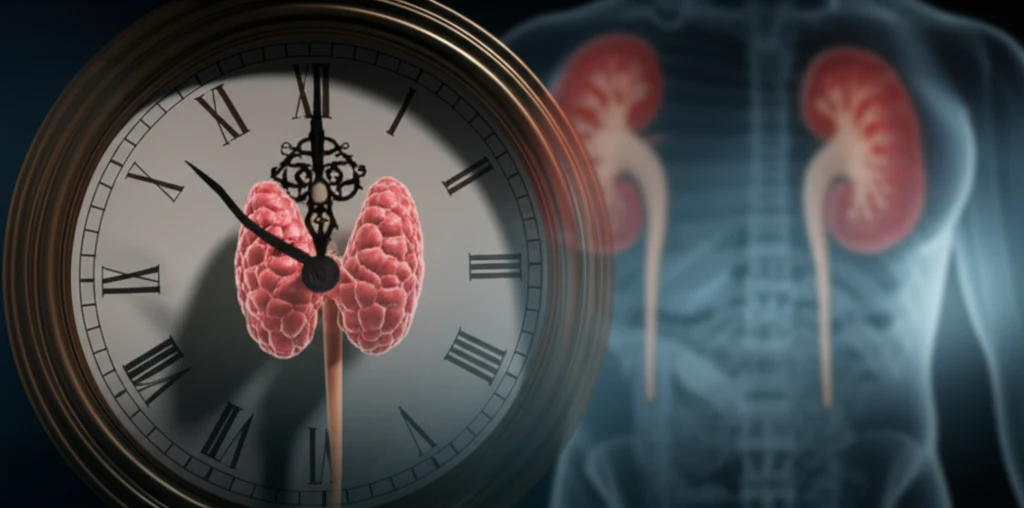
A surreal illustration representing the debate surrounding the duration of primary hyperparathyroidism (PHPT) and its impact on treatment decisions.

Primary Hyperparathyroidism: Should Treatment Duration Impact Guidelines?

"Navigating the complexities of PHPT: A critical look at treatment strategies and the role of disease duration."


Primary hyperparathyroidism (PHPT) presents a complex landscape for clinicians, with varying opinions on optimal treatment strategies. A recent article sparked a discussion regarding the importance of considering the duration of PHPT when evaluating and treating the condition.

While some experts advocate for early intervention to prevent end-organ damage, others argue that treatment decisions should primarily focus on the presence and severity of end-organ involvement, regardless of how long the patient has had PHPT. This article delves into this debate, exploring the nuances of PHPT management and providing insights for informed decision-making.

PHPT encompasses a spectrum of clinical presentations, from asymptomatic cases to severe end-organ dysfunction. Understanding the different forms of PHPT and their potential complications is crucial for tailoring treatment plans to individual patient needs.

The Great Debate: Duration vs. End-Organ Damage in PHPT Treatment

A surreal illustration representing the debate surrounding the duration of primary hyperparathyroidism (PHPT) and its impact on treatment decisions.

The central point of contention revolves around whether the duration of PHPT should influence treatment decisions, even in the absence of significant symptoms or complications. Some argue that prolonged exposure to elevated calcium levels, even if mild, can lead to insidious damage over time, warranting earlier intervention.

Conversely, others maintain that the primary focus should be on addressing existing end-organ involvement, such as kidney stones, bone disease, or cardiovascular issues. They believe that interventions should be reserved for patients with demonstrable complications, regardless of the duration of PHPT.

  • Early Intervention Advocates: Argue that longer PHPT duration should prompt end-organ evaluation, even in normocalcemic or asymptomatic cases.
  • End-Organ Focus: Believe treatment planning should focus on end-organ involvement, not duration.
  • PHPT Variability: Acknowledge PHPT's varied clinical entities, including sporadic, normocalcemic, and familial forms.
  • Surgical Priority: Emphasize surgery as primary treatment, with medicines having limited role except in nonlocalized cases.
Ultimately, the decision of when and how to treat PHPT should be made on a case-by-case basis, considering the patient's individual risk factors, preferences, and the presence or absence of end-organ damage. A collaborative approach involving endocrinologists, surgeons, and other specialists is essential for optimizing patient outcomes.

Navigating the Future of PHPT Management

As research continues to evolve, the optimal approach to managing PHPT remains a subject of ongoing investigation. Future studies are needed to better understand the long-term effects of PHPT duration and to identify reliable markers for predicting disease progression.

In the meantime, clinicians should stay informed about the latest guidelines and recommendations, while also exercising their clinical judgment and tailoring treatment plans to the unique needs of each patient.

By embracing a patient-centered approach and fostering open communication, healthcare providers can help individuals with PHPT achieve the best possible outcomes and maintain their overall well-being.

About this Article -

This article was crafted using a human-AI hybrid and collaborative approach. AI assisted our team with initial drafting, research insights, identifying key questions, and image generation. Our human editors guided topic selection, defined the angle, structured the content, ensured factual accuracy and relevance, refined the tone, and conducted thorough editing to deliver helpful, high-quality information.See our About page for more information.

This article is based on research published under:

DOI-LINK: 10.1016/j.surg.2018.10.007, Alternate LINK

Title: Disagreement: Should The Duration Of Primary Hyperparathyroidism Impact Guidelines For Evaluation And Treatment?

Subject: Surgery

Journal: Surgery

Publisher: Elsevier BV

Authors: Kavindra Singh, Manish Khattar, Chitresh Kumar

Published: 2019-11-01

Everything You Need To Know

1

What is Primary Hyperparathyroidism (PHPT)?

Primary Hyperparathyroidism (PHPT) is a condition characterized by elevated levels of parathyroid hormone, leading to increased calcium in the blood. This can stem from various causes, including parathyroid gland tumors. It's a complex condition that can manifest differently in each person, making diagnosis and management challenging.

2

What is the main debate concerning the treatment of Primary Hyperparathyroidism (PHPT)?

The central debate is whether the duration of Primary Hyperparathyroidism (PHPT) should influence treatment decisions. Some experts believe that the length of time a patient has had PHPT should prompt earlier intervention, even if there are no obvious symptoms or complications. However, others maintain that treatment should primarily focus on addressing existing end-organ damage, such as kidney stones, bone disease, or cardiovascular issues, regardless of the PHPT duration. This disagreement highlights the complexity of managing PHPT.

3

What is meant by 'end-organ damage' in the context of Primary Hyperparathyroidism (PHPT)?

End-organ damage refers to the harm caused by prolonged exposure to high calcium levels due to Primary Hyperparathyroidism (PHPT). The severity of this damage influences treatment decisions. Some common types of damage include kidney stones, bone disease (like osteoporosis), and cardiovascular issues. These complications are significant because they can lead to chronic health problems and reduced quality of life, making timely intervention critical.

4

What are the primary treatment options for Primary Hyperparathyroidism (PHPT)?

The main treatment strategies for Primary Hyperparathyroidism (PHPT) include surgery and, in certain cases, medication. Surgery is often considered the primary treatment, especially when there's evidence of end-organ damage or significant symptoms. Medication has a limited role and can be considered in nonlocalized cases. Decisions are made on an individual basis, taking into account factors like the patient's specific risk factors, preferences, and the presence or absence of end-organ damage.

5

How is the management of Primary Hyperparathyroidism (PHPT) evolving?

The future of Primary Hyperparathyroidism (PHPT) management involves ongoing research to refine treatment guidelines. It highlights the need for a collaborative approach. The decision of when and how to treat PHPT should be made on a case-by-case basis, considering the patient's individual risk factors, preferences, and the presence or absence of end-organ damage. Collaboration between specialists, such as endocrinologists and surgeons, is vital to optimize patient outcomes.

Newsletter Subscribe

Subscribe to get the latest articles and insights directly in your inbox.