
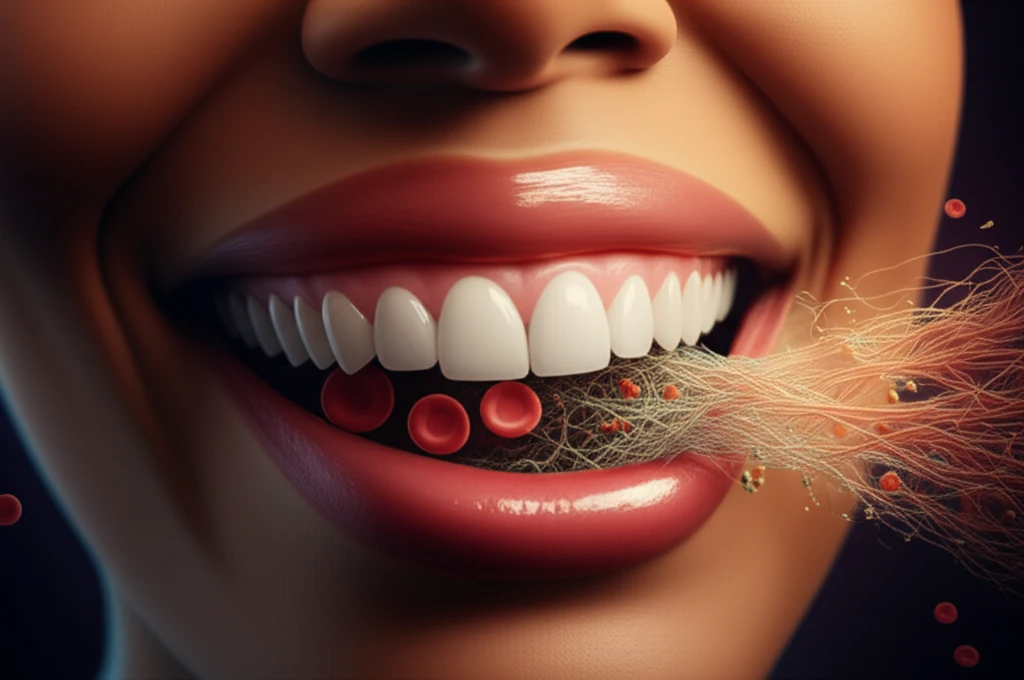
Illustration showing the healing power of PRF in dentistry.

PRF in Dentistry: The Secret Weapon for Faster Healing and a Healthier Smile

"Discovering Platelet-Rich Fibrin (PRF): How This Cutting-Edge Treatment is Revolutionizing Dental Care and Improving Patient Outcomes."


In the ever-evolving world of dentistry, the focus is shifting towards innovative treatments that prioritize natural healing and patient well-being. Among these advancements, Platelet-Rich Fibrin (PRF) stands out as a groundbreaking technique, offering a remarkable approach to accelerate healing and improve outcomes in various dental procedures. But what exactly is PRF, and how is it changing the landscape of modern dentistry?

This article delves into the fascinating world of PRF, exploring its science, applications, and the benefits it offers. We'll unravel how this cutting-edge treatment harnesses the body's natural healing capabilities to promote faster recovery, reduce discomfort, and enhance the overall success of dental treatments. Whether you're a patient seeking the best in dental care or a practitioner looking to enhance your practice, understanding PRF is essential.

Imagine a world where dental procedures are less invasive, healing is faster, and the results are more predictable. This is the promise of PRF, a treatment that is rapidly gaining recognition for its effectiveness and versatility. Let's explore how PRF is transforming dentistry, one smile at a time.

Unveiling the Science Behind Platelet-Rich Fibrin (PRF)

Illustration showing the healing power of PRF in dentistry.

At the heart of PRF lies a simple yet powerful concept: harnessing the body's own healing mechanisms. PRF is a second-generation platelet concentrate derived from the patient's blood, which is processed to concentrate platelets, white blood cells, and growth factors within a natural fibrin matrix. This matrix acts as a scaffold, promoting and accelerating the healing process.

Unlike Platelet-Rich Plasma (PRP), its predecessor, PRF doesn't require any artificial additives or anticoagulants. This means the whole process is more natural. The fibrin matrix slowly releases growth factors over an extended period, leading to sustained healing and tissue regeneration. The natural architecture of PRF contributes to its effectiveness, making it a superior option for various dental applications.

  • Platelets: These tiny cells are packed with growth factors essential for tissue repair.
  • White Blood Cells: These cells combat infection and contribute to the healing process.
  • Growth Factors: Proteins that stimulate cell growth, blood vessel formation, and tissue regeneration.
  • Fibrin Matrix: Acts as a scaffold, creating a supportive environment for healing.
The slow and sustained release of these components sets PRF apart, providing a conducive environment for healing that is both efficient and long-lasting. As we explore the applications of PRF, it becomes clear how this scientific foundation translates into tangible benefits for patients and practitioners alike.

PRF: A Promising Future for Dentistry and Patient Well-being

Platelet-Rich Fibrin (PRF) represents a significant leap forward in dental care. With its natural approach, versatile applications, and impressive results, PRF is poised to transform the way we approach dental procedures. As research continues and its benefits become even more evident, PRF is set to play an even greater role in achieving healthier smiles and improved patient outcomes. It is a testament to the power of harnessing the body's innate healing abilities, paving the way for a brighter future in dentistry.

About this Article -

This article was crafted using a human-AI hybrid and collaborative approach. AI assisted our team with initial drafting, research insights, identifying key questions, and image generation. Our human editors guided topic selection, defined the angle, structured the content, ensured factual accuracy and relevance, refined the tone, and conducted thorough editing to deliver helpful, high-quality information.See our About page for more information.

This article is based on research published under:

DOI-LINK: 10.14419/ijm.v3i2.5079, Alternate LINK

Title: Platelet Rich Fibrin In Dentistry: A Review Of Literature

Subject: General Medicine

Journal: International Journal of Medicine

Publisher: Science Publishing Corporation

Authors: Vishnu Ravi Kumar, Gayathri Gangadharan

Published: 2015-08-26

Everything You Need To Know

1

What exactly is Platelet-Rich Fibrin (PRF) and how does it work in dental treatments?

Platelet-Rich Fibrin (PRF) is a second-generation platelet concentrate derived from a patient's own blood. It's processed to concentrate platelets, white blood cells, and growth factors within a natural fibrin matrix. This fibrin matrix acts as a scaffold, promoting and accelerating the healing process in various dental procedures. Unlike Platelet-Rich Plasma (PRP), PRF does not require artificial additives or anticoagulants, making it a more natural approach.

2

How is Platelet-Rich Fibrin (PRF) different from Platelet-Rich Plasma (PRP) in dental applications?

Platelet-Rich Fibrin (PRF) differs from Platelet-Rich Plasma (PRP) primarily in its composition and method of preparation. PRF is a more natural approach as it does not require artificial additives or anticoagulants, unlike PRP. The fibrin matrix in PRF also allows for a slow and sustained release of growth factors, which promotes long-lasting tissue regeneration. This sustained release and natural composition are key advantages of PRF over PRP.

3

What are the key components of Platelet-Rich Fibrin (PRF) that contribute to faster healing?

Platelet-Rich Fibrin's (PRF) effectiveness in promoting faster healing is attributed to several key components. Platelets are packed with growth factors essential for tissue repair. White blood cells combat infection and contribute to the healing process. Growth factors stimulate cell growth, blood vessel formation, and tissue regeneration. The Fibrin Matrix acts as a scaffold, creating a supportive environment for healing.

4

What are the potential implications of using Platelet-Rich Fibrin (PRF) in dentistry for patient well-being and treatment outcomes?

The use of Platelet-Rich Fibrin (PRF) in dentistry has significant implications for patient well-being and treatment outcomes. By harnessing the body's natural healing mechanisms, PRF can lead to faster recovery, reduced pain, and enhanced tissue regeneration. This translates to more predictable and successful dental treatments, improving patient satisfaction and overall oral health. Further research into PRF's applications could reveal even greater benefits and expand its role in various dental procedures.

5

How does the slow and sustained release of growth factors from the Platelet-Rich Fibrin (PRF) matrix impact the healing process?

The slow and sustained release of growth factors from the Platelet-Rich Fibrin (PRF) matrix has a significant impact on the healing process. This prolonged release ensures that the tissues receive a continuous supply of essential proteins that stimulate cell growth, blood vessel formation, and tissue regeneration. This sustained delivery promotes more efficient and long-lasting healing compared to treatments that provide a one-time boost of growth factors. The natural architecture of the fibrin matrix is crucial for this sustained release, contributing to PRF's superior effectiveness in dental applications.

Newsletter Subscribe

Subscribe to get the latest articles and insights directly in your inbox.