
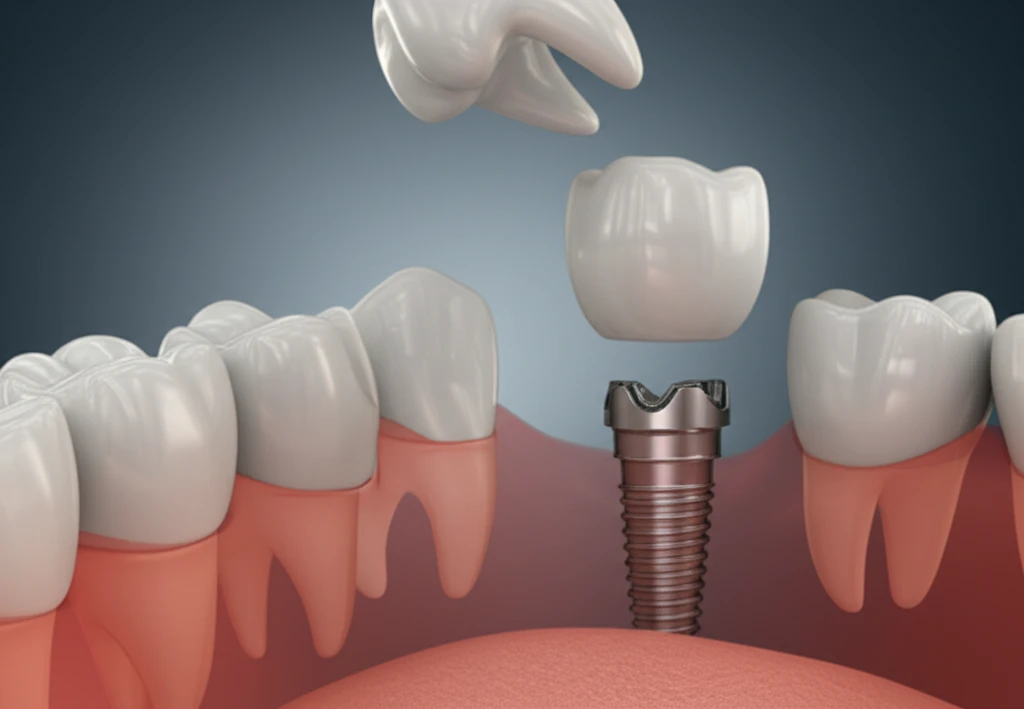
Illustration depicting alveolar ridge preservation after tooth extraction.

Preserving Your Smile's Future: Understanding Ridge Preservation After Tooth Extraction

"Safeguarding Your Smile: Why Ridge Preservation Matters for Dental Health and Implants"


Tooth loss can be a challenging experience, impacting not just your smile's appearance but also your oral health and overall well-being. Fortunately, advancements in dentistry offer solutions like dental implants to restore your smile and function. However, the success of dental implants hinges on several factors, with one of the most critical being the health and structure of your jawbone. This is where alveolar ridge preservation (ARP) comes into play, a proactive measure taken after tooth extraction to maintain the jawbone's integrity and prepare for future implant placement.

This article delves into the world of ARP, exploring why it's essential for anyone considering tooth extraction or dental implants. We'll uncover the science behind jawbone healing, the different ARP techniques available, and how they contribute to successful implant outcomes. We'll also discuss the benefits of ARP, ensuring you're well-informed about the importance of this procedure in preserving your smile's long-term health and beauty.

Whether you're facing a tooth extraction or are already considering dental implants, understanding ARP empowers you to make informed decisions about your oral health. Let's explore how ARP can protect your smile and set the stage for a confident, healthy future.

Why Is Alveolar Ridge Preservation Important After Tooth Extraction?

Illustration depicting alveolar ridge preservation after tooth extraction.

When a tooth is extracted, the jawbone in that area begins to resorb, or shrink. This natural process, known as bone resorption, can lead to a loss of jawbone volume, width, and height. Over time, this bone loss can compromise the space needed for dental implants, making it difficult to achieve optimal implant placement. Additionally, bone loss can affect the aesthetics of your smile, leading to a sunken appearance or changes in your facial structure.

ARP aims to minimize bone loss after tooth extraction, preserving the natural contours of your jawbone and providing a stable foundation for future dental implants. By maintaining the bone's volume and density, ARP ensures the successful integration of implants, leading to a more natural-looking and functional smile.

  • Preserves Jawbone Structure: ARP prevents bone resorption, maintaining the natural shape and volume of your jawbone.
  • Enhances Implant Success: A stable jawbone provides the necessary support for dental implants, increasing their chances of successful integration (osseointegration).
  • Improves Aesthetics: ARP helps maintain the natural contours of your gums and jawline, leading to a more aesthetically pleasing smile.
  • Simplifies Future Procedures: By preserving bone structure, ARP may reduce the need for more extensive bone grafting procedures later.
  • Maintains Proper Bite and Function: A healthy jawbone supports proper chewing and speech.
Ultimately, ARP is an investment in your oral health, ensuring a strong, beautiful smile for years to come. It's a proactive step that can significantly impact the success of your dental implants and the overall health of your mouth.

Protecting Your Smile's Foundation

Alveolar ridge preservation is a critical procedure in modern dentistry, providing a pathway to successful dental implants and a healthy, beautiful smile. By understanding the importance of ARP and discussing it with your dentist, you can take a proactive approach to your oral health, ensuring a confident future for your smile. If you are considering tooth extraction or dental implants, ask your dentist about ARP and how it can benefit you. Your smile's long-term health is worth the investment.

About this Article -

This article was crafted using a human-AI hybrid and collaborative approach. AI assisted our team with initial drafting, research insights, identifying key questions, and image generation. Our human editors guided topic selection, defined the angle, structured the content, ensured factual accuracy and relevance, refined the tone, and conducted thorough editing to deliver helpful, high-quality information.See our About page for more information.

Everything You Need To Know

1

What is alveolar ridge preservation (ARP) and why is it important after a tooth extraction?

Alveolar ridge preservation (ARP) is a proactive dental procedure performed immediately after tooth extraction. Its primary goal is to minimize bone resorption, which is the natural shrinking of the jawbone that occurs when a tooth is removed. ARP is crucial because it preserves the jawbone's natural shape and volume, creating a stable foundation for potential future dental implants. Without ARP, the reduced bone volume could compromise implant placement and affect the aesthetics of your smile.

2

How does alveolar ridge preservation (ARP) enhance the success of dental implants?

Alveolar ridge preservation (ARP) significantly improves the likelihood of dental implant success by ensuring that there's sufficient, healthy jawbone to support the implant. A stable and dense jawbone is essential for osseointegration, the process where the implant fuses with the bone. By preventing bone loss after tooth extraction, ARP creates optimal conditions for implant integration, resulting in a more secure and long-lasting dental restoration. This eliminates the need for extensive bone grafting procedures.

3

What are the key benefits of undergoing alveolar ridge preservation (ARP) after tooth extraction, beyond just preparing for dental implants?

Beyond creating a solid foundation for dental implants, alveolar ridge preservation (ARP) offers several important benefits. It maintains the natural contours of your gums and jawline, preventing a sunken facial appearance and preserving your smile's aesthetics. ARP also simplifies future dental procedures by minimizing the need for extensive bone grafting. Furthermore, a healthy jawbone supports proper bite and function, crucial for chewing and speech. Overall, ARP contributes to long-term oral health and a confident smile.

4

If I am considering tooth extraction, what questions should I ask my dentist about alveolar ridge preservation (ARP)?

When discussing tooth extraction with your dentist, it's crucial to inquire about alveolar ridge preservation (ARP) and its potential benefits for your specific situation. Ask about the specific ARP techniques they use, the materials involved, and the expected outcomes in terms of bone preservation. Understand the risks and benefits of ARP versus not having the procedure. Also, discuss the timeline for potential dental implants after ARP. Understanding these details empowers you to make an informed decision about preserving your smile's future.

5

What are the long-term implications of choosing not to undergo alveolar ridge preservation (ARP) after tooth extraction, especially concerning overall facial aesthetics and dental health?

Choosing not to undergo alveolar ridge preservation (ARP) after tooth extraction can lead to several long-term consequences. The most significant is bone resorption, resulting in a loss of jawbone volume and density. This can compromise the success of future dental implants, potentially requiring more complex and costly bone grafting procedures. Furthermore, bone loss can negatively impact facial aesthetics, leading to a sunken appearance, changes in facial structure, and premature aging around the mouth. A weakened jawbone can also affect bite stability and function, increasing the risk of further dental problems. ARP is an investment that can save money.

Newsletter Subscribe

Subscribe to get the latest articles and insights directly in your inbox.