
Preserving Our Past: The Frontiers of Preventive Conservation and How You Can Help

"Uncover the crucial role of preventive conservation in safeguarding cultural heritage, and learn how you can contribute to preserving history for future generations."
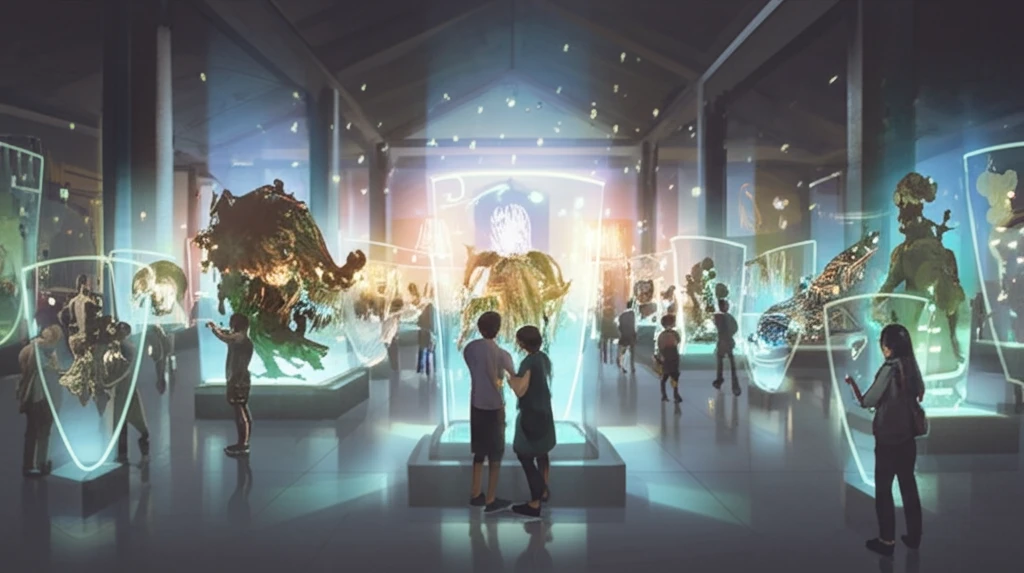
Imagine walking through a museum, surrounded by artifacts that whisper stories of civilizations long past. These objects, fragile and irreplaceable, connect us to our history and shape our understanding of the world. But what if these treasures were slowly fading away, victims of environmental damage and neglect? This is the challenge faced by conservators, the guardians of our cultural heritage. Their work, often unseen, is vital to preserving these precious links to the past.
Preventive conservation is at the forefront of this battle against decay. It's a proactive approach that focuses on minimizing risks to objects before damage occurs. From controlling humidity and temperature to managing light exposure and pollution, preventive conservation encompasses a wide range of strategies aimed at creating stable and sustainable environments for our cultural treasures.
This article explores the cutting-edge research and innovative techniques shaping the future of preventive conservation. We'll delve into the challenges of preserving mixed materials, the impact of pollution and dust, and the development of damage functions to assess environmental risks. Most importantly, we'll uncover how you, as an individual, can play a role in safeguarding our shared history.
A Growing but Still Limited Specialty
Despite being essential to cultural preservation, preventive conservation remains a relatively small field. A study tracking job advertisements on the Conservation Distribution List from 1995 to 2024 found that specific preventive conservation positions, while present, represent a limited share of total conservation jobs advertised. At institutions like the Field Museum, preventive conservators protect collections by carefully examining manufacturer data and performing tests such as artificial aging and chemical analyses to select optimal storage and display materials. Job postings from organizations like Imperial War Museums emphasize the need for professionals who can provide reliable environmental data and insights to support preventive conservation decision-making and reduce risks to collections.
Controlling the Environment to Slow Decay
Preventive conservators focus on a defined set of actionable controls: environmental regulation of temperature, relative humidity, and air exchange rates; and light management including lux limits, UV filtration, and timed illumination for display items. The overarching goal is to slow the natural rate of deterioration and maintain the present condition of cultural materials for as long as possible. A conservation audit highlights deficiencies that should be tackled in a logical and methodical manner, with responses that are not always expensive. Notably, preventive conservation is recognized as the most cost-effective approach available to resource-constrained heritage institutions, though this cost-effectiveness itself underscores the reality that many institutions operate under significant budget limitations.
An Ancient Principle, A Modern Specialty
Preventive conservation is described by the Smithsonian's Museum Conservation Institute as a nascent conservation specialty, despite being a fundamental principle to cultural preservation globally. The core philosophy — preventing damage from occurring in the first place rather than treating it after the fact — is embraced by conservators at major institutions including the National Gallery of Art. This tension between the idea's long-standing importance and its relatively recent formalization as a distinct professional discipline highlights how the field has evolved from an implicit practice into a recognized area of expertise.
The Challenges of Mixed Materials: A Balancing Act
One of the most significant challenges in preventive conservation arises when dealing with objects made from mixed materials. Think of a showcase containing archaeological artifacts: an iron sword with a wooden handle, or a copper brooch adorned with delicate organic inlays. Each material has its own ideal environmental conditions, and often these requirements clash.
- Risk-Based Assessment: Understanding the specific risks posed by different relative humidity levels to each material allows for a more informed decision-making process.
- Showcase Optimization: Modifying showcase design and using materials like silica gel can help maintain a stable and appropriate relative humidity level.
- Prioritization: Focusing on controlling factors that pose the most significant threat to the most vulnerable materials can maximize the effectiveness of conservation efforts.
Non-Invasive Techniques and Training Evolution
Recent scholarship has applied preventive conservation methods to architectural heritage in challenging contexts. A study of Armenia's Geghard Monastery, for instance, used non-invasive analyses to assess monasteries subjected to geological hazards and degradation driven by environmental conditions. On the training front, the Winterthur/University of Delaware Program in Art Conservation has included preventive conservation as an identifiable part of its curriculum since the early 1980s. Growing recognition of the need for both technical proficiency and soft skills — such as communication and collaboration — reflects the increasingly interdisciplinary and collaborative nature of preventive conservation practice.
The Limits of Monitoring
Preventive conservators spend significant effort monitoring collection temperature, relative humidity, light exposure, and pollutants, then analyzing results to develop and deliver proactive care plans to manage deterioration. However, the very need for such constant, ongoing monitoring underscores a fundamental limitation: environmental control is never truly finished. Even well-designed preventive programs require perpetual vigilance, and the reliance on reactive analysis of monitoring data suggests that some degree of damage may be detected only after it has occurred. The challenge remains translating monitoring insights into genuinely proactive — rather than merely reactive — interventions.
What Institutions Look For
A job listing for a Preventive Conservator position at the British Museum provides insight into what leading institutions expect from professionals in this role. Candidates are required to hold a degree or equivalent in conservation with a specific focus on preventive measures, alongside proven experience in preventive conservation within the heritage sector. The listing also emphasizes the need for an understanding of material deterioration processes and conservation ethics — suggesting that the field demands not only technical skill but also a principled approach to decision-making. These requirements reflect the breadth of knowledge that preventive conservation now encompasses.
Your Role in Preserving the Past
Preventive conservation is not solely the responsibility of museums and conservators. Each of us can contribute to safeguarding our shared history. By supporting cultural institutions, advocating for responsible environmental policies, and promoting awareness of conservation issues, we can all play a part in ensuring that these treasures endure for generations to come. Consider the impact of your actions – from reducing pollution to properly caring for your own family heirlooms – every effort, no matter how small, makes a difference.
Guardians of Stable Conditions
Preventive conservators serve as the frontline defenders of cultural collections by evaluating environments and storage conditions before damage occurs. Their core responsibilities include monitoring temperature, relative humidity, light exposure, pests, and pollutants to ensure stable conditions that will not cause harm. This role demands a combination of scientific literacy, meticulous record-keeping, and the ability to communicate findings to broader institutional teams. As cultural institutions increasingly recognize that prevention is more cost-effective than restoration, the preventive conservator's role continues to grow in strategic importance.
Designing Out Human Error
The future of preventive conservation may lie in a philosophical shift toward minimizing direct intervention. Dr. Elizabeth Salmon of UCLA describes the goal as taking human choices out of the equation as much as possible, focusing instead on creating an environment that supports preservation to help objects live as long as possible without direct intervention. At the same time, few conservation training courses adequately prepare students for emerging roles in the field, suggesting a potential skills gap as the profession evolves. As institutions increasingly prioritize preventive conservation and collection management, addressing this training gap will be critical to the field's long-term success.
An Uneven Landscape
Preventive conservation operates within a broader ecosystem of systemic challenges that affect cultural heritage worldwide. Disparities in funding, infrastructure, and institutional priorities mean that even well-established principles of preventive care are applied unevenly across regions and institutions. Climate change introduces new environmental stresses that existing preventive frameworks were not designed to address, requiring ongoing adaptation. While the field continues to advance, these structural realities suggest that the full potential of preventive conservation remains unrealized for many of the world's cultural collections.
Reducing Bias in Decision-Making
Conservation decision-making is not purely a technical exercise — it is shaped by human judgment, institutional priorities, and stakeholder perspectives. Research published in Studies in Conservation has analyzed the impact of stakeholder consultation during conservation decision-making processes, revealing how the involvement of multiple parties can introduce biases that affect outcomes. Recognizing and mitigating these biases is essential for ensuring that preventive conservation decisions serve the long-term interests of the collections themselves. The human element, therefore, remains both the greatest asset and a significant challenge in the pursuit of effective preventive care.