
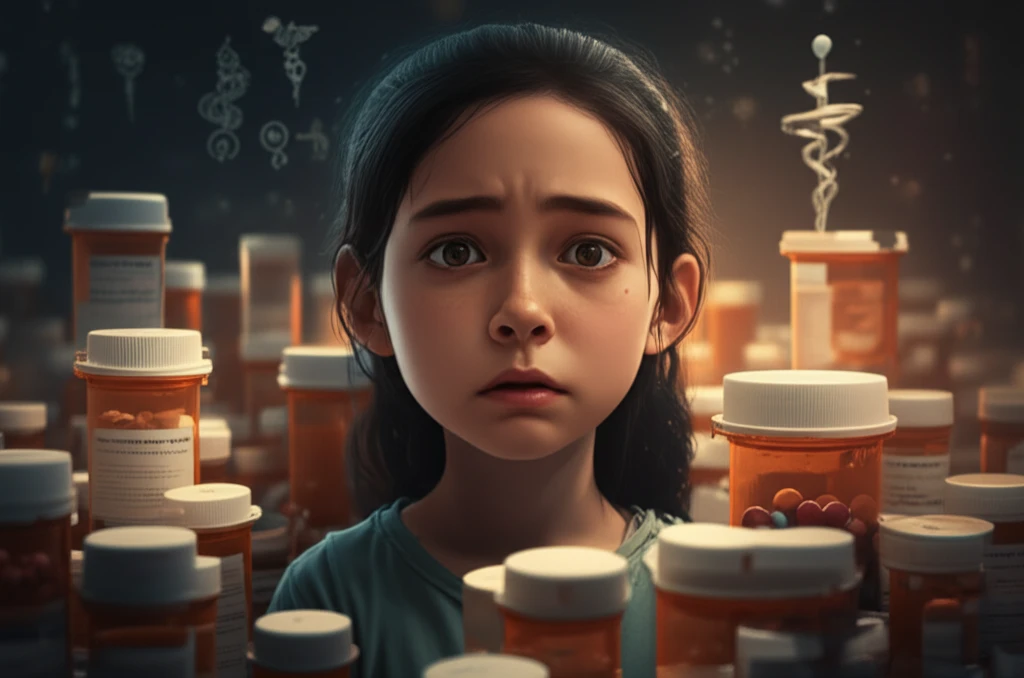
Illustration depicting a young girl surrounded by prescription pill bottles, symbolizing the prevalence of medication use in children.

Prescription Nation: Are Our Kids Over-Medicated? Unpacking the Alarming Rise in Child and Teen Drug Use

"A new study reveals the prevalence of prescription medication use among children and adolescents in the U.S., raising critical questions about their health and safety."


In an era where health and wellness dominate headlines, a new study published in Pediatrics sheds light on a pressing concern: the widespread use of prescription medications among children and adolescents in the United States. The research, focusing on data from 2013 to 2014, reveals that a significant portion of young people are regularly taking prescription drugs, raising critical questions about their health and safety.

The study's findings are not just numbers; they represent a snapshot of the health landscape for our youth. The investigation underscores the importance of understanding the medications our children are taking, the potential risks involved, and the steps we can take to protect their well-being. This article will delve into the details of the research, exploring the key findings and their implications.

The primary goal of this study was to understand the scope of prescription medication use, concurrent use (taking multiple medications at once), and the potential for serious drug interactions within this age group. This research provides a crucial foundation for both parents and healthcare providers to make informed decisions and ensure the safety of our children.

Decoding the Data: Key Findings on Prescription Medication Use

Illustration depicting a young girl surrounded by prescription pill bottles, symbolizing the prevalence of medication use in children.

The study's findings paint a detailed picture of prescription medication use among young people. During the 2013-2014 period, almost 20% of children and adolescents were using at least one prescription medication. This usage rate indicates that prescription medications are now a common part of life for many families.

Within this group, approximately 7% were taking acute medications, drugs typically used for a short duration to treat immediate health issues. The study also revealed that 7.5% of the children and adolescents were concurrently using multiple prescription medications. This practice, while sometimes medically necessary, significantly increases the risk of adverse drug interactions. The research also revealed that adolescent girls, in particular, showed higher rates of using prescription drugs.

  • Prevalence: Almost 20% of children and adolescents were using at least one prescription medication.
  • Acute vs. Chronic: 7% of users took acute medications, while others were on long-term treatments.
  • Concurrent Use: 7.5% of the study population were using two or more prescription drugs concurrently.
  • Risk of DDIs: 8.2% of those taking multiple medications faced the risk of potentially serious drug-drug interactions.
The study underscores that while prescription medications are sometimes necessary, their use carries inherent risks, particularly when multiple drugs are involved. This highlights the importance of careful monitoring and open communication between healthcare providers, parents, and young patients.

Moving Forward: Protecting Our Children's Health

The study provides a wake-up call, emphasizing the need for increased awareness, vigilance, and proactive measures to protect our children's health. This includes educating parents about medication risks, encouraging open communication with healthcare providers, and promoting safer prescribing practices. By working together, we can help ensure that prescription medications are used safely and effectively for the health and well-being of our children and adolescents. This research reinforces the urgent need for a concerted, multi-faceted approach to address the rising use of medications among young people, ensuring their safety and supporting their overall well-being.

About this Article -

This article was crafted using a human-AI hybrid and collaborative approach. AI assisted our team with initial drafting, research insights, identifying key questions, and image generation. Our human editors guided topic selection, defined the angle, structured the content, ensured factual accuracy and relevance, refined the tone, and conducted thorough editing to deliver helpful, high-quality information.See our About page for more information.

This article is based on research published under:

DOI-LINK: 10.1542/peds.2018-1042, Alternate LINK

Title: Prescription Medication Use Among Children And Adolescents In The United States

Subject: Pediatrics, Perinatology and Child Health

Journal: Pediatrics

Publisher: American Academy of Pediatrics (AAP)

Authors: Dima M. Qato, G. Caleb Alexander, Jenny S. Guadamuz, Stacy Tessler Lindau

Published: 2018-09-01

Everything You Need To Know

1

What percentage of children and adolescents in the United States were found to be using at least one prescription medication according to the study?

According to the study conducted during 2013-2014, almost 20% of children and adolescents in the United States were using at least one prescription medication. This indicates that prescription medications are a prevalent aspect of healthcare for young people.

2

What does the study reveal about the concurrent use of prescription medications among children and adolescents, and why is this a concern?

The study found that 7.5% of the children and adolescents were concurrently using multiple prescription medications. This is concerning because the concurrent use of multiple medications significantly increases the risk of adverse drug interactions (DDIs), which can have serious health consequences. The study highlights that 8.2% of those taking multiple medications faced the risk of potentially serious drug-drug interactions.

3

What are acute medications, and what percentage of children and adolescents were found to be using them in the study?

Acute medications are drugs typically used for a short duration to treat immediate health issues. The study revealed that 7% of the children and adolescents using prescription medications were taking acute medications.

4

Beyond prevalence rates, what broader implications does the research suggest for parents and healthcare providers?

Beyond the statistics, this research suggests that parents need to be more informed about the medications their children are taking and the potential risks involved. Healthcare providers should prioritize open communication with both parents and young patients, ensuring safer prescribing practices. This includes carefully monitoring medication use and being vigilant about the potential for adverse drug interactions when multiple medications are prescribed. The study serves as a reminder of the importance of shared decision-making and a multi-faceted approach to safeguard the well-being of children and adolescents.

5

The study emphasizes the risk of drug-drug interactions (DDIs). Can you elaborate on why DDIs are particularly concerning in children and adolescents, and what measures can be taken to minimize these risks?

Drug-drug interactions (DDIs) are particularly concerning in children and adolescents due to their developing physiology, which can affect how medications are absorbed, metabolized, and eliminated. This variability increases the potential for unpredictable and adverse effects. To minimize the risk of DDIs, healthcare providers should conduct thorough medication reviews, considering all prescription drugs, over-the-counter medications, and supplements a child is taking. Utilizing electronic health records and drug interaction databases can help identify potential DDIs. Parents play a crucial role by providing accurate and complete medication histories and reporting any unusual symptoms or side effects to the healthcare provider promptly. Regular monitoring and open communication among healthcare providers, parents, and young patients are essential for preventing and managing DDIs.

Newsletter Subscribe

Subscribe to get the latest articles and insights directly in your inbox.