
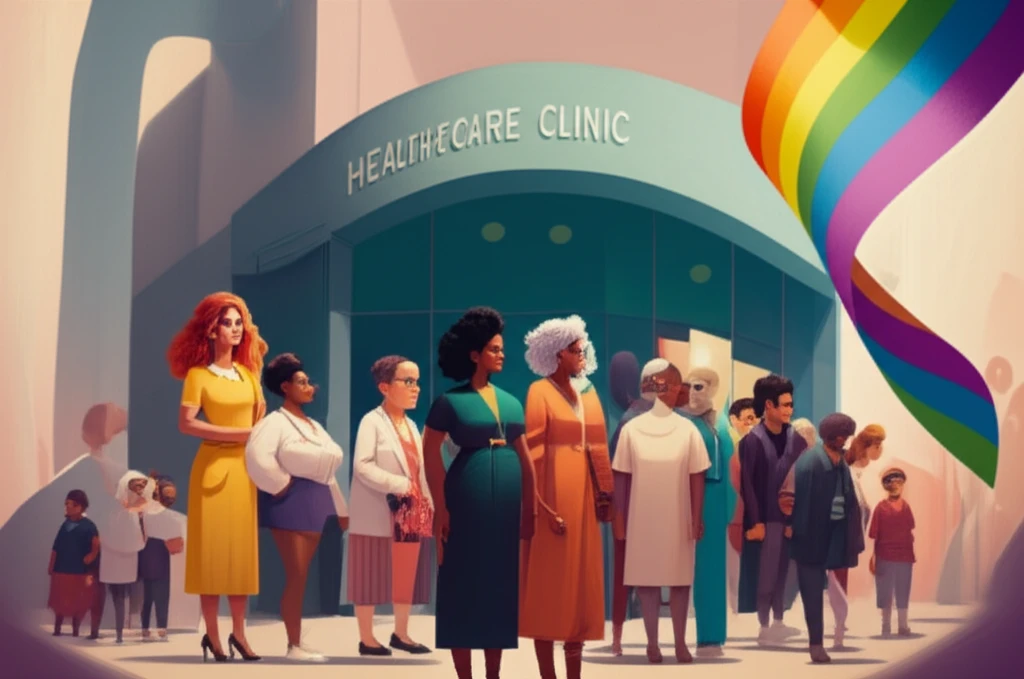
PrEP for Trans Communities: A Guide to Gender-Affirming HIV Prevention

"Explore how pre-exposure prophylaxis (PrEP) can be effectively and sensitively delivered to transgender individuals, addressing unique barriers and promoting inclusive healthcare."
Transgender (trans) people, particularly trans women of color, are disproportionately affected by HIV. Pre-exposure prophylaxis (PrEP), using daily coformulated emtricitabine and tenofovir disoproxil fumarate, is a promising biomedical intervention. However, its effectiveness in the transgender population hasn't been fully established due to limited data. Initial findings suggest that several barriers hinder PrEP uptake within the trans community. These include difficulties accessing healthcare and concerns about potential interactions with hormone therapy.
A combination of biological factors, discrimination, and systemic inequities increases the risk of HIV acquisition among transgender individuals, especially trans women of color. According to 2015 data from the Centers for Disease Control and Prevention (CDC), new HIV diagnoses among trans people were three times higher than the national average. Data from 2009 to 2014 indicated that 2,351 trans people were diagnosed with HIV, with 84% being trans women and half of those being African American. The actual number of infected trans men and women may be higher due to underreporting.
Underreporting is common because of challenges in accurately capturing gender identity in HIV surveillance systems. Trans women are frequently grouped with cisgender men who have sex with men in epidemiological reports. Even in multinational pre-exposure prophylaxis (PrEP) studies, identifying trans participants required complex methods because gender identity data was not uniformly collected. Despite these data gaps, it's clear that the risk factors for HIV infection among trans individuals are significant, underscoring the urgent need for targeted prevention strategies.
Navigating Barriers to PrEP Access for Trans Individuals
To date, clinical trials for PrEP have largely excluded transgender individuals. Concerns about how PrEP might negatively interact with gender-affirming hormone therapy may also deter trans people from considering PrEP. However, current evidence indicates no significant drug interactions between PrEP and feminizing or masculinizing hormones. There are also no known contraindications for using PrEP alongside hormone therapy. More research is underway to fully understand any potential interactions between hormonal medications and PrEP.
- Lack of inclusion in clinical trials
- Concerns about interactions with hormone therapy
- Stigma and fear of discrimination
The Path Forward: Enhancing PrEP Uptake and Adherence
Inclusion of gender identity measures uniformly across HIV surveillance and prevention systems is an essential component to better understanding patterns of PrEP use and barriers to care among the trans population. The CDC is currently exploring revisions to its data collection and classification methods to be more accurate and inclusive of trans people. Studies of interactions between hormone therapy and antiretrovirals and studies of biomedical risk factors unique to trans people—such as transmission of HIV through vaginal sex in trans women who have undergone vaginoplasty—are essential. Health systems-level interventions may improve retention in care, including office staff training, electronic health records inclusive of chosen name and pronoun, and a transgender-inclusive approach to sexual history taking. Ultimately, structural-level change is needed to reduce the drivers of the epidemic and overcome barriers to effective PrEP use in this disenfranchised community at high risk for HIV. Future PrEP and treatment as prevention studies are essential to address the factors that may lead to suboptimal adherence.