
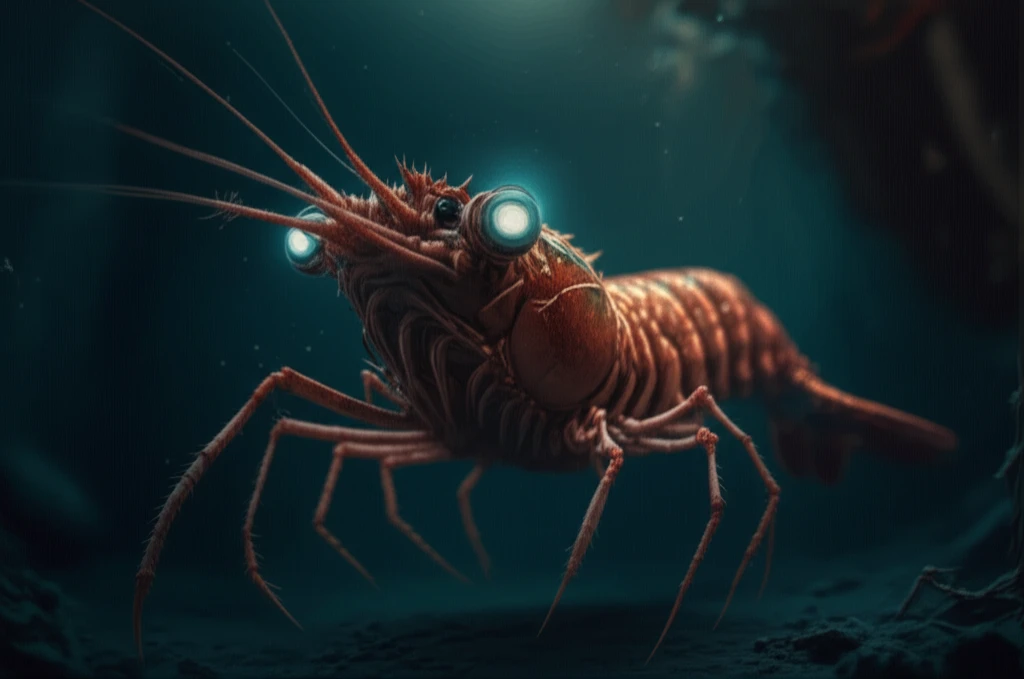
Prawn with bioluminescent eyes detecting pollution.

Prawn's Hidden Power: Unlocking Secrets for a Cleaner Ocean

"How Understanding Cholinesterase in Prawns Can Revolutionize Pollution Monitoring"


Imagine a world where we can easily and accurately detect pollution in our oceans. This isn't just a dream; it's becoming a reality thanks to the humble prawn. Scientists are increasingly turning to biomarkers—biological indicators—to assess the health of our ecosystems. Among these, cholinesterases (ChEs), enzymes crucial for nerve function, are emerging as powerful tools for detecting pollutants, particularly in aquatic environments.

A new study focuses on the common prawn (Palaemon serratus) to understand how ChEs behave in different tissues. Think of it as mapping the prawn's inner workings to reveal its sensitivity to environmental toxins. This research isn't just about prawns; it's about creating a more effective and responsive way to monitor the health of our oceans.

This article explores the groundbreaking research on the distribution and properties of ChEs in the common prawn. We'll dive into how these enzymes react to various pollutants, which tissues are most sensitive, and how this knowledge can be used to develop better pollution monitoring systems. Get ready to see the ocean through the eyes—or rather, the enzymes—of a prawn.

Why Prawns? Unveiling Cholinesterase as a Pollution Detector

Prawn with bioluminescent eyes detecting pollution.

Marine environments face constant threats from various pollutants, making it crucial to have effective monitoring tools. Traditional methods can be costly and time-consuming. This is where prawns and their ChEs come into play. By understanding how ChEs in prawns react to pollutants, scientists can develop a sensitive and cost-effective method for assessing water quality. It’s like having a natural early warning system for environmental threats.

The research team investigated various tissues in prawns, including the eyes, brain, gills, and digestive tract, to pinpoint where ChE activity is most prominent. Histochemical localization revealed that the eyes exhibit the highest concentration of ChEs, followed by the brain, gills, and digestive system. Interestingly, muscle tissue showed minimal ChE activity. This discovery is crucial because it highlights which tissues are most likely to respond to pollutants, guiding future monitoring efforts.

  • Eyes Lead the Way: Prawn eyes contain the highest amount of ChE activity, making them a prime candidate for pollution detection.
  • Tissue Matters: Different tissues react differently. The brain, gills, and digestive tract also show significant ChE activity, while muscles show little.
  • Enzyme Insights: Understanding where and how ChEs function provides a roadmap for targeted environmental monitoring.
The study didn't stop at locating ChEs. Researchers also examined how these enzymes interact with different substances, including various thiocholine esters and selective inhibitors. The results indicated that the ChEs in prawns are highly sensitive to choline esters, particularly acetylthiocholine, and are easily inhibited by eserine sulfate. This sensitivity confirms that these enzymes can be effectively used to detect specific types of pollutants.

The Future of Ocean Monitoring: Prawns as Sentinels

This research opens up exciting possibilities for using prawns as bioindicators of pollution. By focusing on the ChEs in their eyes, scientists have identified a readily accessible and highly sensitive tool for monitoring water quality. This approach is not only cost-effective but also aligns with the growing need for sustainable environmental solutions.

The insights gained from this study can be applied to develop more targeted and efficient pollution monitoring programs. Imagine deploying networks of prawn-based sensors to continuously monitor water quality in estuaries and coastal zones. This could provide real-time data on pollution levels, enabling authorities to respond quickly to emerging threats.

As we continue to face increasing environmental challenges, innovative approaches like this are essential. By understanding and harnessing the natural capabilities of organisms like the common prawn, we can pave the way for a cleaner, healthier ocean for future generations. The future of ocean monitoring may very well depend on these small but mighty crustaceans.

About this Article -

This article was crafted using a human-AI hybrid and collaborative approach. AI assisted our team with initial drafting, research insights, identifying key questions, and image generation. Our human editors guided topic selection, defined the angle, structured the content, ensured factual accuracy and relevance, refined the tone, and conducted thorough editing to deliver helpful, high-quality information.See our About page for more information.

This article is based on research published under:

DOI-LINK: 10.1086/bblv218n1p1, Alternate LINK

Title: Localization And Properties Of Cholinesterases In The Common Prawn (Palaemon Serratus): A Kinetic-Histochemical Study

Subject: General Agricultural and Biological Sciences

Journal: The Biological Bulletin

Publisher: University of Chicago Press

Authors: Manuela F. Frasco, Ida Eržen, Jure Stojan, Lúcia Guilhermino

Published: 2010-02-01

Everything You Need To Know

1

How are prawns being used to monitor ocean pollution, and what are cholinesterases (ChEs)?

Cholinesterases (ChEs) are enzymes crucial for nerve function. In prawns, they are used as biomarkers to detect pollutants in aquatic environments. The common prawn, Palaemon serratus, is studied to map its inner workings and reveal its sensitivity to environmental toxins. The eyes of the prawn have the highest concentration of ChE activity, making them prime candidates for pollution detection.

2

Which prawn tissues are most important for detecting pollution, and why were they chosen for the Cholinesterases (ChEs) study?

The research examined tissues such as the eyes, brain, gills, and digestive tract. The eyes exhibit the highest concentration of Cholinesterases (ChEs), followed by the brain, gills, and digestive system. Muscle tissue showed minimal ChE activity. This is vital as it pinpoints which tissues are most likely to respond to pollutants, guiding future monitoring efforts.

3

How do Cholinesterases (ChEs) in prawns react to pollutants, and what does this reveal about their use as pollution detectors?

Scientists examined how Cholinesterases (ChEs) interact with substances like thiocholine esters and selective inhibitors. The results showed that ChEs in prawns are highly sensitive to choline esters, especially acetylthiocholine, and are easily inhibited by eserine sulfate. This sensitivity validates their effectiveness in detecting specific pollutants.

4

What are the practical implications of using prawns as 'sentinels' for ocean monitoring, particularly focusing on Cholinesterases (ChEs)?

Using prawns as bioindicators focuses on Cholinesterases (ChEs) in their eyes, which provides a readily accessible and highly sensitive tool for monitoring water quality. This method is cost-effective and supports sustainable environmental solutions. It offers a natural early warning system for environmental threats, supplementing traditional methods that can be expensive and time-consuming.

5

What aspects of prawn Cholinesterases (ChEs) and pollution monitoring were not addressed, and what further research is needed?

While the research highlights the effectiveness of using Cholinesterases (ChEs) in prawns for pollution detection, it primarily focuses on their sensitivity to choline esters and specific inhibitors. Further research is needed to understand how ChEs react to a broader range of pollutants, including heavy metals, pesticides, and industrial chemicals, to create a more comprehensive pollution monitoring system. Exploring the long-term effects of chronic pollutant exposure on prawn ChE activity could also enhance the reliability and predictive power of this bioindicator method.

Newsletter Subscribe

Subscribe to get the latest articles and insights directly in your inbox.