
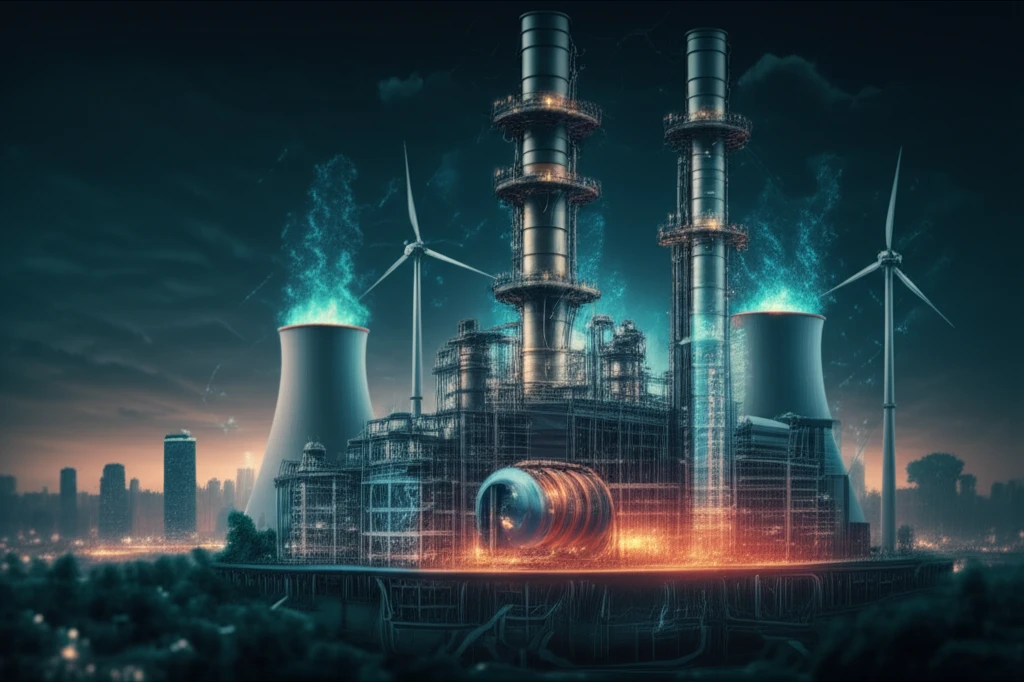
Interconnected turbines in a combined cycle power plant, symbolizing sustainable energy for a vibrant city.

Powering the Future: How Combined Cycle Configurations are Revolutionizing Energy Production

"A Deep Dive into Simple Gas Turbines, Steam Turbines, and Ammonia Water Turbines for a Sustainable Tomorrow"


In an era defined by the urgent need for efficient and sustainable energy solutions, combined cycle power plants are emerging as a frontrunner. These innovative systems, which cleverly integrate gas turbines, steam turbines, and ammonia water turbines, are not just incremental improvements; they represent a paradigm shift in how we generate power.

At the heart of this revolution lies the concept of maximizing energy utilization. Traditional power generation methods often squander significant amounts of heat, releasing it into the environment as waste. Combined cycle systems, however, capture this 'waste' heat and convert it into additional power, significantly boosting overall efficiency and reducing environmental impact.

This article delves into a groundbreaking study that meticulously evaluates different combined cycle configurations, providing critical insights into optimizing performance and promoting sustainability. By exploring the synergistic relationship between simple gas turbines, steam turbines, and ammonia water turbines, we uncover pathways to a cleaner, more efficient energy future. Get ready to discover how these technologies are not just generating electricity, but also paving the way for a more sustainable tomorrow.

Decoding Combined Cycle Configurations: A Symphony of Turbines

Interconnected turbines in a combined cycle power plant, symbolizing sustainable energy for a vibrant city.

The core of combined cycle systems lies in their ability to harness energy from multiple sources and convert it into electricity with remarkable efficiency. The process typically begins with a gas turbine, which burns fuel to generate electricity and produces high-temperature exhaust gas. Instead of venting this gas directly into the atmosphere, as in traditional systems, combined cycle plants channel it to a heat recovery steam generator (HRSG).

Within the HRSG, the hot exhaust gas heats water to produce high-pressure steam, which then drives a steam turbine to generate additional electricity. In some advanced configurations, an ammonia water turbine is also incorporated to further extract energy from the remaining heat. This cascading process, where energy is extracted in stages from different sources, is what gives combined cycle plants their exceptional efficiency.

  • Gas Turbine (GT): Burns fuel to generate initial electricity and exhaust gas.
  • Heat Recovery Steam Generator (HRSG): Captures exhaust heat to produce steam.
  • Steam Turbine (ST): Generates additional electricity from steam produced in the HRSG.
  • Ammonia Water Turbine (AWT): Extracts further energy from residual heat (in advanced configurations).
Researchers have explored numerous ways to optimize these configurations, experimenting with different arrangements and working fluids to maximize energy extraction and minimize waste. The goal is to find the perfect 'recipe' that balances efficiency, cost-effectiveness, and environmental impact. This study dives into the analysis of eight different combined cycle configurations, each with its unique approach to harnessing the power of these three turbine types.

The Path to Sustainable Power: Combined Cycle's Promising Future

The study makes it clear that combined cycle configurations offer a compelling pathway towards a more sustainable energy future. By optimizing the interplay between gas turbines, steam turbines, and innovative technologies like ammonia water turbines, we can unlock unprecedented levels of energy efficiency and significantly reduce our reliance on fossil fuels.

While the research highlights the promise of combined cycle systems, it also underscores the importance of continued innovation and optimization. Further research into advanced materials, innovative designs, and intelligent control systems will be crucial to pushing the boundaries of efficiency and unlocking the full potential of these systems.

As the world transitions towards cleaner energy sources, combined cycle configurations are poised to play a pivotal role. By embracing these technologies and fostering ongoing innovation, we can pave the way for a future where power generation is not only efficient and cost-effective, but also environmentally responsible.

About this Article -

This article was crafted using a human-AI hybrid and collaborative approach. AI assisted our team with initial drafting, research insights, identifying key questions, and image generation. Our human editors guided topic selection, defined the angle, structured the content, ensured factual accuracy and relevance, refined the tone, and conducted thorough editing to deliver helpful, high-quality information.See our About page for more information.

This article is based on research published under:

DOI-LINK: 10.1016/j.energy.2018.12.008, Alternate LINK

Title: Comparative Evaluation Of Different Combined Cycle Configurations Having Simple Gas Turbine, Steam Turbine And Ammonia Water Turbine

Subject: General Energy

Journal: Energy

Publisher: Elsevier BV

Authors: Mayank Maheshwari, Onkar Singh

Published: 2019-02-01

Everything You Need To Know

1

How do combined cycle power plants improve energy efficiency compared to traditional methods?

Combined cycle power plants maximize energy utilization by capturing waste heat and converting it into additional power. Traditional power generation methods often release significant amounts of heat into the environment as waste. Combined cycle systems channel the waste heat to a heat recovery steam generator (HRSG). Within the HRSG, the hot exhaust gas heats water to produce high-pressure steam, which then drives a steam turbine to generate additional electricity, significantly boosting overall efficiency and reducing environmental impact.

2

Can you explain the step-by-step process of how a combined cycle system generates electricity, highlighting the role of each turbine?

A gas turbine burns fuel to generate initial electricity and exhaust gas. The high-temperature exhaust gas is then channeled to a heat recovery steam generator (HRSG). Instead of venting this gas directly into the atmosphere, the HRSG captures exhaust heat to produce steam. This steam drives a steam turbine to generate additional electricity. In some advanced configurations, an ammonia water turbine is also incorporated to further extract energy from the remaining heat.

3

What are the core components of a combined cycle system and how do they work together?

The components of a combined cycle system are: a gas turbine, which burns fuel to generate initial electricity and exhaust gas; a heat recovery steam generator (HRSG), which captures exhaust heat to produce steam; a steam turbine, which generates additional electricity from steam produced in the HRSG; and, in advanced configurations, an ammonia water turbine, which extracts further energy from residual heat. These work in tandem to maximize energy extraction.

4

What is the purpose of incorporating an ammonia water turbine in certain combined cycle configurations?

An ammonia water turbine extracts further energy from residual heat in advanced combined cycle configurations. After the gas turbine produces electricity and its exhaust heats water to create steam for the steam turbine, some heat may still remain. An ammonia water turbine is used to extract any remaining energy from this heat, before it is released. It is used in advanced configurations to maximize efficiency.

5

What implications do combined cycle configurations have for achieving a more sustainable energy future, and what further research could enhance these benefits?

Combined cycle configurations offer a compelling pathway towards a more sustainable energy future by optimizing the interplay between gas turbines, steam turbines, and innovative technologies like ammonia water turbines. This optimization unlocks unprecedented levels of energy efficiency and significantly reduces our reliance on fossil fuels. Further research into the arrangement and working fluids of these systems can continue to improve the balance between efficiency, cost-effectiveness, and environmental impact.

Newsletter Subscribe

Subscribe to get the latest articles and insights directly in your inbox.