
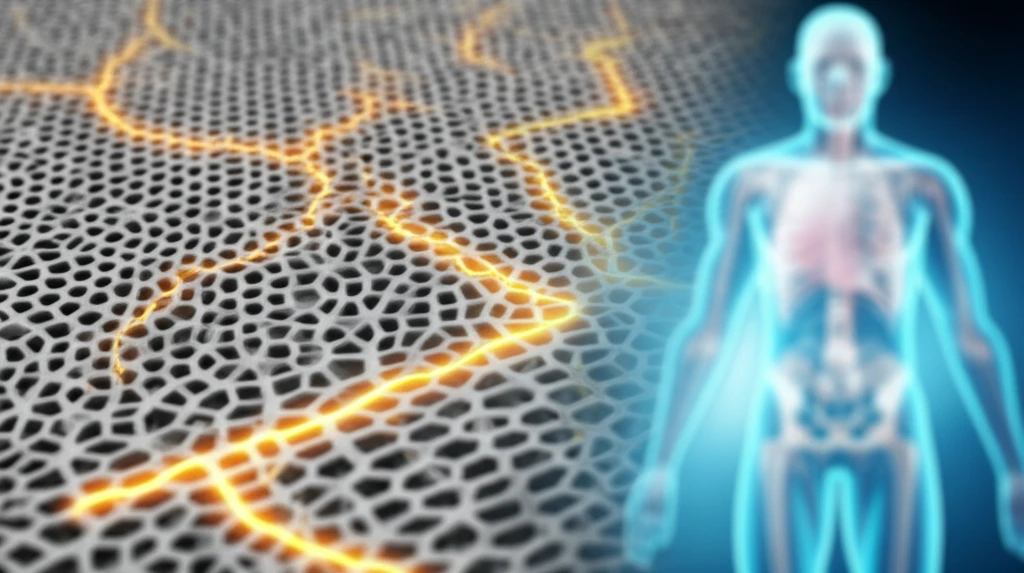
Microscopic view of bone cells integrating with a porous titanium implant.

Porous Metals in Bone Implants: The Key to Better Healing?

"Discover how innovative porous titanium alloys are revolutionizing bone implant technology, offering new hope for patients needing bone repair and arthroplasty."


For individuals facing bone defects or the need for joint replacement, the advancements in orthopedic implants offer a beacon of hope. Traditional materials, while strong, often cause complications due to their stiffness mismatch with natural bone. This is where porous metals, particularly porous titanium alloys, step in to transform the landscape.

A recent study published in the 'Journal of the Mechanical Behavior of Biomedical Materials' investigates the use of porous Ti6Al4V alloys in bone implants. The study meticulously compares two fabrication methods: Selective Laser Melting (SLM) and a novel sintering technique, evaluating their impact on biocompatibility and bone integration. This research opens new avenues for creating implants that not only support bone growth but also minimize common post-operative issues.

Porous metals mimic the structure of natural bone, encouraging better integration and reducing stress shielding—a phenomenon where the implant bears more load than the bone, leading to bone weakening. This article will explore how these innovative materials are designed, tested, and applied, offering a comprehensive overview of the benefits and future directions of porous metals in orthopedic medicine.

Why Porous Metals Are a Game-Changer in Orthopedics

Microscopic view of bone cells integrating with a porous titanium implant.

Traditional metallic implants, while strong, possess an elastic modulus much higher than that of natural bone. This discrepancy leads to stress shielding, where the implant carries a disproportionate amount of the load, causing the surrounding bone to weaken and resorb. Porous metals, on the other hand, can be designed to more closely match the elastic modulus of bone, promoting a more natural distribution of stress and encouraging bone remodeling.

The benefits of porous metals extend beyond mechanical compatibility. Their structure allows for bone tissue ingrowth, which enhances implant stability and longevity. This ingrowth not only secures the implant but also facilitates nutrient exchange and vascularization, essential for healthy bone maintenance. Furthermore, porous surfaces provide a larger area for cell adhesion, fostering better integration of the implant with the host tissue.

Here’s a breakdown of the key advantages:
  • Reduced Stress Shielding: Minimizes bone weakening by closely matching the stiffness of natural bone.
  • Enhanced Bone Ingrowth: Allows bone tissue to grow into the implant, improving stability.
  • Improved Cell Adhesion: Porous surfaces offer more area for cells to attach and thrive.
  • Better Nutrient Exchange: Facilitates the transport of nutrients to bone cells within the implant.
The recent study meticulously compared porous Ti6Al4V alloys created via two methods: Selective Laser Melting (SLM) and a new sintering technique. SLM uses a laser to fuse metal powders layer by layer, creating highly precise and customizable structures. The sintering technique involves heating a powder suspension to create a porous structure. Both methods aim to produce implants with interconnected pores that encourage bone ingrowth, but they differ significantly in their fabrication process and resulting microstructure.

Looking Ahead: The Future of Porous Metal Implants

Porous metal implants represent a significant leap forward in orthopedic technology. Their ability to mimic natural bone structure, reduce stress shielding, and promote bone ingrowth makes them an ideal choice for a wide range of applications, from joint replacements to bone defect repairs. As research continues to refine manufacturing techniques and optimize pore structures, we can expect even greater improvements in implant performance and patient outcomes. The future of orthopedics is undoubtedly porous, offering new hope and improved quality of life for individuals needing bone implants.

About this Article -

This article was crafted using a human-AI hybrid and collaborative approach. AI assisted our team with initial drafting, research insights, identifying key questions, and image generation. Our human editors guided topic selection, defined the angle, structured the content, ensured factual accuracy and relevance, refined the tone, and conducted thorough editing to deliver helpful, high-quality information.See our About page for more information.

Everything You Need To Know

1

What are the primary benefits of using porous metals in bone implants compared to traditional implants?

Porous metals offer several key advantages over traditional metallic implants. Firstly, they mitigate stress shielding, a common issue with conventional implants that have a higher elastic modulus than natural bone. This mismatch causes the implant to bear most of the load, leading to bone weakening. Porous metals, on the other hand, are designed to better match the elastic modulus of bone, promoting a more natural stress distribution. Secondly, their porous structure allows for bone tissue ingrowth, enhancing implant stability and longevity. This ingrowth also facilitates nutrient exchange and vascularization, crucial for healthy bone maintenance. Lastly, porous surfaces provide a larger area for cell adhesion, leading to better integration of the implant with the host tissue. All of these aspects contribute to improved biocompatibility and better patient outcomes.

2

How does the structure of porous Ti6Al4V alloys contribute to improved bone integration in implants?

The porous structure of Ti6Al4V alloys is designed to mimic the structure of natural bone. This is a critical factor in improving bone integration. The interconnected pores within the alloy allow bone tissue to grow into the implant, a process known as bone ingrowth. This not only secures the implant firmly within the bone but also facilitates the exchange of nutrients and promotes vascularization, which are essential for healthy bone maintenance. The porous surfaces also provide a larger surface area for cells to adhere to, further enhancing the integration of the implant with the host tissue. These features collectively lead to better biocompatibility and improved implant performance.

3

What are the main differences between Selective Laser Melting (SLM) and the sintering technique in creating porous Ti6Al4V alloys for bone implants?

Both Selective Laser Melting (SLM) and the sintering technique are used to fabricate porous Ti6Al4V alloys, but they employ different methods. SLM uses a laser to fuse metal powders layer by layer, creating highly precise and customizable structures. This method allows for intricate designs and precise control over the pore size and distribution. The sintering technique, on the other hand, involves heating a powder suspension to create a porous structure. While both methods aim to create interconnected pores for bone ingrowth, they differ in their fabrication process and resulting microstructure. These differences can impact the mechanical properties, biocompatibility, and overall performance of the implant. A recent study compared these two methods to evaluate their impact on bone integration.

4

Why is reducing stress shielding important when choosing a bone implant material?

Reducing stress shielding is crucial because it directly impacts the health and longevity of the surrounding bone. Traditional metallic implants often have a much higher elastic modulus compared to natural bone. This difference in stiffness causes the implant to bear a disproportionate amount of the load, effectively shielding the bone from normal stress. This lack of stress can lead to bone weakening and resorption, ultimately compromising the implant's long-term stability and potentially requiring revision surgery. Porous metals, such as porous Ti6Al4V alloys, are designed to have an elastic modulus that is closer to that of natural bone, allowing for a more natural distribution of stress and encouraging bone remodeling. This helps to maintain bone health and improve the implant's long-term success.

5

What is the future outlook for porous metal implants in orthopedic medicine, and what advancements can we expect?

The future of porous metal implants in orthopedic medicine is promising, with significant advancements expected. As research continues to refine manufacturing techniques and optimize pore structures, we can anticipate even greater improvements in implant performance and patient outcomes. Ongoing studies are focusing on enhancing the biocompatibility, mechanical properties, and the ability of implants like porous Ti6Al4V alloys to promote bone ingrowth and integration. Furthermore, advancements in areas like personalized medicine and 3D printing could lead to the creation of custom-designed porous metal implants tailored to individual patient needs, offering new hope and improved quality of life for individuals needing bone implants.

Newsletter Subscribe

Subscribe to get the latest articles and insights directly in your inbox.