
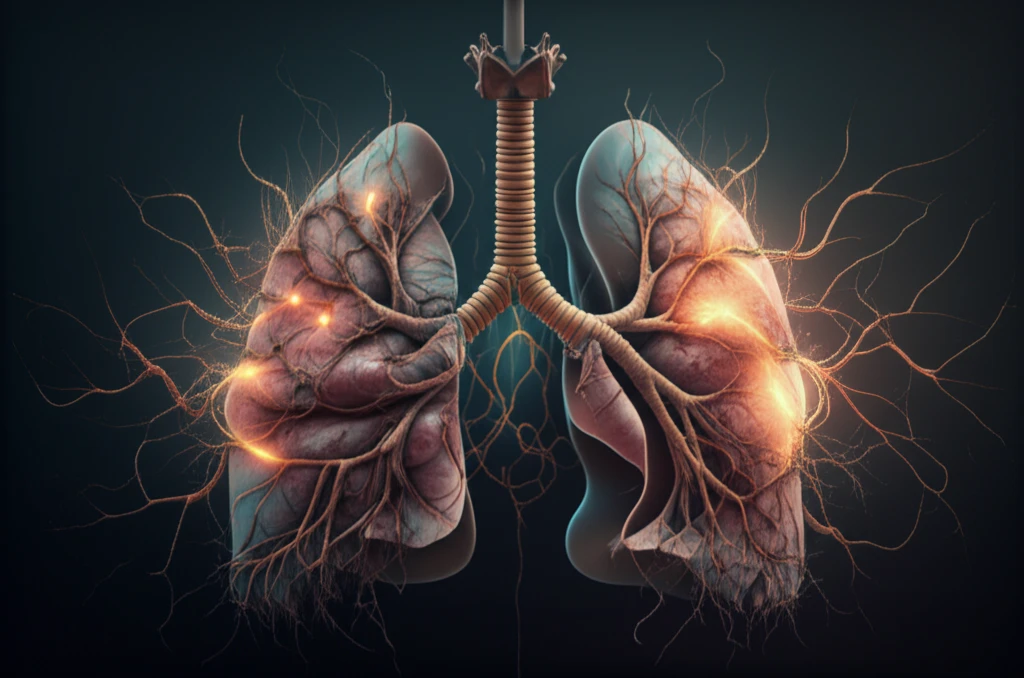
Illustration of lungs with glowing fibers representing healing from pulmonary fibrosis

Pirfenidone: Is it Really a Game Changer for Pulmonary Fibrosis?

"Unpacking the Effectiveness and Tolerability of Pirfenidone in Treating Idiopathic Pulmonary Fibrosis"


Idiopathic pulmonary fibrosis (IPF) is a chronic lung disease that progressively scars the lungs, making it difficult to breathe. While there's no cure, pirfenidone is a medication used to slow down the progression of the disease. But how effective is it in the real world, and what side effects should patients and caregivers be aware of?

Two studies presented at a pharmacy conference shed light on these important questions. One study examines the effectiveness and safety of pirfenidone in patients with mild to moderate IPF, while the other investigates the adverse events associated with the drug and the reasons why some patients discontinue treatment.

This article synthesizes the findings of these studies to provide a clear and accessible overview of pirfenidone's role in managing IPF, offering practical insights for patients, families, and healthcare providers.

Pirfenidone's Impact on Lung Function: What the Studies Reveal

Illustration of lungs with glowing fibers representing healing from pulmonary fibrosis

One study retrospectively looked at the effects of pirfenidone on lung function in eight patients with mild to moderate IPF. The researchers primarily focused on changes in forced vital capacity (FVC), a measure of how much air a person can exhale forcefully after a deep breath. FVC is a key indicator of lung function in IPF patients.

The study found that:

  • Five patients experienced an increase in FVC, indicating improved lung function.
  • Three patients showed a decrease in FVC, suggesting the disease was still progressing despite treatment.
  • Other lung function variables, like forced expiratory volume (FEV1) and diffusion capacity for carbon monoxide (DLCO), were not consistently recorded for all patients, limiting the ability to draw broader conclusions.
  • Two patients with available data showed some improvement in their ability to walk for six minutes (6MWT), alongside a decline in DLCO.
These mixed results highlight the variability in how patients respond to pirfenidone. While some individuals experience improvements in lung function, others may not see the same benefits. The study also underscores the importance of comprehensive lung function testing to monitor treatment response.

Balancing Benefits and Tolerability: Making Informed Decisions About Pirfenidone

Pirfenidone can be a valuable tool in managing IPF, but it's not without its challenges. The studies discussed here emphasize the importance of individualized treatment approaches and careful monitoring for side effects. Patients should openly communicate with their healthcare providers about any concerns or adverse events they experience.

While the research indicates that women may experience less tolerance to pirfenidone and need lower doses, further studies with larger sample sizes are needed to confirm this finding. Dosage adjustments and proactive management of side effects can help improve treatment adherence and overall outcomes.

Ultimately, the decision to use pirfenidone should be made in consultation with a pulmonologist or other healthcare professional experienced in treating IPF. By weighing the potential benefits and risks, and by actively participating in their care, patients can make informed choices that best support their quality of life.

About this Article -

This article was crafted using a human-AI hybrid and collaborative approach. AI assisted our team with initial drafting, research insights, identifying key questions, and image generation. Our human editors guided topic selection, defined the angle, structured the content, ensured factual accuracy and relevance, refined the tone, and conducted thorough editing to deliver helpful, high-quality information.See our About page for more information.

Everything You Need To Know

1

What is Pirfenidone, and what is its purpose?

Pirfenidone is a medication used to treat Idiopathic Pulmonary Fibrosis (IPF), a chronic lung disease. It works by slowing the progression of lung scarring. This is significant because IPF leads to progressive scarring which makes it difficult to breathe. Although pirfenidone doesn't cure IPF, it helps to manage the disease, potentially improving the quality of life and extending the lifespan of individuals diagnosed with the disease.

2

How does pirfenidone impact lung function in patients with Idiopathic Pulmonary Fibrosis?

The studies presented looked at how pirfenidone affects lung function, specifically using Forced Vital Capacity (FVC) as a key measure. FVC measures the amount of air a person can exhale forcefully after a deep breath. In these studies, some patients showed an increase in FVC, indicating improved lung function. Others had a decrease, showing the disease still progressed. The results show the variability of response to pirfenidone and the need for comprehensive lung function tests to understand how the drug works for each patient.

3

Why is it important to consider the side effects and tolerability of Pirfenidone?

Adverse events and tolerability are crucial aspects of pirfenidone treatment. Some common side effects may occur and it is important for patients to discuss all concerns with their healthcare providers. Careful monitoring allows for the early detection of problems and for making decisions about treatment adjustments. This ensures that patients receive the best possible care while minimizing the negative effects of the medication. Some patients may discontinue treatment due to adverse events.

4

What other factors were considered in the studies to assess the impact of Pirfenidone?

The study also looked at other lung function variables like Forced Expiratory Volume (FEV1) and Diffusion Capacity for Carbon Monoxide (DLCO), but the data was not consistently recorded for all patients. Two patients, with available data, showed some improvement in their ability to walk for six minutes (6MWT), alongside a decline in DLCO. This highlights the challenges and need for thorough assessments, going beyond just FVC. The mixed results suggest that a complete picture requires multiple tests to accurately assess how pirfenidone impacts lung function and overall patient health.

5

Why is communication with healthcare providers important when taking Pirfenidone?

Open communication between patients and healthcare providers is essential when taking pirfenidone. Discussing any side effects or concerns is important for managing treatment effectively. It allows healthcare providers to make necessary adjustments, ensuring patients receive the maximum benefits of pirfenidone while minimizing any potential harms. This collaborative approach is vital for successful IPF management.

Newsletter Subscribe

Subscribe to get the latest articles and insights directly in your inbox.