
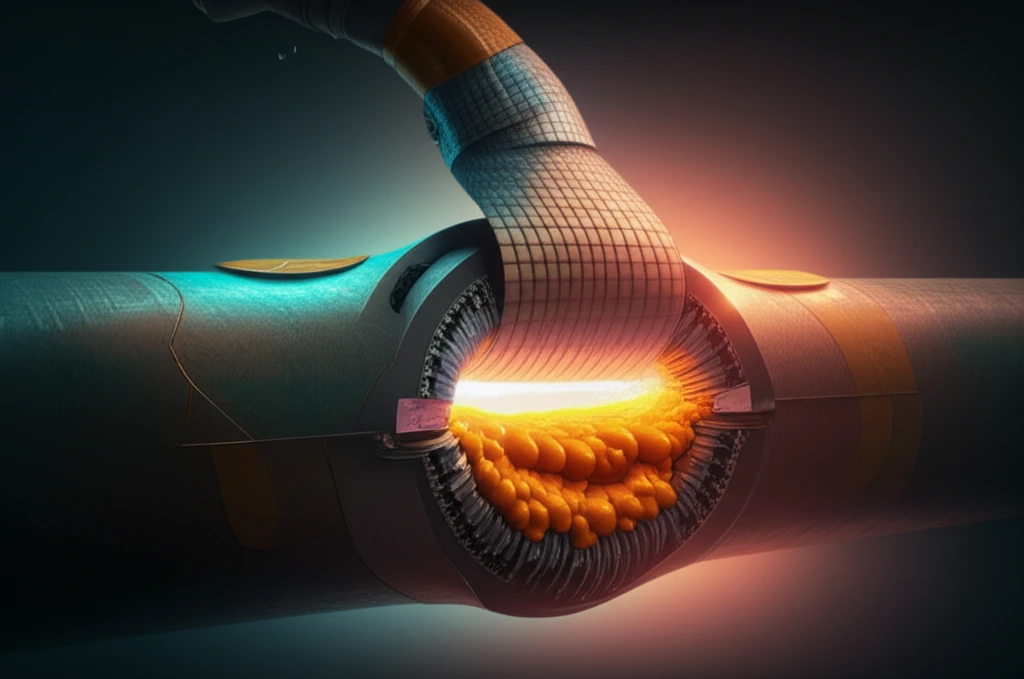
Illustration of a pipeline repair process with epoxy grout and a composite wrap, highlighting the technology's strength and innovation.

Pipeline Problems? How Epoxy Grouts Are Revolutionizing Repairs

"From cracks to corrosion, learn how a clever blend of materials is saving the day for our vital oil and gas pipelines."


Across the globe, pipelines silently transport the lifeblood of our modern world: oil and gas. These intricate networks, stretching for thousands of miles, are essential for powering industries and homes alike. But like any infrastructure, pipelines face a relentless enemy: time. Corrosion, material defects, and external damage constantly threaten their integrity, leading to leaks, downtime, and environmental concerns.

For years, the industry has sought innovative ways to combat these issues. Traditional methods, while effective, can be costly and disruptive. The advent of composite repair systems, particularly those employing epoxy grouts, has emerged as a game-changer. These systems offer a robust, efficient, and increasingly sustainable solution for extending the life of aging pipelines.

This article delves into the science and application of epoxy grouts, focusing on their vital role in composite repair. We'll explore their composition, the mechanical properties that make them ideal for the job, and the ways they're revolutionizing pipeline maintenance. From understanding the core concepts to appreciating real-world applications, this exploration offers insights into an unsung hero of modern infrastructure.

What are Epoxy Grouts, and Why Do They Matter?

Illustration of a pipeline repair process with epoxy grout and a composite wrap, highlighting the technology's strength and innovation.

Epoxy grouts are specialized materials primarily used to fill gaps, reinforce structures, and create a seamless bond between different components. In pipeline repair, this translates to a critical role: providing a solid foundation for composite wraps. These wraps, often made of fiber-reinforced polymers (FRPs), act as a protective layer, restoring the structural integrity of damaged pipes.

The magic of epoxy grouts lies in their composition. They typically consist of:

  • Epoxy Resin: The backbone of the material, providing strength and adhesion.
  • Hardener: A catalyst that causes the resin to cure and solidify.
  • Fillers: Such as silica or ceramic particles, which enhance the grout's mechanical properties and help it withstand pressure and stress.
By understanding the properties of epoxy grouts, engineers can predict the long-term performance of a pipeline repair, make informed decisions about which materials to use, and reduce the need for expensive maintenance and emergency repairs.

The Future of Pipelines: Stronger, Safer, and More Sustainable

As the world demands more from its infrastructure, epoxy grouts and composite repair systems will continue to play an essential role. They provide a path toward more sustainable, efficient, and reliable pipeline networks. By embracing this innovation, the industry can safeguard the vital systems that power our modern world for generations to come.

About this Article -

This article was crafted using a human-AI hybrid and collaborative approach. AI assisted our team with initial drafting, research insights, identifying key questions, and image generation. Our human editors guided topic selection, defined the angle, structured the content, ensured factual accuracy and relevance, refined the tone, and conducted thorough editing to deliver helpful, high-quality information.See our About page for more information.

This article is based on research published under:

DOI-LINK: 10.1115/1.4041792, Alternate LINK

Title: Mechanical Properties Characterization And Finite Element Analysis Of Epoxy Grouts In Repairing Damaged Pipeline

Subject: Mechanical Engineering

Journal: Journal of Pressure Vessel Technology

Publisher: ASME International

Authors: Lim Kar Sing, Nordin Yahaya, Alireza Valipour, Libriati Zardasti, Siti Nur Afifah Azraai, Norhazilan Md Noor

Published: 2018-11-12

Everything You Need To Know

1

What are epoxy grouts, and what makes them suitable for pipeline repair?

Epoxy grouts are specialized materials used to fill gaps and reinforce structures, creating a strong bond between components. In pipeline repair, they provide a solid foundation for composite wraps, usually made of fiber-reinforced polymers (FRPs). Their composition typically includes epoxy resin for strength and adhesion, a hardener to solidify the resin, and fillers like silica or ceramic particles to enhance mechanical properties and withstand pressure. These properties make them ideal for restoring the structural integrity of damaged pipes.

2

What are the primary components of epoxy grouts, and how does each contribute to the grout's overall performance in pipeline repair?

Epoxy grouts consist of three primary components: epoxy resin, hardener, and fillers. The epoxy resin serves as the backbone, providing strength and adhesion to the materials being bonded. The hardener acts as a catalyst, causing the resin to cure and solidify, creating a durable and robust structure. Fillers, such as silica or ceramic particles, enhance the grout's mechanical properties, improving its ability to withstand pressure and stress. This combination ensures the epoxy grout provides a strong, long-lasting repair solution for pipelines.

3

How do composite repair systems, utilizing epoxy grouts and fiber-reinforced polymers (FRPs), improve the longevity and sustainability of oil and gas pipelines?

Composite repair systems, which combine epoxy grouts with fiber-reinforced polymers (FRPs), enhance the longevity and sustainability of oil and gas pipelines by providing a robust, efficient, and sustainable solution for aging infrastructure. The epoxy grout creates a seamless bond and reinforces the damaged area, while the FRP wrap acts as a protective layer, restoring structural integrity. This reduces the need for frequent and costly maintenance or complete pipeline replacement, contributing to more sustainable and reliable pipeline networks.

4

What are some of the advantages of using epoxy grouts in pipeline repair compared to traditional methods?

Epoxy grouts offer several advantages over traditional pipeline repair methods. They provide a robust and efficient solution, reducing downtime and environmental concerns. Composite repair systems employing epoxy grouts and fiber-reinforced polymers (FRPs) are less disruptive and can be applied more quickly than traditional methods. This approach is also more sustainable, extending the life of aging pipelines and reducing the need for frequent replacements. The result is a more cost-effective and environmentally friendly solution for pipeline maintenance.

5

What implications do epoxy grouts and composite repair systems have for the future of pipeline infrastructure, considering increasing demands and environmental concerns?

As the world demands more from its infrastructure while also prioritizing environmental protection, epoxy grouts and composite repair systems will play an increasingly critical role in ensuring pipeline integrity. The ability of epoxy grouts to reinforce and extend the life of existing pipelines offers a sustainable alternative to costly and disruptive replacements. Embracing this innovation allows the industry to safeguard vital systems, ensuring safer, more efficient, and more reliable pipeline networks for future generations.

Newsletter Subscribe

Subscribe to get the latest articles and insights directly in your inbox.