
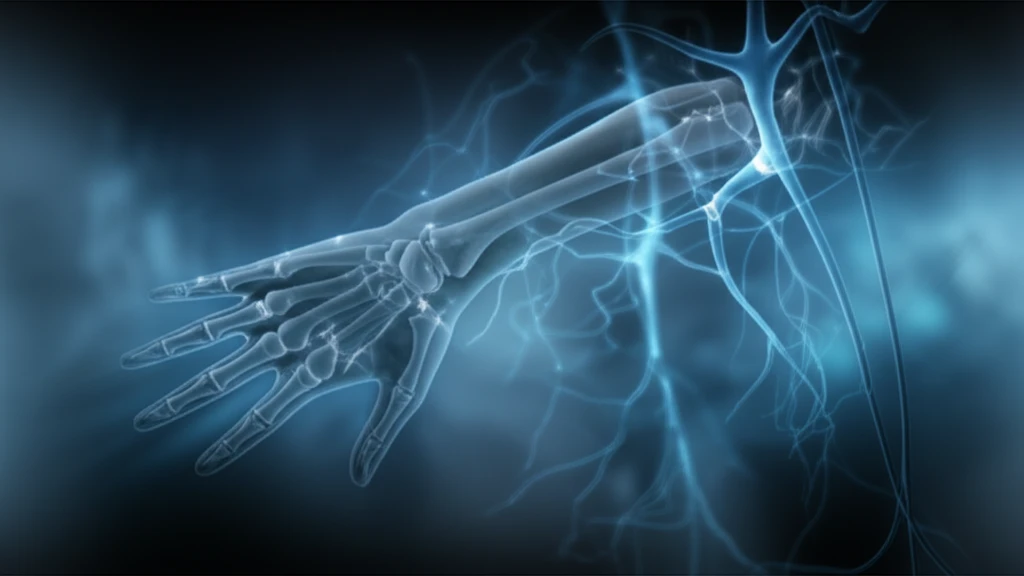
A surreal illustration of a phantom limb extending from an amputated stump, symbolizing the neural connections in the brain.

Phantom Limb Sensations: Why They Happen and How to Find Relief

"Exploring the neuroscience behind phantom limb pain and innovative treatment options."


The persistence of phantom limb sensations has been a medical curiosity since the 16th century. Even after amputation, many individuals continue to experience a vivid sense of presence in the missing limb. This phenomenon isn't just a fleeting memory; it often includes the ability to feel movements, sometimes even painful ones, in the absent limb.

For years, these phantom movements were often dismissed as mere imagination or confused with motor imagery. However, recent research reveals a more complex picture. Studies have shown that individuals with amputations can distinguish between imagining a movement and actually 'executing' it with their phantom limb, engaging different brain areas and exhibiting distinct performance patterns.

This distinction has significant implications for understanding how the brain perceives movement and offers promising avenues for therapeutic interventions. By exploring the nature of motor perceptions in phantom limbs, scientists are uncovering the mechanisms behind our awareness of movement and developing innovative strategies to alleviate phantom limb pain and improve rehabilitation.

Phantom Limb Movements: Imagination or Reality?

A surreal illustration of a phantom limb extending from an amputated stump, symbolizing the neural connections in the brain.

The question of whether phantom limb movements are truly 'executed' or simply imagined has intrigued researchers for decades. The absence of visual feedback makes it challenging to differentiate between a willed action and a mental representation. However, objective techniques such as electromyography (EMG) and neuroimaging are providing valuable insights into the underlying processes.

Studies using EMG have demonstrated that individuals with amputations can generate significant muscle activity in the stump during attempted phantom limb movements. This suggests that the brain is indeed sending motor commands to the missing limb, even in the absence of physical movement. Furthermore, neuroimaging studies have revealed distinct patterns of brain activity associated with phantom limb execution versus motor imagery.

  • Behavioral Differences: Amputees show different performance patterns when asked to imagine versus execute movements with their phantom limb.
  • EMG Activity: Significant EMG activity is recorded in the stump muscles during attempted execution, indicating motor command generation.
  • Brain Activity: Neuroimaging reveals distinct brain networks activated during phantom limb execution and motor imagery.
One study compared the performance of 19 upper-limb amputees and 18 control subjects in motor imagery and execution tasks. The results confirmed that amputees could differentiate between executed and imagined movements with their phantom limb. Notably, the speed of executed movements was significantly reduced in the phantom limb compared to motor imagery, suggesting that the absence of a physical limb specifically affects motor execution, not the ability to imagine.

Phantom Limb Research: A Promising Future

Research into phantom limb sensations and movements provides a unique window into the brain's mechanisms of motor control and perception. By understanding how the brain adapts to limb loss and generates the experience of a phantom limb, scientists can develop more effective therapies for phantom limb pain, improve prosthetic design, and enhance rehabilitation outcomes. The journey to unlock the mysteries of the phantom limb is ongoing, but the potential benefits for amputees and our understanding of the brain are immense.

About this Article -

This article was crafted using a human-AI hybrid and collaborative approach. AI assisted our team with initial drafting, research insights, identifying key questions, and image generation. Our human editors guided topic selection, defined the angle, structured the content, ensured factual accuracy and relevance, refined the tone, and conducted thorough editing to deliver helpful, high-quality information.See our About page for more information.

Everything You Need To Know

1

What exactly is phantom limb pain, and why is it important to understand?

Phantom limb pain is the experience of pain in a limb that has been amputated. It's significant because it affects many amputees and can severely impact their quality of life. Understanding the underlying neuroscience is key to developing effective treatment strategies. While the focus is on pain, phantom limb sensations can also include non-painful feelings, like the sensation of movement or pressure.

2

What are phantom limb movements, and what makes them significant in understanding the brain?

Phantom limb movements refer to the sensation and attempted execution of movements in the missing limb. This is important because research suggests that the brain is still sending motor commands to the missing limb, even without physical presence. Electromyography (EMG) and neuroimaging studies are used to objectively measure muscle activity and brain activity during these movements, providing insights into the brain's motor control mechanisms.

3

What is electromyography (EMG), and how does it help us understand phantom limb movements?

Electromyography (EMG) is a technique used to measure muscle activity. In the context of phantom limbs, EMG helps detect muscle activity in the stump during attempted phantom limb movements. Significant EMG activity suggests that the brain is indeed sending motor commands to the missing limb. This reinforces the idea that phantom limb movements are not just imagined but involve actual motor command generation.

4

How do neuroimaging studies contribute to our understanding of phantom limb sensations?

Neuroimaging studies reveal distinct patterns of brain activity associated with phantom limb execution versus motor imagery. This is significant because it demonstrates that different brain networks are activated depending on whether an amputee is imagining a movement or attempting to 'execute' it with their phantom limb. This differentiation helps scientists understand the neural mechanisms underlying motor control and perception.

5

Why is research on phantom limbs considered promising for the future, and what benefits can it bring?

Research into phantom limb sensations and movements offers a unique opportunity to understand the brain's mechanisms of motor control and perception. By studying how the brain adapts to limb loss and generates the experience of a phantom limb, scientists can develop more effective therapies for phantom limb pain, improve prosthetic design, and enhance rehabilitation outcomes. The ability to differentiate between motor imagery and phantom limb execution is crucial for these advancements.

Newsletter Subscribe

Subscribe to get the latest articles and insights directly in your inbox.