
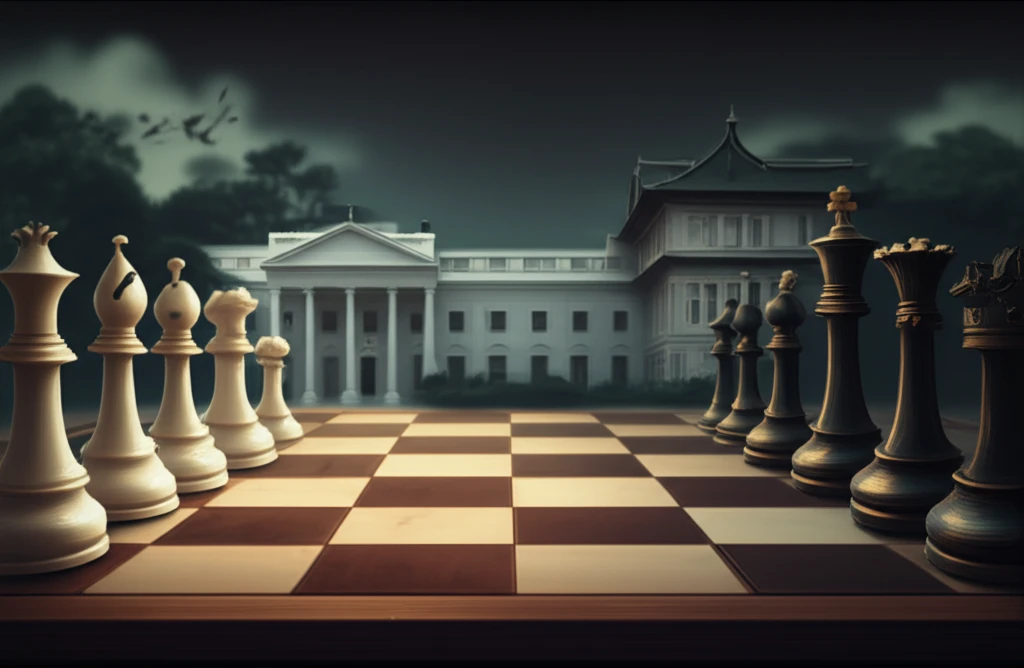
Chess game metaphor for Pearl Harbor diplomacy.

Pearl Harbor: Was FDR a Master Manipulator or a Leader Backed Into a Corner?

"Explore the complex questions surrounding Franklin D. Roosevelt's role in the lead-up to World War II and the attack on Pearl Harbor."


The attack on Pearl Harbor on December 7, 1941, remains a pivotal moment in American history, catapulting the United States into World War II. While the surprise attack unified the nation, it also ignited a persistent debate: Did President Franklin D. Roosevelt (FDR) knowingly provoke Japan into attacking, or was he navigating an impossible situation with the limited options available?

This question delves into the complex geopolitical landscape of the time. Germany's dominance in Europe and Japan's expansionist ambitions in Asia created a world on the brink. FDR faced immense pressure to support allies while grappling with strong isolationist sentiments at home. The economic and strategic implications of these decisions continue to be examined by historians and political analysts.

Understanding the nuances of this debate requires a careful examination of the events leading up to Pearl Harbor. From economic sanctions against Japan to diplomatic negotiations and military strategies, each action carries layers of interpretation. This article explores the arguments, evidence, and perspectives surrounding FDR's role, offering a comprehensive look at one of history's most debated questions.

The Provocation Theory: Did FDR Intentionally Push Japan to War?

Chess game metaphor for Pearl Harbor diplomacy.

One of the central arguments revolves around the idea that FDR deliberately provoked Japan. Proponents of this theory point to several key actions taken by the U.S. government in the months leading up to the attack. These actions, they argue, put Japan in an untenable position, effectively forcing their hand.

Key actions often cited as provocations include:

  • Economic Sanctions: In July 1941, the U.S. froze Japanese assets and embargoed oil exports to Japan. This had a crippling effect on the Japanese economy, which heavily relied on American oil.
  • Military Positioning: The U.S. increased its military presence in the Pacific, including bolstering forces in the Philippines. Some view this as a strategic move to contain Japan, while others see it as an aggressive posture.
  • The 'Ten-Point Note': Presented to Japan in November 1941, this note demanded Japan withdraw its troops from China and Indochina and repudiate the Tripartite Pact. Critics argue these demands were intentionally designed to be unacceptable.
The intent behind these actions is fiercely debated. Were they legitimate measures to curb Japanese aggression, or were they designed to corner Japan into initiating a conflict? Understanding the context of each decision is crucial to unraveling this historical puzzle.

The Legacy of Pearl Harbor: A Question of Leadership and Intent

The attack on Pearl Harbor remains a topic of intense scrutiny and debate. Whether FDR deliberately provoked Japan or was acting out of necessity in a rapidly deteriorating global environment is a question that lacks a simple answer. Understanding the complexities of the situation requires considering the geopolitical pressures, domestic constraints, and the range of perspectives that shaped FDR's decisions. Ultimately, examining this historical turning point offers valuable insights into leadership, strategy, and the enduring challenges of navigating international crises.

About this Article -

This article was crafted using a human-AI hybrid and collaborative approach. AI assisted our team with initial drafting, research insights, identifying key questions, and image generation. Our human editors guided topic selection, defined the angle, structured the content, ensured factual accuracy and relevance, refined the tone, and conducted thorough editing to deliver helpful, high-quality information.See our About page for more information.

Everything You Need To Know

1

What were the main actions taken by the United States that are often cited as potential provocations against Japan before the Pearl Harbor attack?

Several key actions are frequently cited as potential provocations. These include economic sanctions like freezing Japanese assets and embargoing oil exports, which severely impacted the Japanese economy. Furthermore, the U.S. increased its military presence in the Pacific, particularly in the Philippines, seen by some as a strategic containment move and others as an aggressive posturing. The 'Ten-Point Note,' presented to Japan, demanded the withdrawal of troops from China and Indochina and the repudiation of the Tripartite Pact, which many believe were intentionally designed to be unacceptable.

2

Why is the debate surrounding Franklin D. Roosevelt's actions leading up to Pearl Harbor still relevant today?

The debate's relevance lies in understanding leadership during international crises. Analyzing whether Franklin D. Roosevelt deliberately provoked Japan or responded to global pressures provides insights into strategic decision-making under pressure. The situation involved geopolitical pressures from Germany's dominance and Japan's expansionist ambitions, alongside domestic isolationist sentiments in the U.S. This case study offers valuable lessons about navigating complex international relations and the enduring challenges of leadership in times of crisis, applicable to modern scenarios.

3

What was the impact of the economic sanctions imposed by the United States on Japan prior to the attack on Pearl Harbor?

The economic sanctions, including the freezing of Japanese assets and the embargo on oil exports, had a crippling effect on the Japanese economy. Japan was heavily reliant on American oil, so these sanctions severely restricted its ability to maintain its military operations and economic activities. This critical situation is a central point in the argument that Franklin D. Roosevelt's policies put Japan in an untenable position, potentially forcing its hand in the lead-up to the attack.

4

What is the 'Provocation Theory' regarding Franklin D. Roosevelt's role in the Pearl Harbor attack, and what arguments support it?

The 'Provocation Theory' suggests Franklin D. Roosevelt intentionally provoked Japan to initiate conflict. Proponents cite several actions as evidence, including the economic sanctions, the increased military presence in the Pacific, and the 'Ten-Point Note.' They argue these measures were designed to corner Japan, leaving it with limited options and effectively forcing it to take aggressive action. This perspective requires careful consideration of the geopolitical climate of the time, the domestic pressures, and the strategic calculations that shaped FDR's decisions.

5

How did the geopolitical landscape in the years leading up to World War II, particularly the actions of Germany and Japan, influence the decisions made by Franklin D. Roosevelt?

The geopolitical environment was critical. Germany's dominance in Europe and Japan's aggressive expansion in Asia created a world on the brink. This environment placed immense pressure on Franklin D. Roosevelt. He had to balance supporting allies against the strong isolationist sentiment at home, adding layers of complexity to his decisions. FDR's actions were shaped by the need to address these global challenges while navigating the limitations imposed by domestic politics and public opinion. The need to respond to both Germany's and Japan's ambitions played a key role in the context surrounding the attack on Pearl Harbor.

Newsletter Subscribe

Subscribe to get the latest articles and insights directly in your inbox.