
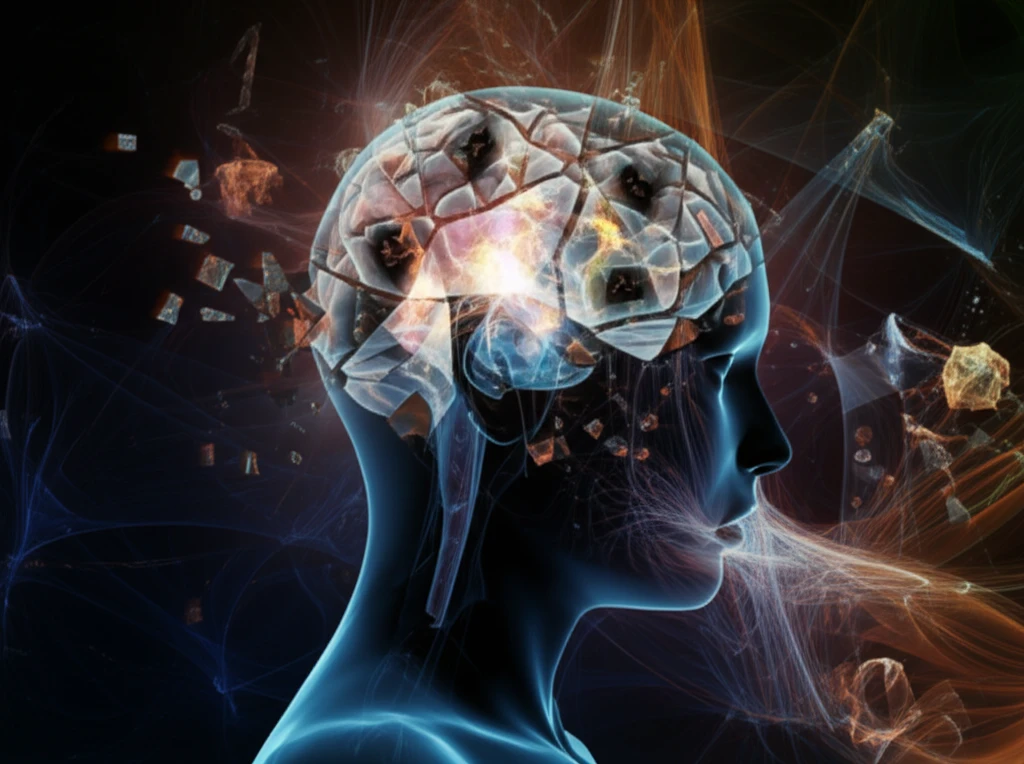
Panic Disorder and Your Memory: Unlocking the Anxious Mind

"Can anxiety sabotage your ability to focus? New research reveals the hidden ways panic disorder impacts working memory and what it means for daily life."
Panic disorder (PD) is more than just feeling anxious; it's a condition marked by recurring, unexpected panic attacks that can significantly disrupt daily life. These attacks, characterized by intense anxiety, can lead to professional and social difficulties, making it crucial to understand how PD affects cognitive functions.
One critical area of cognitive function impacted by PD is working memory—the ability to hold and manipulate information in the mind. Researchers have long investigated the link between anxiety and memory, seeking to understand how high levels of anxiety can interfere with the brain's ability to process information effectively. This article delves into recent findings that shed light on this complex relationship.
Recent studies employing advanced techniques like quantitative electroencephalography (qEEG) and computer simulations are providing new insights into how anxiety associated with panic disorder can disrupt working memory. These studies aim to map the specific brainwave patterns and communication breakdowns that occur when individuals with PD experience heightened anxiety, offering potential pathways for more effective treatments.
How Common is Panic Disorder?
Panic attacks and panic disorder affect many people worldwide, though precise current statistics are hard to pin down and vary depending on how surveys are designed and which definitions are applied. Reported rates differ across countries and regions, as do the degrees of distress and disability people experience. What is reasonably clear is that untreated symptoms can disrupt work, social life, and overall quality of life, making panic a meaningful public-health concern.
Standard Treatments and Where They Fall Short
The standard approach to panic disorder typically combines psychological treatment, such as cognitive behavioral therapy, with education about the symptoms and, in many cases, prescribed medication. These established methods are widely used and generally considered helpful, but they have acknowledged limitations. Not everyone responds fully to the common treatments, and relapse or residual symptoms can occur. Because individual experiences differ, treatment is often tailored and adjusted over time, so results should be interpreted cautiously rather than treated as guaranteed outcomes.
From 'Psychoneurotic Disorder' to a Recognized Diagnosis
Panic disorder did not appear in the first Diagnostic and Statistical Manual, Version 1 (DSM-I), published by the American Psychiatric Association in 1952, which instead described panic-like symptoms under the label 'psychoneurotic disorder.' The disorder received its own diagnostic category only in the 1980 publication of the DSM-III, after decades of disparate attempts to understand it with little agreement on specifics. The validity of panic disorder and panic attacks as genuine psychological phenomena is supported by their positive associations with a family history of panic disorder, an elevated risk of suicide, lifetime treatment for psychiatric disorders, and substantial work and social impairment.
The Anxious Brain: How Panic Disrupts Working Memory
A study published in the Journal of Psychiatric Research investigated the impact of anxiety on working memory in individuals with panic disorder. The researchers used qEEG to measure brainwave activity and coherence—the communication between different brain regions—in patients with PD and healthy controls during a visual task designed to engage working memory. The study also incorporated a computer simulation (CS) to induce anxiety, allowing them to observe how heightened anxiety levels affected brain function in real-time.
- Gamma Coherence: Measures the communication between different brain regions.
- Frontoparietal Networks: Brain regions crucial for working memory.
- Computer Simulation (CS): Used to induce anxiety in a controlled setting.
Working Memory at the Center of Recent Panic Research
A working-memory angle has become a central thread in recent panic and anxiety research. A systematic review and meta-analysis published in November 2025 found that cognitive rehabilitation is an effective intervention for reducing symptom severity and improving working memory in patients with anxiety. Separately, a November 2024 systematic review re-examined the cognitive theory of panic disorder, assessing the predictions at the heart of this widespread approach to help inform clinical implications. Researchers also note that anxiety spectrum disorders are characterized by excessive and uncontrollable worrying about potential negative events, with various reports linking them to working memory deficits.
Impairments, Open Questions, and Conflicting Results
Not all findings point to a single, clean memory profile in panic disorder. Studies report that panic disorder (PD) patients present impairments of working memory, decision-making, and executive function, yet it remains unclear whether the first-degree relatives (FDRs) of people with PD show abnormal clinical and neuropsychological characteristics compared with the general population. Research on working memory in anxiety spectrum disorders has also yielded conflicting results stemming from different study approaches. In addition, a 2021 study in Psychiatry Investigation found that anxiety, depression, and sociodemographic factors such as age, gender, education level, income, and marital status among people with PD are associated with functional impairment in the areas of work, social, and family.
How Panic Disorder's Working Memory Compares to Other Conditions
A causal-comparative study comparing working memory across diagnostic groups found meaningful differences among the conditions. Analyzing 200 patients referred to the psychiatric clinics of Qom city in 1401-1400, the researchers reported that the working memory of individuals with obsessive-compulsive disorder was higher than that of people with major depressive disorder and panic disorder, but lower than that of healthy individuals (P<0.01). The authors concluded that working memory differs across patients with obsessive-compulsive disorder, major depression, panic disorder, and healthy individuals.
Understanding and Addressing the Impact on Memory
This research underscores the importance of recognizing the cognitive effects of panic disorder. While the physical symptoms of a panic attack are often the primary focus, the impact on memory, attention, and cognitive function can significantly affect an individual's ability to perform daily tasks and maintain overall well-being.
Pulling Together the Memory-Panic Connection
Across the research reviewed here, a consistent theme emerges: panic disorder is closely tied to how the mind processes threatening information, and that link shows up in memory-related findings. Researchers have observed working memory and episodic memory differences in people with panic disorder, though results are not always consistent. The strongest conclusion is that panic is a real and disabling condition rather than a matter of imagination or weakness, and that memory processes are a promising area of study. Because the evidence is still developing, expert synthesis should be treated as informed interpretation rather than settled fact.
Where the Next Wave of Research Is Heading
Future research on panic disorder and memory is likely to focus on sharper, more precise measures of different memory systems and how they change with treatment. Digital and mobile technologies may eventually allow real-time tracking of panic episodes and the cognitive lapses that accompany them. New lines of study may also probe whether working memory training or cognitive rehabilitation can complement existing treatments. These directions are promising but largely speculative at this stage, so they should be read as possibilities rather than established outcomes.
Panic Disorder Inside the Wider Mental Health System
Panic disorder does not exist in isolation: it intersects with a broader mental health system where access to evidence-based care is uneven. Many people face long waits for diagnosis and treatment, and stigma can discourage help-seeking in some communities. Economic and social pressures can shape who is diagnosed, how quickly treatment begins, and whether it can be sustained. Addressing panic disorder therefore depends not only on better treatments but also on making care more accessible and reducing systemic barriers.
What Panic Looks Like in Real Lives
Real-world case reports illustrate how panic disorder plays out in very different lives and bodies. A 2022 IntechOpen 'real-world' case chapter documents extreme panic attributed to an underlying neurological condition, with many episodes persisting over time - unlike typical panic that arises unpredictably, from unknown causes, and lasts only a short while. A separate adolescent case study highlights the impact of panic on normative developmental tasks and argues that interventions should be adapted to an adolescent's developmental stage and should consider any mental images. On the memory side, one proposal (Berksun, 1999) holds that patients with panic disorder have a defect in fear-relevant episodic memory, with panic attacks arising from automaticity in recollecting fear-relevant emotional-autonomic clusters.
The findings suggest that interventions targeting anxiety may also improve cognitive function. Cognitive behavioral therapy (CBT), for example, can help individuals manage anxiety and develop coping strategies, potentially restoring more typical brain communication patterns and enhancing working memory. Similarly, pharmacological treatments that reduce anxiety may also have beneficial effects on cognitive function.
Future research should explore the long-term effects of anxiety on brain function and investigate the effectiveness of various interventions in improving both emotional and cognitive outcomes. By further unraveling the complex relationship between anxiety and working memory, we can pave the way for more comprehensive and effective treatments for panic disorder and related conditions.