
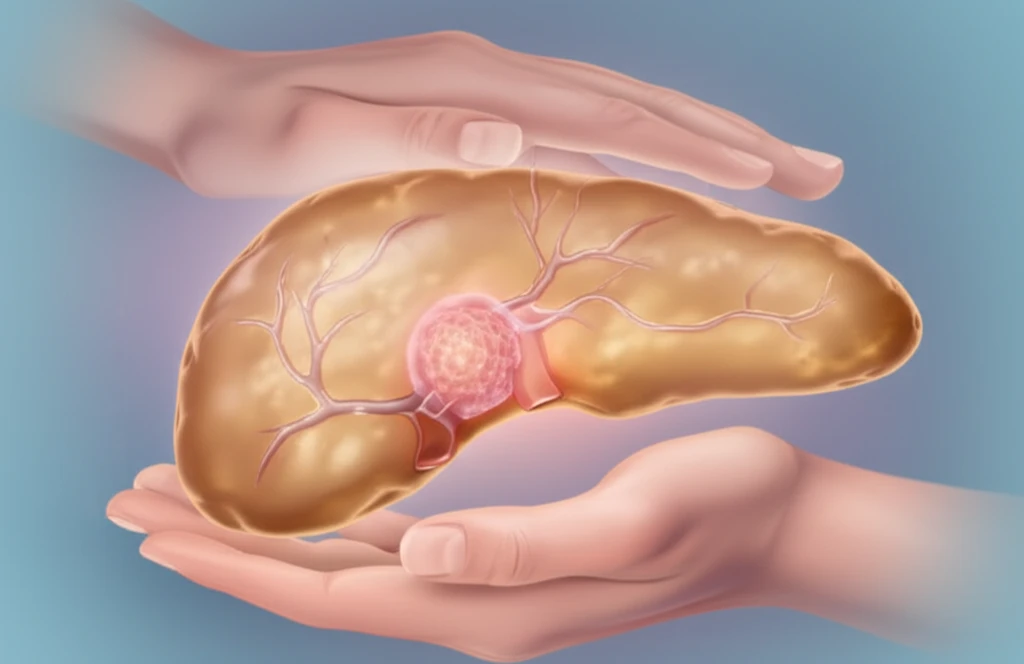
Pancreatic Serous Cystadenoma: What You Need to Know About This Rare Tumor

"A deep dive into the diagnosis, characteristics, and management of serous cystadenomas of the pancreas, empowering you with essential knowledge about this often incidental finding."
Serous cystadenomas (SCAs) of the pancreas are uncommon, benign growths that primarily affect older women. These tumors are characterized by their unique appearance under a microscope, with most exhibiting a microcystic structure. Macrocystic and solid variations also exist. Distinguishing SCAs from other, more aggressive cystic pancreatic lesions is critical for appropriate patient management.
The main goal is to provide a clear understanding of the clinical and pathological features of SCAs. By understanding these characteristics, healthcare professionals can make accurate diagnoses and better understand the behavior of these tumors.
This article reviews a study of 23 SCA cases diagnosed at a major medical center between 2001 and 2018. The aim is to shed light on the typical presentation, diagnostic methods, and treatment approaches for SCAs, offering valuable insights for patients and medical professionals alike.
Decoding Serous Cystadenoma: Key Features and Diagnostic Insights
The study revealed that the average age at diagnosis was 53.43 years, with a significant female predominance (female to male ratio of 4.75:1). Over half of the cases (56.5%) were incidentally discovered, meaning they were found during imaging for unrelated conditions. Abdominal pain was the most frequently reported symptom. The tumors were commonly located in the body and tail of the pancreas, ranging in size from 2 to 16 cm. A central scar, a characteristic feature, was observed in 43.4% of cases. Two cases were identified as macrocystic (unilocular).
- Mean age at presentation: 53.43 years
- Female to male ratio: 4.75:1
- Incidental diagnosis: 56.5% of cases
- Common symptom: Abdominal pain
- Common locations: Body and tail of pancreas
- Tumor size range: 2 to 16 cm
- Central scar presence: 43.4% of cases
- Macrocystic cases: 8.6%
The Outlook for Serous Cystadenoma: What It Means for You
Pancreatic serous cystadenomas are benign neoplasms with an excellent prognosis. The tumors typically exhibit consistent morphological features. While surgical resection was common in the reviewed study, this was often due to incomplete pre-operative radiological evaluation and concerns about potentially missing and inadequately treating mucinous cystic neoplasms, which require different management.
Modern imaging techniques (MRI and endoscopic ultrasound) enhance diagnostic accuracy, potentially reducing the need for surgery in many cases. Conservative management is appropriate for many patients, particularly those with asymptomatic or smaller tumors.
If you have been diagnosed with a serous cystadenoma, understanding its characteristics and the available management options is crucial. Discuss your case thoroughly with your healthcare team to determine the most appropriate course of action, balancing the benefits of intervention with the potential risks.