
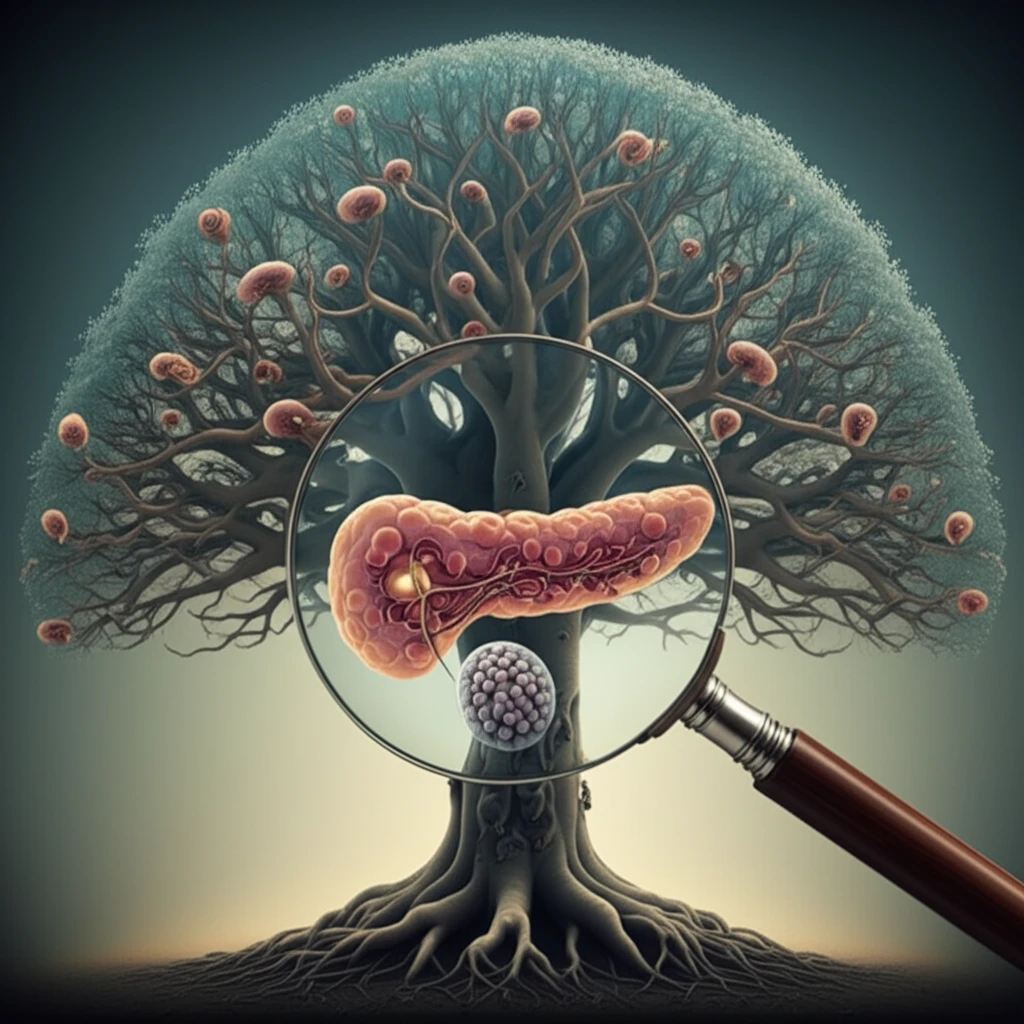
Pancreatic Cancer Screening: Are You at Risk?

"Understanding risk factors, genetic predispositions, and screening methods for early detection"
Pancreatic cancer is projected to become the second leading cause of cancer-related deaths by 2020, largely due to its late detection. Early diagnosis is crucial, as curative resection significantly improves survival rates. While only a small percentage of pancreatic cancers are hereditary, understanding the genetic and environmental factors involved is key to identifying individuals who would benefit from screening.
Up to 10% of pancreatic ductal adenocarcinoma (PDAC) cases have a hereditary component. However, known germline mutations account for only a fraction of the increased risk seen in families with a history of the disease. This highlights the complex interplay of genetic and environmental influences.
Due to the relatively low incidence of pancreatic cancer in the general population, widespread screening isn't currently recommended. However, expert guidelines exist for individuals at higher risk, including those with specific genetic mutations and a strong family history of pancreatic cancer. This article explores these guidelines, risk factors, and screening methods.
What Elevates Your Risk?
While genetics play a significant role, several environmental and lifestyle factors can also increase your risk of developing pancreatic cancer. Identifying these factors is the first step in assessing your personal risk profile.
- Tobacco Use: Smoking is a major risk factor, approximately doubling the risk of pancreatic cancer. The risk increases with the duration of smoking, but quitting can reduce the risk over time.
- Other Environmental Exposures: Certain occupational exposures, such as chlorinated hydrocarbon solvents, nickel compounds, and silica dust, have been linked to a moderate increase in pancreatic cancer risk.
- Chronic Pancreatitis: While the link is debated, chronic pancreatitis, especially when combined with tobacco or alcohol use, may increase the risk. It's important to differentiate between a single episode and recurrent or chronic conditions.
- Metabolic Syndrome and Obesity: Metabolic syndrome and a BMI over 30 kg/m² have been associated with a slightly increased risk, particularly in women and those with low physical activity.
- Diabetes: Long-standing diabetes (over 5 years) doubles the risk of pancreatic cancer. Interestingly, new-onset diabetes can also be an early sign of the disease.
Take Control: Screening and Early Detection
If you have a family history of pancreatic cancer or carry a known genetic mutation, you may be a candidate for pancreatic cancer screening. The goal of screening is to detect cancer at an early, curable stage, or ideally, to identify precancerous lesions that can be removed.
Two primary imaging techniques are used for pancreatic cancer screening:
<ul> <li><b>Endoscopic Ultrasound (EUS):</b> This allows for detailed imaging of the pancreas and enables the collection of tissue samples for analysis.</li> <li><b>Magnetic Resonance Cholangiopancreatography (MRCP):</b> This non-invasive imaging technique provides detailed views of the pancreatic ducts.</li> </ul> EUS and MRCP are often used as complementary techniques. Expert consensus guidelines recommend annual screening with EUS and/or MRI/MRCP for individuals at high risk. As research continues and our understanding of the genetic basis of pancreatic cancer improves, screening recommendations will likely be further refined. If you believe you may be at increased risk, talk to your doctor about your individual situation and the potential benefits of screening.