
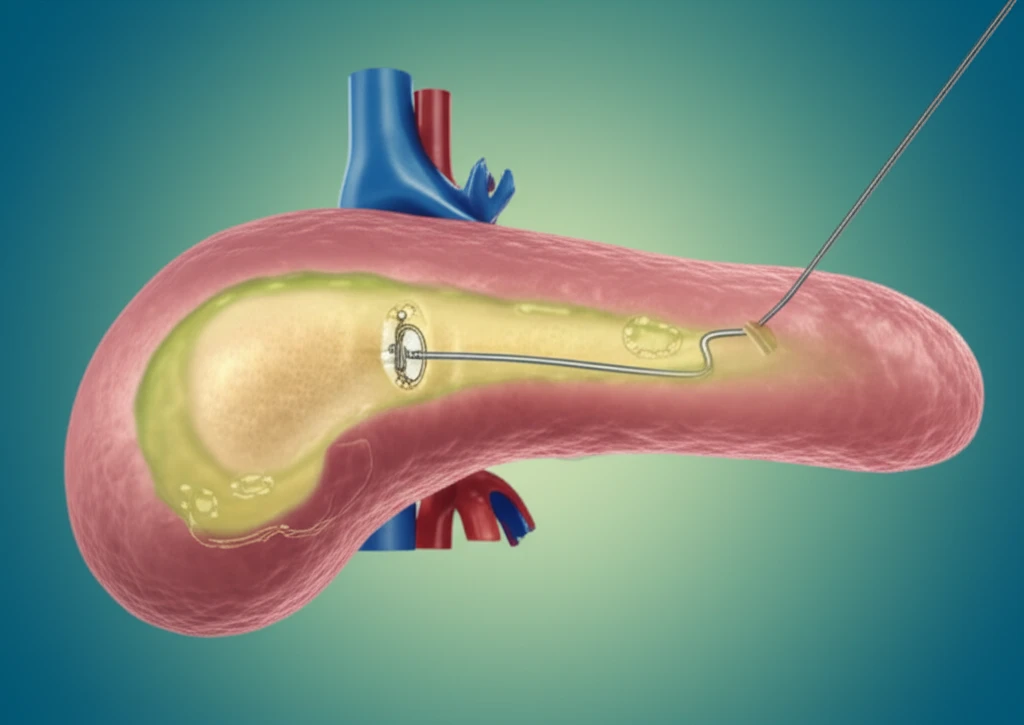
Illustration of pancreatic ascites being treated with endoscopic stenting.

Pancreatic Ascites: When Your Body Leaks and How to Fix It

"Navigating the challenges of pancreatic ascites with endoscopic stenting: A patient's journey to recovery."


Imagine your body springing a leak, not externally, but internally. That's essentially what happens with pancreatic ascites (PA), a rare but serious condition where pancreatic fluid accumulates in the abdominal cavity. Think of it as a plumbing problem in your abdomen, one that can cause significant discomfort and complications.

While not as common as other digestive disorders, PA presents a unique set of challenges for both patients and doctors. Traditionally, treatment options have ranged from conservative management, like dietary changes and medication, to more invasive procedures like surgery. However, a growing body of evidence suggests that endoscopic stenting – a minimally invasive technique – may offer a promising alternative.

This article explores the complexities of pancreatic ascites, diving into its causes, symptoms, and the latest treatment approaches. We'll focus particularly on the role of endoscopic stenting, highlighting a real-life case where this innovative technique led to a successful recovery. Whether you're a healthcare professional or someone seeking information about PA, this guide aims to provide a clear and comprehensive overview.

What is Pancreatic Ascites and What Causes It?

Illustration of pancreatic ascites being treated with endoscopic stenting.

Pancreatic ascites occurs when the pancreatic duct, which carries digestive enzymes from the pancreas to the small intestine, is disrupted. This disruption allows pancreatic fluid to leak into the abdominal cavity, leading to a buildup of fluid known as ascites. The fluid is rich in enzymes, which can irritate the lining of the abdomen and cause further complications.

Several factors can lead to this ductal disruption, with chronic pancreatitis and pancreatic trauma being the most common culprits. Chronic pancreatitis, often linked to long-term alcohol abuse or gallstones, causes inflammation and damage to the pancreas over time, weakening the ductal walls. Trauma, such as a car accident or abdominal injury, can directly damage the pancreatic duct.

  • Chronic Pancreatitis: Long-term inflammation damages the pancreatic duct.
  • Pancreatic Trauma: Physical injury disrupts the duct.
  • Pancreatic Pseudocysts: Leaking pseudocysts contribute to fluid accumulation.
  • Surgery Complications: Rarely, surgery can inadvertently damage the pancreatic duct.
Regardless of the cause, the consequences of PA can be significant. The accumulation of fluid can cause abdominal distension, discomfort, and even difficulty breathing. Over time, it can also lead to malnutrition and other health problems. Early diagnosis and appropriate treatment are essential to prevent these complications.

A New Hope for Pancreatic Ascites Patients

Pancreatic ascites presents significant therapeutic challenges. Endoscopic transpapillary stenting is an increasingly well-described treatment approach due to lower failure rates and mortality than surgery or conservative therapy, endoscopic intervention should strongly be considered prior to surgery or conservative therapy in the management of PA.

About this Article -

This article was crafted using a human-AI hybrid and collaborative approach. AI assisted our team with initial drafting, research insights, identifying key questions, and image generation. Our human editors guided topic selection, defined the angle, structured the content, ensured factual accuracy and relevance, refined the tone, and conducted thorough editing to deliver helpful, high-quality information.See our About page for more information.

Everything You Need To Know

1

What exactly is pancreatic ascites?

Pancreatic ascites (PA) is a condition where pancreatic fluid accumulates in the abdominal cavity due to a disruption in the pancreatic duct. This duct normally carries digestive enzymes from the pancreas to the small intestine. When it's damaged, the enzyme-rich fluid leaks, causing irritation and complications. This is significant because the fluid accumulation can lead to abdominal discomfort, breathing difficulties, and malnutrition if left untreated. Early diagnosis is crucial to avoid these severe health issues.

2

What are the primary causes of pancreatic ascites?

Several factors can cause pancreatic duct disruption leading to pancreatic ascites (PA). The most common causes include chronic pancreatitis and pancreatic trauma. Chronic pancreatitis, often linked to alcohol abuse or gallstones, weakens the ductal walls over time. Pancreatic trauma, such as injuries from accidents, can directly damage the duct. Pancreatic pseudocysts and, in rare cases, surgery complications can also lead to this condition. Identifying the underlying cause is essential for effective treatment.

3

What is endoscopic stenting, and how does it help with pancreatic ascites?

Endoscopic stenting is a minimally invasive procedure used to treat pancreatic ascites (PA). It involves placing a stent in the pancreatic duct to restore normal fluid flow and prevent further leakage into the abdominal cavity. This approach is gaining prominence due to its lower failure rates and mortality compared to traditional surgery or conservative treatments. It's significant as it provides a less invasive option with potentially better outcomes for patients with PA.

4

How does chronic pancreatitis relate to pancreatic ascites?

Chronic pancreatitis is a major cause of pancreatic ascites (PA). It's a long-term inflammation of the pancreas that can damage the pancreatic duct, making it prone to leakage. Factors like prolonged alcohol abuse or gallstones are often associated with chronic pancreatitis. Managing chronic pancreatitis is vital in preventing PA. This involves addressing the underlying causes, such as alcohol cessation and managing gallstones, to reduce the risk of ductal damage and subsequent fluid accumulation.

5

What are pancreatic pseudocysts, and how do they contribute to pancreatic ascites?

Pancreatic pseudocysts are collections of fluid and tissue that can form in or around the pancreas. When these pseudocysts leak, they can contribute to the fluid accumulation seen in pancreatic ascites (PA). While not the most common cause, leaking pseudocysts can exacerbate the condition. Treating these pseudocysts, often through drainage procedures, can help manage and alleviate the symptoms and complications associated with PA. Sometimes stents are placed to facilitate ongoing drainage.

Newsletter Subscribe

Subscribe to get the latest articles and insights directly in your inbox.