
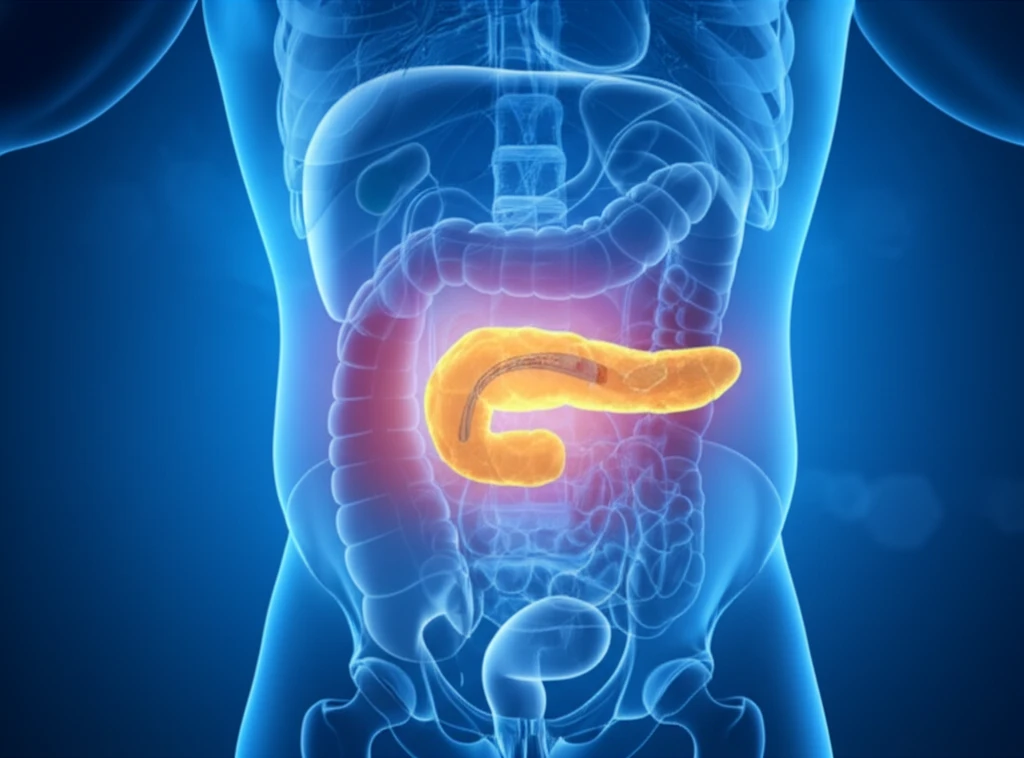
Illustration depicting pancreatic ascites and endoscopic stenting.

Pancreatic Ascites: A Hidden Threat and How Modern Medicine Tackles It

"Decoding the Complexities of Pancreatic Ascites: A Comprehensive Guide for Understanding and Treatment"


Pancreatic ascites, a condition where pancreatic fluid accumulates in the abdominal cavity, presents significant challenges in medical treatment. This often-overlooked complication of pancreatitis can lead to severe discomfort and potentially life-threatening situations. Understanding this condition is crucial for effective management, and this guide provides a comprehensive overview of its causes, diagnosis, and the latest treatment approaches.

The incidence of pancreatic ascites is relatively low, yet its impact on those affected is substantial. Characterized by the presence of pancreatic fluid in the peritoneal cavity, this condition is often linked to disruptions in the pancreatic ducts. This disruption can lead to the leakage of pancreatic secretions into the abdomen, causing a range of symptoms and complications.

This article delves into the complexities of pancreatic ascites, exploring its origins, diagnostic methods, and therapeutic strategies. We'll examine the evolution of treatment, from conservative methods to advanced interventions like endoscopic pancreatic stenting. Our goal is to provide a clear, accessible, and informative resource for anyone seeking to understand and manage this challenging condition.

Unveiling Pancreatic Ascites: Causes, Diagnosis, and Current Treatment Strategies

Illustration depicting pancreatic ascites and endoscopic stenting.

Pancreatic ascites is primarily caused by the leakage of pancreatic fluid into the abdominal cavity. This leakage typically results from disruptions in the pancreatic ducts, often due to chronic pancreatitis or pancreatic trauma. The fluid, rich in digestive enzymes, irritates the peritoneum, leading to ascites. Recognizing the underlying causes is the first step toward effective management.

Diagnosis involves a combination of clinical assessment, imaging techniques, and laboratory tests. Doctors often look for abdominal distension, pain, and other symptoms. Imaging methods like CT scans and ultrasounds help visualize the fluid accumulation and assess the pancreatic structure. Analysis of the ascitic fluid, particularly the amylase and protein levels, is key to confirm the diagnosis.

  • Conservative Management: This includes rest, dietary adjustments, and medications to manage symptoms and reduce pancreatic secretions.
  • Interventional Therapy: When conservative methods fail, interventional approaches such as paracentesis (draining fluid) and endoscopic procedures become necessary.
  • Endoscopic Pancreatic Stenting: This advanced technique involves placing a stent in the pancreatic duct to facilitate healing and prevent further leakage.
Treatment options vary based on the severity of the condition and the patient's overall health. Conservative management is often the initial approach, with a focus on relieving symptoms and reducing pancreatic secretions. However, in many cases, more aggressive interventions are needed. Endoscopic pancreatic stenting has emerged as a promising option, offering a less invasive alternative to surgery with improved outcomes. This technique aims to repair the damaged pancreatic duct and restore normal pancreatic function.

Looking Ahead: Advancements and Hope for Patients

The ongoing research and advancements in endoscopic techniques offer new hope for patients with pancreatic ascites. Endoscopic pancreatic stenting has shown promising results, improving outcomes and reducing the need for more invasive procedures. As medical understanding deepens, further innovative approaches will likely emerge, promising better care and quality of life for those affected by this challenging condition.

About this Article -

This article was crafted using a human-AI hybrid and collaborative approach. AI assisted our team with initial drafting, research insights, identifying key questions, and image generation. Our human editors guided topic selection, defined the angle, structured the content, ensured factual accuracy and relevance, refined the tone, and conducted thorough editing to deliver helpful, high-quality information.See our About page for more information.

This article is based on research published under:

DOI-LINK: 10.1136/bcr-2014-204774, Alternate LINK

Title: Therapeutic Challenges Of Pancreatic Ascites And The Role Of Endoscopic Pancreatic Stenting

Subject: General Medicine

Journal: Case Reports

Publisher: BMJ

Authors: S. Karlapudi, T. Hinohara, J. Clements, G. Bakis

Published: 2014-08-21

Everything You Need To Know

1

What exactly is Pancreatic Ascites, and how does it relate to Pancreatitis?

Pancreatic Ascites is a medical condition characterized by the accumulation of pancreatic fluid within the peritoneal cavity, the space inside the abdomen. This accumulation is a direct consequence of pancreatitis, an inflammation of the pancreas. The damage to the pancreas, often due to chronic pancreatitis or pancreatic trauma, can cause the pancreatic ducts to become disrupted. This disruption then allows pancreatic secretions, rich in digestive enzymes, to leak into the abdominal cavity, leading to the development of Pancreatic Ascites. This fluid irritates the peritoneum, leading to discomfort and potential complications.

2

What are the primary causes of Pancreatic Ascites?

The primary cause of Pancreatic Ascites is the leakage of pancreatic fluid into the abdominal cavity. This leakage primarily results from disruptions within the pancreatic ducts. These disruptions are often linked to chronic pancreatitis or pancreatic trauma. The pancreatic fluid, containing digestive enzymes, escapes the ducts and accumulates in the abdomen, leading to the manifestation of Pancreatic Ascites. Recognizing these underlying causes is critical for effective management.

3

How is Pancreatic Ascites typically diagnosed?

The diagnosis of Pancreatic Ascites involves a combination of clinical assessment, imaging techniques, and laboratory tests. Doctors initially look for telltale symptoms such as abdominal distension and pain. Imaging methods like CT scans and ultrasounds are then employed to visualize the fluid accumulation and to assess the pancreatic structure. A key diagnostic step is the analysis of the ascitic fluid itself, with a focus on measuring amylase and protein levels. Elevated levels of these enzymes in the fluid strongly suggest Pancreatic Ascites.

4

What treatment options are available for managing Pancreatic Ascites?

Treatment options for Pancreatic Ascites vary based on the severity of the condition and the patient's overall health. Conservative management, the initial approach, includes rest, dietary adjustments, and medications aimed at managing symptoms and reducing pancreatic secretions. When conservative methods prove insufficient, interventional therapies, such as paracentesis (draining fluid) and endoscopic procedures, become necessary. Endoscopic Pancreatic Stenting, a more advanced technique, is a promising option, offering a less invasive approach to repair the damaged pancreatic duct and restore normal pancreatic function.

5

How does Endoscopic Pancreatic Stenting work in treating Pancreatic Ascites, and what are its benefits?

Endoscopic Pancreatic Stenting is an advanced technique used to treat Pancreatic Ascites. It involves placing a stent, a small tube, in the pancreatic duct. This procedure is designed to facilitate healing of the duct and prevent further leakage of pancreatic fluid into the abdominal cavity. By repairing the damaged pancreatic duct, the stent helps to restore normal pancreatic function, alleviating the underlying cause of Pancreatic Ascites. The benefits of Endoscopic Pancreatic Stenting include improved outcomes and a reduced need for more invasive surgical procedures, offering a less invasive alternative with the potential for better patient outcomes.

Newsletter Subscribe

Subscribe to get the latest articles and insights directly in your inbox.