
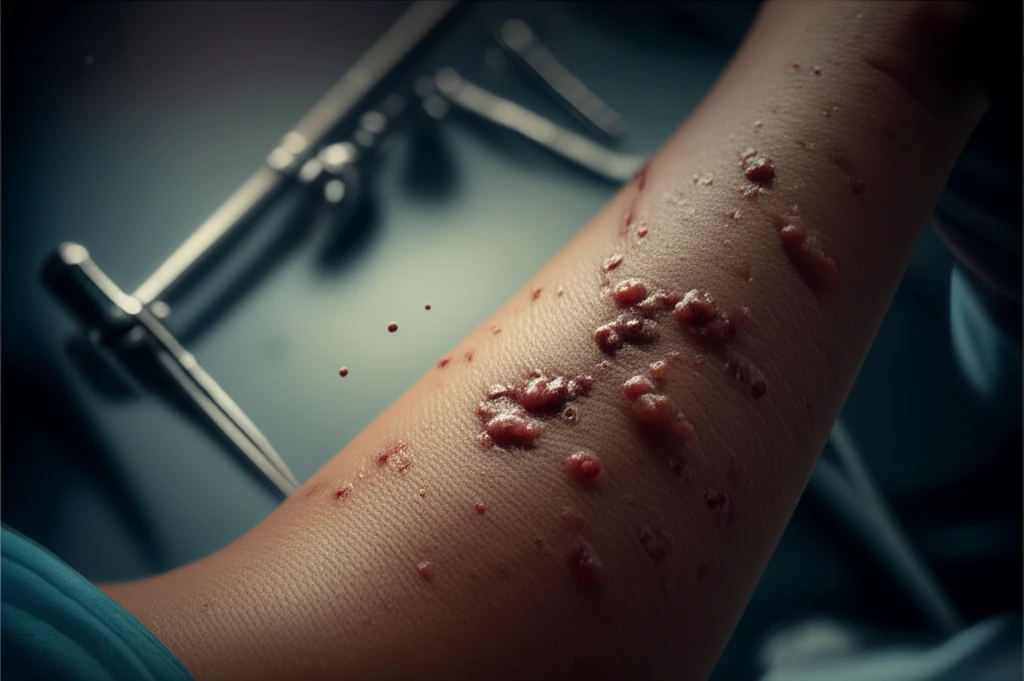
Palmar Purpuric Lichen Nitidus: Understanding the Rare Skin Condition

"A deep dive into the diagnosis, symptoms, and effective treatments for this uncommon cause of palmar eruptions."
Imagine dealing with a persistent skin issue on your palms for thirty years, misdiagnosed and only temporarily relieved by various treatments. This was the reality for a 50-year-old man whose case eventually led to a diagnosis of Palmar Purpuric Lichen Nitidus (LN), a rare and often overlooked skin condition.
Lichen Nitidus is an uncommon skin disorder characterized by small, skin-colored or slightly reddish bumps (papules) that typically appear on the arms, chest, abdomen, and genitals. However, the purpuric variant, particularly when localized to the palms, is exceptionally rare, making diagnosis challenging.
This article explores the complexities of Palmar Purpuric Lichen Nitidus, drawing from a real case to shed light on its symptoms, diagnostic process, and effective management strategies. We aim to provide clarity and guidance for those who may be experiencing similar unexplained palmar eruptions.
Decoding Palmar Purpuric Lichen Nitidus: What Makes It Unique?
The key to diagnosing Palmar Purpuric Lichen Nitidus lies in recognizing its distinctive features. Unlike common hand eczema or contact dermatitis, which were initial suspicions in the featured case, this condition presents with:
- Absence of itchiness (pruritus), but presence of pain or hypersensitivity.
- Punctual hemorrhages, visible through dermatoscopy.
- A history of failed responses to typical eczema treatments, such as topical glucocorticosteroids.
Finding Relief: Effective Treatment Strategies
While there's no one-size-fits-all cure for Lichen Nitidus, particularly the palmar purpuric variant, successful management is possible. The case study highlights the effectiveness of a combined approach using topical tacrolimus and clobetasol propionate. Tacrolimus, an immunomodulator, helps to reduce inflammation, while clobetasol propionate, a potent corticosteroid, further suppresses the immune response and reduces symptoms.
The patient in the study initially experienced moderate improvement with tacrolimus alone, but complete remission was achieved with the alternating regimen of tacrolimus and clobetasol propionate. This underscores the importance of personalized treatment plans and the potential benefits of combining therapies.
If you suspect you have Palmar Purpuric Lichen Nitidus, consult a dermatologist for accurate diagnosis and tailored treatment. With proper management, you can find relief from this challenging skin condition and improve your quality of life.