
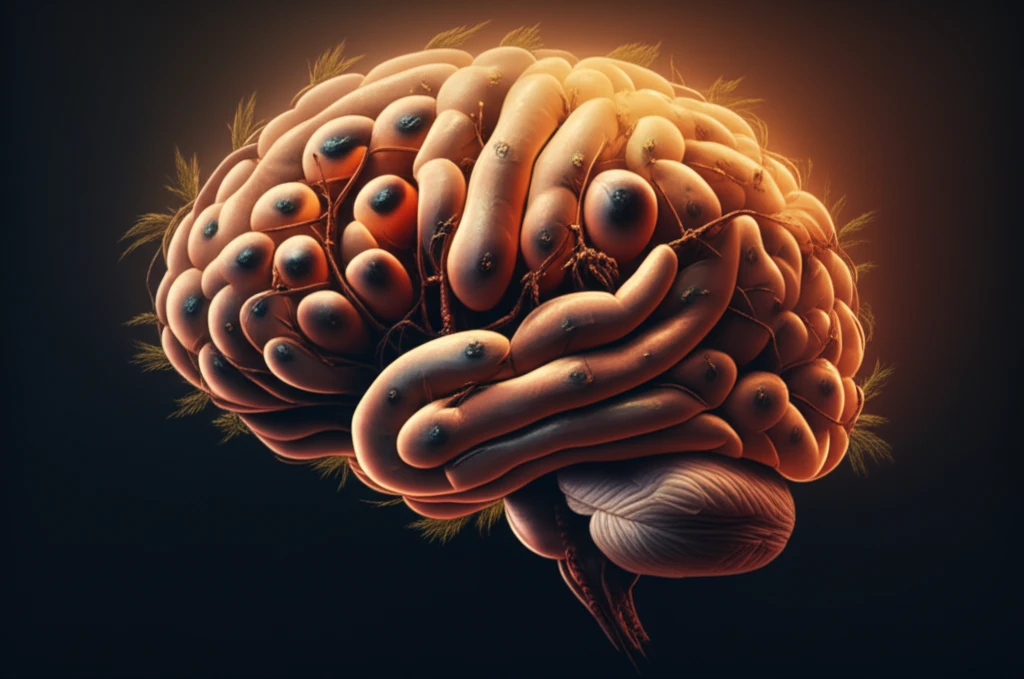
Surreal illustration of a brain intertwined with glowing palm fruits, symbolizing the protective effects of palm fruit bioactives.

Palm Fruit Bioactives: The Natural Way to Calm Brain Inflammation and Boost Cognitive Health

"Unlock the secrets of palm fruit bioactives and discover how these natural compounds can reduce inflammation, protect your brain, and potentially prevent neurodegenerative diseases."


In an era where neurodegenerative diseases are becoming increasingly prevalent, the quest for effective prevention and treatment strategies is more critical than ever. Recent scientific investigations have turned their attention to the potential of natural compounds, specifically those found in palm fruits, to mitigate neuroinflammation – a key factor in the progression of diseases like Alzheimer's and Parkinson's.

Reactive astrocytes, a type of glial cell in the brain, play a significant role in the development of neuroinflammation. When activated, these cells can release cytokines and chemokines, triggering a cascade of inflammatory responses that contribute to neuronal damage. This has led researchers to explore ways to modulate astrocyte activity and reduce the production of pro-inflammatory substances.

A groundbreaking study published in Scientific Reports has shed light on the beneficial effects of palm fruit bioactives (PFB) on human astrocytes. The study demonstrates that PFB can effectively reduce inflammation in these cells, altering the cytokine secretome and lowering levels of key inflammatory markers such as TNFα, RANTES, and IP-10. This article delves into the findings of this research, exploring the potential of PFB as a natural approach to preventing and treating neurodegenerative diseases.

What are Palm Fruit Bioactives (PFB)?

Surreal illustration of a brain intertwined with glowing palm fruits, symbolizing the protective effects of palm fruit bioactives.

Palm fruit bioactives, also known as oil palm phenolics (OPP), are a complex mixture of water-soluble compounds derived from the fruit of the oil palm (Elaeis guineensis). These compounds are extracted through mechanical crushing, steaming, and filtering processes, resulting in a potent blend of antioxidant polyphenols.

PFB comprises various organic compounds, including protocatechuic acid, shikimic acid, p-hydroxybenzoic acid, methyl-4-hydroxycinnamate, and three structural isomers of caffeoylshikimic acid. This diverse composition contributes to the wide range of beneficial cellular and physiological effects observed in both in vivo and in vitro models.

  • Anti-inflammatory: PFB has demonstrated the ability to reduce inflammation by modulating the expression of key inflammatory mediators.
  • Antidiabetic: Studies suggest that PFB may help regulate blood sugar levels and improve insulin sensitivity.
  • Anticancer: Research indicates that PFB may possess anticancer properties, potentially inhibiting cancer cell growth and proliferation.
  • Anti-angiogenic: PFB may help prevent the formation of new blood vessels that feed tumors.
  • Antihypertensive: PFB may contribute to lowering blood pressure.
  • Anti-atherosclerotic: Research suggests that PFB can help prevent the buildup of plaque in arteries.
  • Antiviral effects: PFB may exhibit antiviral properties, potentially inhibiting viral replication.
  • Anti-chronic degenerative diseases of aging: PFB may protect against age-related diseases by reducing oxidative stress and inflammation.
  • Anti-dementia: PFB has shown promise in inhibiting the aggregation of beta-amyloid peptide, a key factor in Alzheimer's disease.
With its diverse range of bioactive compounds, PFB offers a multi-faceted approach to promoting health and well-being.

The Future of PFB in Neurodegenerative Disease Prevention

This groundbreaking study provides compelling evidence for the potential of PFB in preventing and treating neurodegenerative diseases. By modulating astrocyte activity, reducing inflammation, and lowering key inflammatory markers, PFB offers a natural approach to protecting the brain and promoting cognitive health. As research in this area continues to evolve, PFB may emerge as a valuable tool in the fight against Alzheimer's, Parkinson's, and other debilitating neurological conditions.

About this Article -

This article was crafted using a human-AI hybrid and collaborative approach. AI assisted our team with initial drafting, research insights, identifying key questions, and image generation. Our human editors guided topic selection, defined the angle, structured the content, ensured factual accuracy and relevance, refined the tone, and conducted thorough editing to deliver helpful, high-quality information.See our About page for more information.

Everything You Need To Know

1

What exactly are Palm Fruit Bioactives (PFB)?

Palm Fruit Bioactives (PFB), also known as oil palm phenolics (OPP), are a group of water-soluble compounds extracted from the fruit of the oil palm (Elaeis guineensis). The extraction process involves mechanical crushing, steaming, and filtering. PFB is composed of various organic compounds like protocatechuic acid, shikimic acid and caffeoylshikimic acid isomers, contributing to beneficial cellular and physiological effects.

2

How do reactive astrocytes contribute to brain inflammation, and what role do Palm Fruit Bioactives (PFB) play in this process?

Reactive astrocytes contribute to neuroinflammation by releasing cytokines and chemokines. These substances trigger inflammatory responses that can damage neurons. Palm Fruit Bioactives (PFB) have demonstrated the ability to modulate astrocyte activity and reduce the production of these pro-inflammatory substances, potentially preventing or slowing down neurodegenerative processes.

3

In what specific ways might Palm Fruit Bioactives (PFB) help with neurodegenerative diseases?

Palm Fruit Bioactives (PFB) have shown potential in preventing and treating neurodegenerative diseases due to their anti-inflammatory properties. They can reduce inflammation, lower inflammatory markers like TNFα, RANTES, and IP-10, and modulate astrocyte activity. These actions can help protect the brain and promote cognitive health.

4

Besides reducing inflammation, what other health benefits are associated with Palm Fruit Bioactives (PFB)?

PFB exhibits a range of health benefits due to its diverse bioactive compounds. These include anti-inflammatory, antidiabetic, anticancer, anti-angiogenic, antihypertensive, anti-atherosclerotic, antiviral effects, protection against chronic degenerative diseases of aging and anti-dementia properties. These effects contribute to overall well-being and disease prevention.

5

What study supports the claims about Palm Fruit Bioactives (PFB) and brain health?

The study mentioned in the text investigated the effects of Palm Fruit Bioactives (PFB) on human astrocytes, which are brain cells involved in inflammation. It was published in Scientific Reports and demonstrated that PFB can reduce inflammation in these cells by altering the cytokine secretome and lowering levels of key inflammatory markers. This study provides evidence for PFB's potential in preventing and treating neurodegenerative diseases.

Newsletter Subscribe

Subscribe to get the latest articles and insights directly in your inbox.