
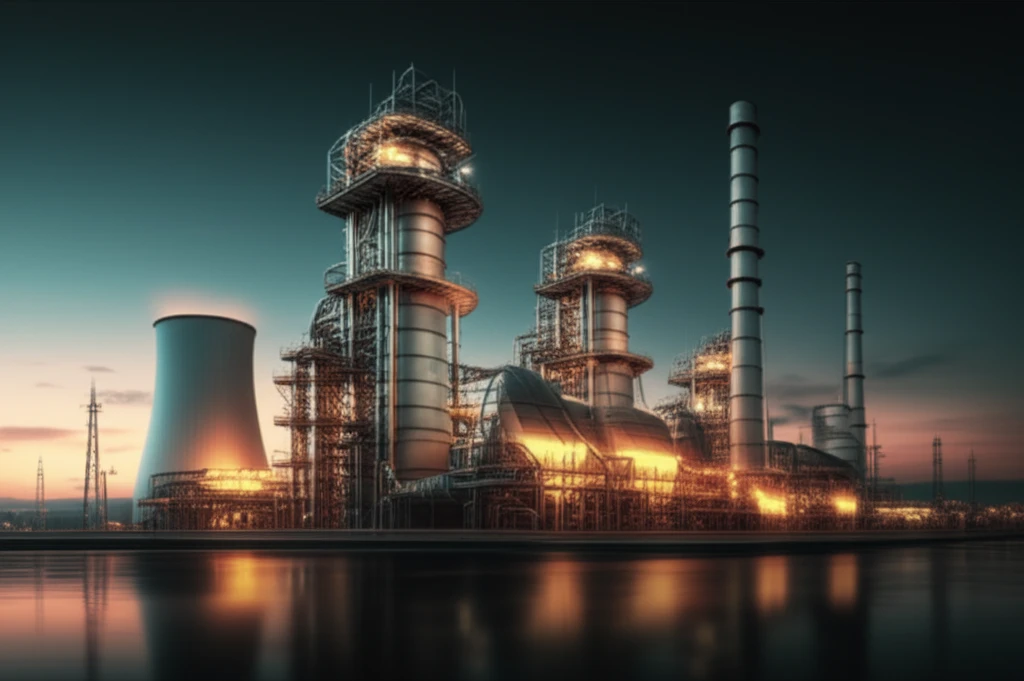
Oxy-Turbines: The Unsung Heroes in the Quest for Clean Power?

"Dive into the world of oxy-turbine power plants, a game-changing solution for carbon capture and a cleaner future."
In the escalating battle against climate change, capturing carbon dioxide (CO2) from power plants is a critical strategy. While post-combustion capture has been the go-to method, a new contender is gaining traction: oxy-combustion turbines. These innovative systems recycle CO2 and/or steam as working fluids, potentially offering a more efficient and cost-effective way to reduce emissions from natural gas power plants.
A recent study by the IEA Greenhouse Gas R&D (IEAGHG) program, conducted by Amec Foster Wheeler, rigorously evaluated the performance and costs of various oxy-turbine plant designs. This research provides valuable insights into the most promising oxy-turbine cycles and their potential to revolutionize power generation with CO2 capture.
This article explores the key findings of the IEAGHG study, highlighting the technical and economic aspects of oxy-turbine technology. We will delve into how these plants operate, compare different design approaches, and assess their potential to compete with existing carbon capture methods, offering a comprehensive overview for anyone interested in the future of clean energy.
Decoding Oxy-Turbine Technology: How Does It Work?
Oxy-turbine cycles represent a significant departure from traditional power generation. Instead of using air for combustion, they utilize pure oxygen, which, when combined with recycled CO2 or steam, creates a working fluid that drives the turbine. This process results in a concentrated stream of CO2, making it easier and more cost-effective to capture and store.
- Semi-closed Oxy-Combustion Combined Cycle (SCOC-CC): Resembles a conventional combined cycle, using recycled CO2 to control combustion temperature.
- NET Power Cycle: Employs carbon dioxide as the working fluid in a high-pressure Brayton cycle.
- Graz Cycle: Uses water as a moderator of the combustion temperature.
- CES Cycle: Also uses water as a temperature moderator, with a high-pressure oxy-fuel combustor.
The Future of Clean Energy: Is Oxy-Turbine Technology the Answer?
The IEAGHG study provides a comprehensive assessment of the potential of oxy-turbine power plants for CO2 capture. While challenges remain, particularly in terms of cost and technological maturity, the research suggests that these systems hold significant promise for cleaner power generation.
The NET Power cycle, in particular, stands out for its potential high efficiency. However, further development and commercial deployment are needed to validate these findings and realize the full potential of oxy-turbine technology. Ongoing research and development efforts, coupled with supportive policies, will be crucial in driving down costs and accelerating the adoption of these innovative systems.
As the world transitions to a low-carbon future, oxy-turbine power plants could play a vital role in reducing emissions from natural gas power plants. By embracing innovation and investing in clean energy technologies, we can pave the way for a more sustainable and environmentally responsible energy future.