
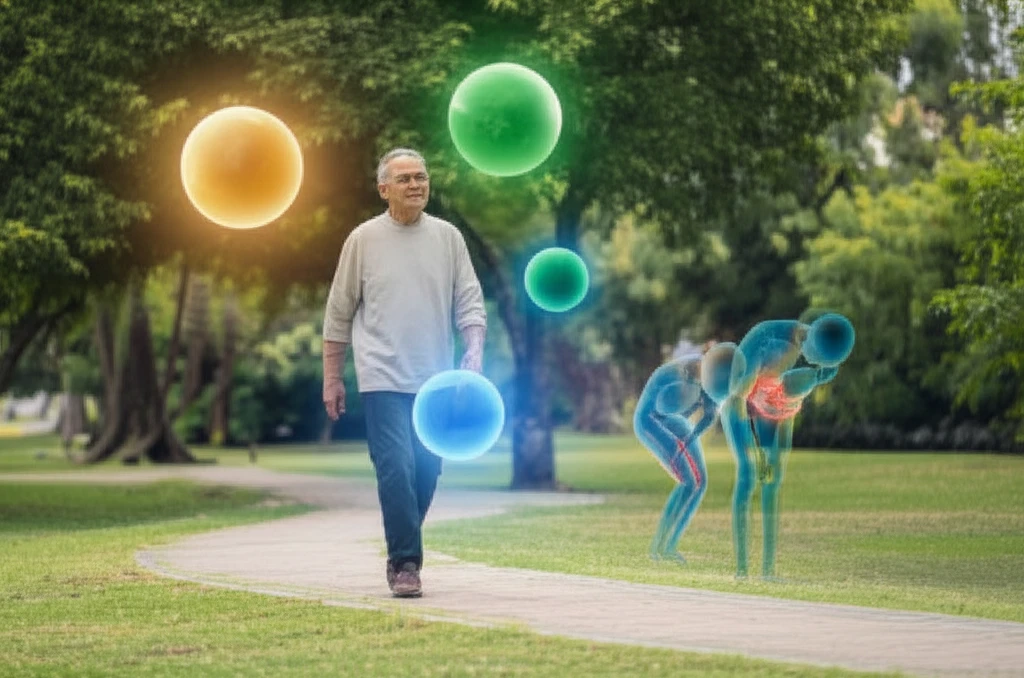
Elderly person confidently walking through a park.

Osteoarthritis and Fall Prevention: A Comprehensive Guide for Older Adults

"Uncover the link between osteoarthritis and fall risk, and discover practical strategies to stay safe and independent."


Osteoarthritis, characterized by pain, stiffness, and instability in the affected joints, severely restricts daily activities. This limitation often leads to decreased physical function, impaired balance, and reduced agility, significantly increasing the risk of falls. Falls can result in serious injuries like fractures, leading to hospitalization or even early mortality.

Even without physical injury, the fear of falling can limit physical activity, further reducing flexibility and balance, ultimately compromising independence. Falls are multifaceted events influenced by various interconnected risk factors. Research identifies key contributors such as a history of falls, age, gender (particularly women), and living alone. Psychological factors like fear of falling and cognitive impairments also play a significant role, as do physical limitations, sensory deficits, chronic diseases, medication use, lifestyle choices, and environmental hazards.

Recognizing falls as a preventable health issue allows for targeted interventions. Fall prevention involves modifying individual risk factors through actions such as strength and balance exercises, vitamin D and calcium supplementation, and environmental modifications. For those with osteoarthritis, the disease process introduces additional challenges due to joint pain and deformity, further complicating balance and stability. Active participation in fall prevention programs and understanding personal risk factors are crucial steps toward reducing fall incidents.

Understanding the Risks: Why Osteoarthritis Increases Fall Susceptibility

Elderly person confidently walking through a park.

Osteoarthritis significantly impacts mobility and balance, making older adults more prone to falls. Understanding the specific ways osteoarthritis contributes to this risk is crucial for effective prevention.

Several factors intertwine to create this increased susceptibility:

  • Pain and Stiffness: Pain in weight-bearing joints like knees and hips can alter gait and reduce mobility, increasing the chance of falls.
  • Muscle Weakness: Osteoarthritis can lead to muscle weakness around affected joints, hindering stability and support.
  • Reduced Proprioception: Osteoarthritis can affect proprioception, or your sense of body position. This makes it harder to maintain balance, especially on uneven surfaces or in low-light conditions.
  • Joint Instability: Damage to joint structures and supporting tissues contributes to joint instability.
It's important to remember that these risk factors often interact. For example, pain can lead to decreased activity, which in turn weakens muscles and worsens joint instability.

Taking Action: Implementing a Fall Prevention Strategy

Effective fall prevention requires a multi-faceted approach that addresses individual risk factors and promotes proactive measures. The study highlights the significance of knowledge, perceived risk, and self-efficacy in adopting preventive behaviors. By understanding these factors and implementing targeted interventions, older adults with osteoarthritis can significantly reduce their risk of falls and maintain a higher quality of life.

About this Article -

This article was crafted using a human-AI hybrid and collaborative approach. AI assisted our team with initial drafting, research insights, identifying key questions, and image generation. Our human editors guided topic selection, defined the angle, structured the content, ensured factual accuracy and relevance, refined the tone, and conducted thorough editing to deliver helpful, high-quality information.See our About page for more information.

This article is based on research published under:

DOI-LINK: 10.7475/kjan.2015.27.6.684, Alternate LINK

Title: A Structural Equation Model Of Fall Prevention Behavior Among Community-Dwelling Older Adults With Osteoarthritis

Subject: General Nursing

Journal: Korean Journal of Adult Nursing

Publisher: Korean Society of Adult Nursing

Authors: Keong Sook Jang, Rhayun Song

Published: 2015-01-01

Everything You Need To Know

1

What exactly is Osteoarthritis, and how does it lead to falls?

Osteoarthritis is a condition marked by joint pain, stiffness, and instability, which directly impacts an older adult's mobility and balance. The limitations caused by Osteoarthritis include restricted daily activities and decreased physical function. This increases the risk of falls because it affects the joints, muscles, and sensory systems needed for maintaining balance and coordination, leading to a higher chance of falls.

2

What specific factors make older adults with Osteoarthritis more likely to fall?

Several factors explain why Osteoarthritis increases fall risk. First, pain and stiffness in weight-bearing joints alter gait and reduce mobility. Second, Osteoarthritis can lead to muscle weakness around the affected joints, hindering stability and support. Third, it can affect proprioception, making it harder to maintain balance. Finally, damage to joint structures contributes to joint instability, further increasing fall risk.

3

Besides Osteoarthritis, what other factors contribute to the risk of falls in older adults?

A history of falls is a significant risk factor. Other risks include age, gender (particularly women), and living alone. Psychological factors like fear of falling and cognitive impairments also play a role, as do physical limitations, sensory deficits, chronic diseases, medication use, lifestyle choices, and environmental hazards. Recognizing these factors allows for targeted interventions to prevent falls.

4

What are the key strategies for preventing falls, especially for people with Osteoarthritis?

Fall prevention involves a multi-faceted approach. This includes interventions such as strength and balance exercises, vitamin D and calcium supplementation, and environmental modifications. For those with Osteoarthritis, additional strategies are needed because of the joint pain and deformity. Active participation in fall prevention programs and understanding personal risk factors are crucial steps.

5

How can older adults effectively implement a fall prevention strategy?

Implementing a fall prevention strategy involves understanding individual risk factors and promoting proactive measures. This includes targeted interventions based on knowledge, perceived risk, and self-efficacy. By addressing these factors, older adults with Osteoarthritis can reduce their risk of falls and maintain a higher quality of life. It is important to remember that these risk factors often interact. For example, pain can lead to decreased activity, which in turn weakens muscles and worsens joint instability.

Newsletter Subscribe

Subscribe to get the latest articles and insights directly in your inbox.