
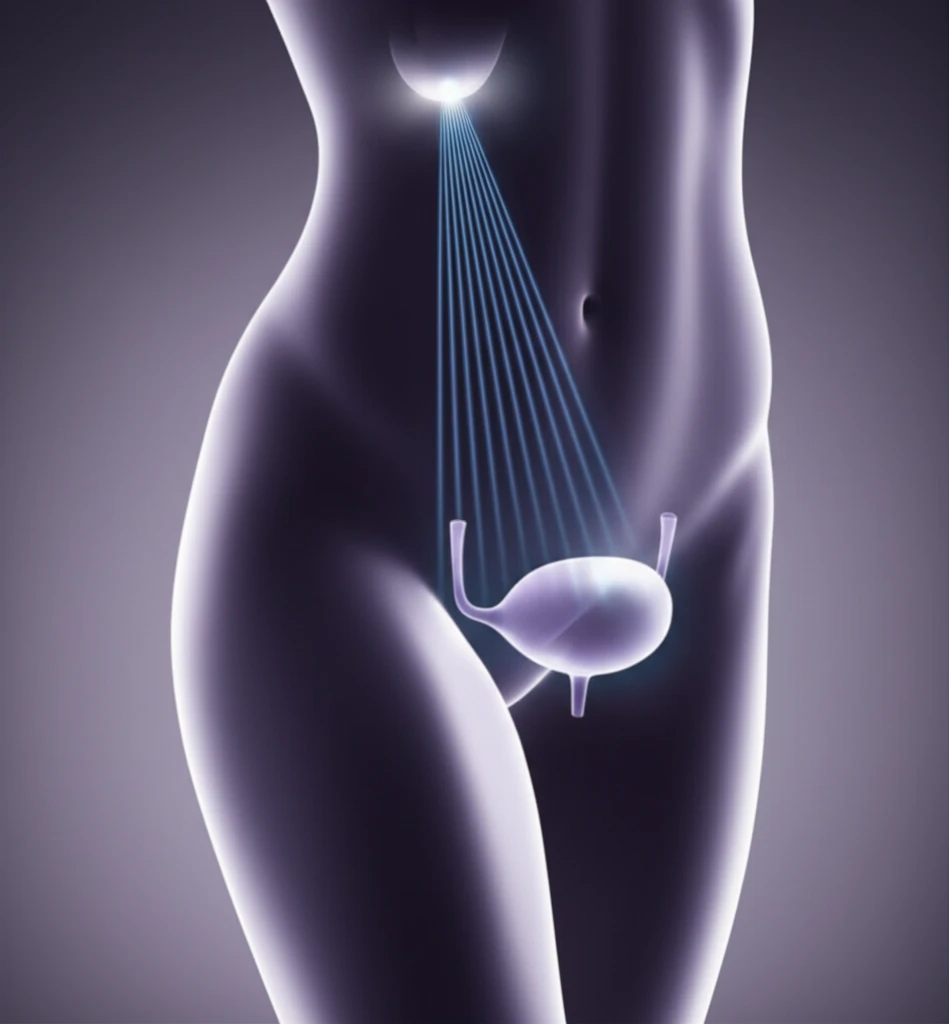
Illustration of radiation therapy planning for cervical cancer

Optimizing Brachytherapy: How Bladder Volume Impacts Radiation Dose in Cervical Cancer Treatment

"A Deep Dive into Balancing Risk and Effectiveness in Intracavitary Brachytherapy for Cervical Cancer"


Cervical cancer treatment often involves a combination of external beam radiation therapy and brachytherapy, a procedure where radioactive sources are placed inside the body near the tumor. Intracavitary brachytherapy, specifically, is a common technique used to target cervical tumors, but it also poses a risk to nearby organs like the bladder, rectum, and small intestine.

Balancing the radiation dose to effectively kill cancer cells while minimizing damage to these organs is a critical challenge. Medical physicists and radiation oncologists use sophisticated planning techniques to optimize the dose distribution, and imaging plays a key role in this process. Recent research has focused on how the volume of the bladder during brachytherapy can impact the radiation dose received by these organs at risk.

This article explores the findings of a study investigating the effect of bladder volume on radiation dose distribution during intracavitary brachytherapy for cervical cancer. By understanding these effects, clinicians can refine their treatment planning strategies to improve patient outcomes and reduce the risk of complications.

Bladder Volume: A Key Factor in Radiation Dose Distribution

Illustration of radiation therapy planning for cervical cancer

A prospective study was conducted involving 20 patients undergoing intracavitary brachytherapy for cervical cancer following external beam radiation. Each patient underwent two simulated dosimetries: one with a full bladder and one with an empty bladder. The goal was to assess how bladder volume affects the radiation dose received by the bladder itself, as well as the rectum and small intestine.

The study focused on a metric called D2cm³, which represents the dose received by 2 cm³ of the organ. This value was converted to an equivalent dose in 2 Gy fractions (EQD2) and added to the EQD2 from external beam radiation to determine the total equivalent dose to each organ at risk. The study aimed to keep the total EQD2 below 90 Gy for the bladder, 75 Gy for the rectum, and 70 Gy for the small intestine.

  • Bladder Dose: The average D2cm³ to the bladder increased significantly, from 6.8 Gy with an empty bladder to 8.5 Gy with a full bladder. This corresponded to an increase from 83 Gy to 99 Gy in EQD2, a 16% increase.
  • Small Intestine Dose: The average D2cm³ to the small intestine decreased significantly, from 4.75 Gy with an empty bladder to 2.61 Gy with a full bladder. This translates to a decrease from 62 Gy to 50 Gy EQD2.
  • Rectal Dose: No significant difference was observed in the D2cm³ to the rectum based on bladder volume.
These results suggest that treating patients with an empty bladder during intracavitary brachytherapy may offer a better balance between bladder and small intestine dose. While a full bladder increases the dose to the bladder itself, it also reduces the dose to the small intestine, which is often more sensitive to radiation. The study concluded that using an empty bladder represents a superior clinical compromise, as it ensures the dose constraint to the small intestine is respected. However, the clinical significance of this practice needs further confirmation through additional research.

The Path Forward: Refining Brachytherapy Techniques

This research underscores the importance of carefully considering bladder volume during brachytherapy planning for cervical cancer. While the study suggests that an empty bladder may be preferable, further investigation is needed to fully understand the long-term clinical implications.

Future studies could explore the optimal bladder volume range, taking into account individual patient anatomy and tumor characteristics. Advanced imaging techniques and dose optimization algorithms could also be used to further refine treatment plans and minimize the risk of complications.

Ultimately, the goal is to deliver the most effective radiation dose to the tumor while sparing healthy tissues, leading to improved survival rates and quality of life for women undergoing brachytherapy for cervical cancer. This research is a step forward in achieving that goal.

About this Article -

This article was crafted using a human-AI hybrid and collaborative approach. AI assisted our team with initial drafting, research insights, identifying key questions, and image generation. Our human editors guided topic selection, defined the angle, structured the content, ensured factual accuracy and relevance, refined the tone, and conducted thorough editing to deliver helpful, high-quality information.See our About page for more information.

This article is based on research published under:

DOI-LINK: 10.1016/j.canrad.2018.07.084, Alternate LINK

Title: Curiethérapie Intracavitaire De Haut Débit De Dose Du Cancer Du Col Utérin : Effet Du Volume Vésical Sur La Distribution De Dose Aux Organes À Risque

Subject: Radiology, Nuclear Medicine and imaging

Journal: Cancer/Radiothérapie

Publisher: Elsevier BV

Authors: C. Lahmamssi, A. Ennakri

Published: 2018-10-01

Everything You Need To Know

1

What is intracavitary brachytherapy, and why is it used in cervical cancer treatment?

Intracavitary brachytherapy is a type of radiation therapy where radioactive sources are placed inside the body, near the tumor. In cervical cancer treatment, it's used to specifically target cervical tumors after external beam radiation therapy. This allows for a high dose of radiation to be delivered directly to the tumor while minimizing exposure to surrounding healthy tissues such as the bladder, rectum, and small intestine, though balancing this exposure is a critical challenge in treatment planning.

2

How does bladder volume impact radiation dose distribution during intracavitary brachytherapy for cervical cancer?

Bladder volume significantly affects the radiation dose distribution to organs at risk during intracavitary brachytherapy. Specifically, a full bladder increases the radiation dose to the bladder itself but decreases the radiation dose to the small intestine. The dose to the rectum doesn't change significantly. Because the small intestine is very sensitive, radiation oncologists consider bladder volume to optimize treatment plans and reduce complications.

3

What does D2cm³ represent in the context of brachytherapy planning, and why is it important?

D2cm³ represents the dose received by the 2 cm³ of an organ that receives the highest dose during brachytherapy. It's a critical metric because it helps clinicians assess the potential risk of damage to organs at risk like the bladder, rectum, and small intestine. This value is converted to an equivalent dose in 2 Gy fractions (EQD2) and added to the EQD2 from external beam radiation to determine the total equivalent dose to each organ at risk. Treatment plans are optimized to keep the total EQD2 below specific thresholds for each organ, like 90 Gy for the bladder, 75 Gy for the rectum, and 70 Gy for the small intestine, in order to minimize complications.

4

According to the study, what is the clinical compromise between bladder and small intestine dose when treating with an empty bladder during intracavitary brachytherapy?

The study suggests that treating patients with an empty bladder during intracavitary brachytherapy may be a superior clinical compromise, because it ensures the dose constraint to the small intestine is respected. Although an empty bladder reduces the radiation dose to the bladder itself, the small intestine is often more sensitive to radiation. By using an empty bladder, treatment plans can be optimized to reduce the risk of complications, while maintaining an effective tumoricidal dose.

5

What are the next steps in refining brachytherapy techniques for cervical cancer, based on the findings regarding bladder volume?

Based on the study, further investigation is needed to fully understand the long-term clinical implications of managing bladder volume during brachytherapy. While the study suggests that an empty bladder may be preferable, additional research is required to confirm these findings and to refine treatment planning strategies. Specifically, future studies should investigate the long-term effects of different bladder volumes on both tumor control and the incidence of complications in the bladder, small intestine, and rectum. This will allow clinicians to develop more precise and personalized brachytherapy techniques for cervical cancer treatment.

Newsletter Subscribe

Subscribe to get the latest articles and insights directly in your inbox.