
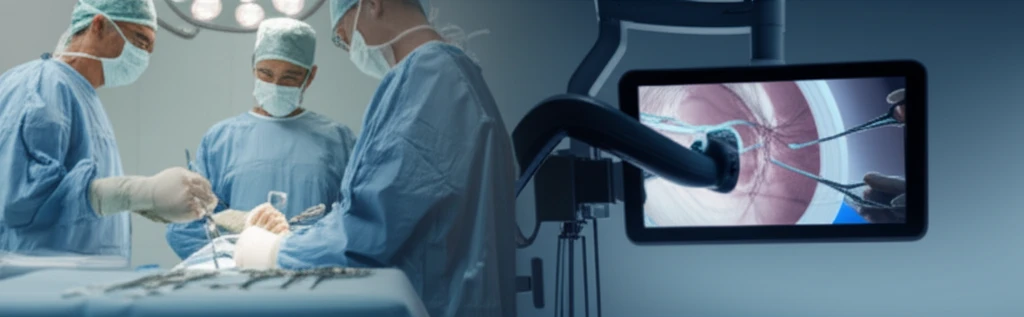
Open vs. Endovascular Repair: Which Is Best for Thoracic Aortic Disease?

"A comparative analysis of open surgical repair (OSR) and thoracic endovascular repair (TEVAR) for treating isolated descending thoracic aortic disease, weighing benefits, risks, and long-term outcomes."
The landscape of thoracic aortic disease treatment is evolving, primarily due to the rising incidence of degenerative aortic conditions. Historically, conventional open surgery has been the standard approach. However, the emergence of thoracic endovascular repair (TEVAR) offers a less invasive alternative, prompting a re-evaluation of treatment strategies.
Open surgical repair (OSR), involves a thoracotomy to access and repair the affected aorta. While OSR has a long track record of success, it's associated with significant mortality and morbidity, including neurologic complications. This has fueled the search for less invasive techniques.
TEVAR involves the placement of a stent graft within the aorta to reinforce the weakened vessel. TEVAR has expanded rapidly, offering a potentially safer approach for high-risk patients. However, challenges remain, including endoleaks, graft migration, and uncertainty regarding long-term durability.
TEVAR vs. OSR: A Head-to-Head Comparison of Outcomes
A recent study published in the Korean Journal of Radiology compared the midterm outcomes of OSR and TEVAR for isolated descending thoracic aortic disease. The study retrospectively reviewed 68 patients treated between 2006 and 2010, dividing them into two groups: OSR (n=40) and TEVAR (n=28). The researchers analyzed perioperative complications, 30-day mortality, clinical success, and long-term survival.
- Age: TEVAR patients were older on average.
- Complications: OSR had a slightly higher rate of perioperative complications.
- Mortality: OSR showed a higher 30-day mortality rate.
- Clinical Success: TEVAR demonstrated a 71% success rate in aortic remodeling.
- Survival: One-year survival rates were comparable between both groups.
The Future of Aortic Disease Treatment
Thoracic endovascular repair presents a viable alternative to open surgical repair for isolated thoracic aortic disease, offering comparable midterm results. However, the potential for late adverse events, such as endoleakage or rupture, requires continued close monitoring and long-term follow-up to ensure satisfactory outcomes.