
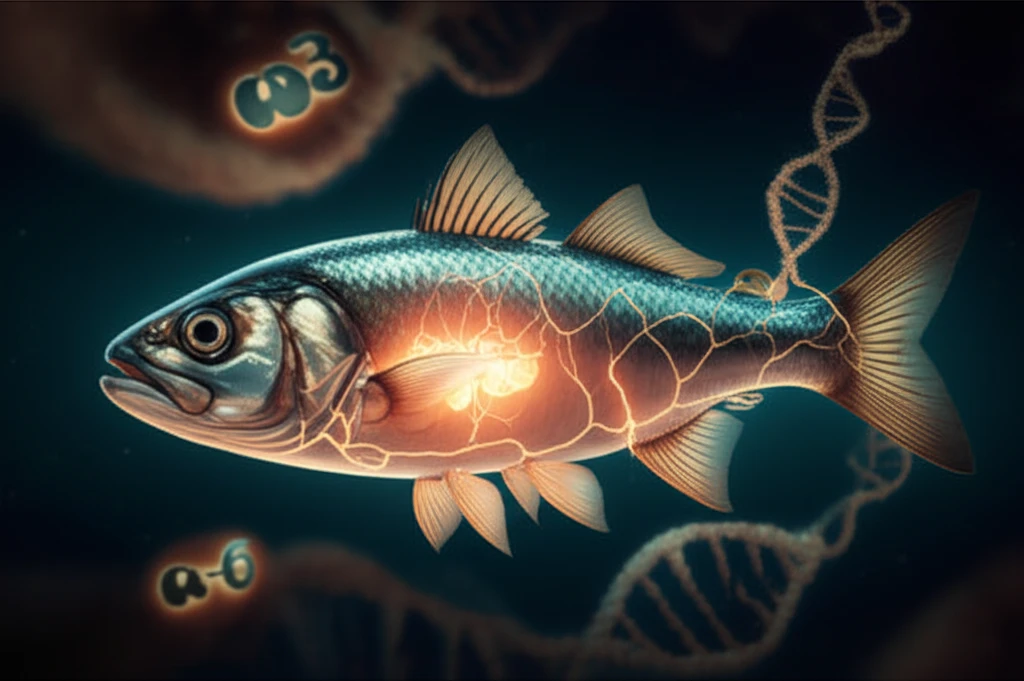
Omega-3 vs. Omega-6: Decoding the Best Fats for Your Health

"Unlocking the secrets of a-linolenic acid and linoleic acid: a deep dive into how these fats impact your body at the cellular level."
In the quest for optimal health, understanding the roles of different types of fats is crucial. While it's well-known that marine fish require long-chain polyunsaturated fatty acids (LC-PUFA), the utilization of a-linolenic acid (ALA, an omega-3) and linoleic acid (LA, an omega-6) in euryhaline species (those that can adapt to a wide range of salinities) remains less clear. Euryhaline fish occupy a fascinating middle ground, possessing some capacity to synthesize LC-PUFA from ALA and LA.
Recent research has shed light on how these fatty acids influence the health of Japanese seabass (Lateolabrax japonicus), a euryhaline and carnivorous species. A previous study showed that supplementing diets with linseed oil (rich in ALA) or soybean oil (rich in LA) resulted in comparable growth performance to fish oil-based diets. However, indications suggested Japanese seabass might have a preference for ALA over LA.
To further investigate the distinct effects of ALA and LA, scientists conducted a detailed study analyzing the hepatic transcriptome (the complete set of RNA transcripts in the liver) of Japanese seabass. This research provides critical insights into how these fats regulate gene expression, offering a foundation for understanding their broader impacts on health and metabolism.
ALA vs. LA: How They Impact Gene Expression and Your Health
The study compared two experimental diets: one rich in LA (sunflower seed oil) and another rich in ALA (perilla oil). Researchers meticulously analyzed how these diets influenced the seabass's liver at a molecular level. Key findings revealed that ALA up-regulated 49 genes and down-regulated 311 genes, compared to LA. This indicates that ALA has a profound impact on crucial biological processes.
- Lipid Transport: Genes like ApoA1, ApoA4, and ApoE are essential for transporting lipids throughout the body.
- Fatty Acid Binding: FABP1, FABP3, and FABP4 facilitate the uptake and transport of fatty acids within cells.
- Fatty Acid Transport: FATP6 helps move fatty acids across cell membranes.
- Triglyceride Synthesis: DGAT1 is involved in synthesizing triglycerides, a form of fat storage.
- Protein Synthesis: Ribosomal proteins like L9e, L13e, and S4e are crucial for protein production.
Translating Research into Dietary Choices: What Does It All Mean?
This research provides a foundation for understanding how different dietary fats affect fundamental biological processes. The study suggests that a high intake of ALA may influence lipid transport and protein synthesis in the liver, though further research is needed to fully understand these effects in humans.
While the study focused on Japanese seabass, the underlying principles of gene regulation and lipid metabolism are relevant to human health. Balancing your intake of omega-3 and omega-6 fatty acids is vital for overall well-being. You can achieve this balance by incorporating:
<ul><li><b>Omega-3 Rich Foods</b>: Flaxseeds, chia seeds, walnuts, and fatty fish like salmon.</li><li><b>Omega-6 Conscious Choices</b>: While essential, be mindful of the sources. Opt for whole foods and limit processed options high in omega-6s.</li></ul>By making informed choices, you can harness the power of these essential fats to support your body's health at the cellular level.