
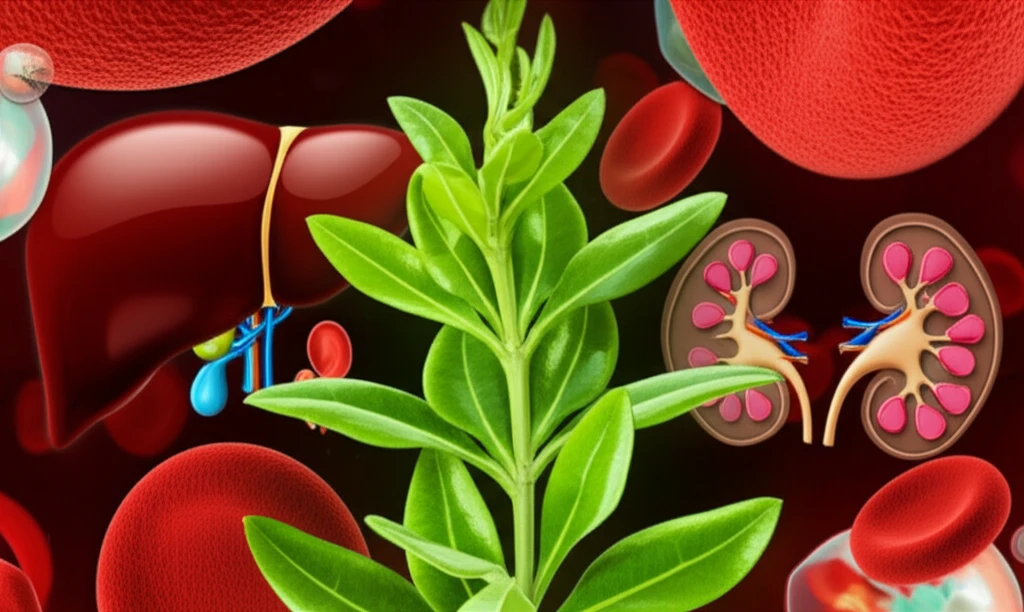
Surreal illustration of Olax subscorpioidea impacting blood, liver, and kidneys.

Olax subscorpioidea: Unlocking the Secrets of a Traditional Remedy

"Exploring the potential health impacts of a West African medicinal plant, from its effects on blood health to its liver and kidney interactions."


For centuries, traditional medicine has harnessed the power of plants to treat various ailments. Among these, Olax subscorpioidea, a plant native to West Africa, holds a significant place. With increasing interest in natural remedies, understanding the science behind these traditional treatments is crucial.

A recent study published in the African Journal of Pharmacy and Pharmacology investigated the effects of Olax subscorpioidea extract on albino Wistar rats, a common model for studying human health. The research focused on biochemical, hematological (blood-related), and histopathological (tissue-related) markers to assess the plant's potential toxicity and impact on various bodily functions.

This article aims to break down the key findings of this study, making them accessible to a broader audience interested in natural health solutions and the science behind traditional remedies. We'll explore how Olax subscorpioidea may influence blood health, liver function, and kidney interactions, while also considering the limitations and future directions of this research.

Does Olax subscorpioidea Impact Blood Health?

Surreal illustration of Olax subscorpioidea impacting blood, liver, and kidneys.

The study revealed that Olax subscorpioidea extract can indeed influence blood health. Specifically, it led to a significant decrease in white blood cell (WBC) count across all treated groups of rats. Hemoglobin levels also saw a reduction in groups receiving varying extract concentrations (250, 500, and 1000 mg/kg).

These findings suggest a potential impact on the immune system, as white blood cells are crucial for fighting infections. The decreased hemoglobin levels could also raise concerns about anemia, a condition characterized by a deficiency in red blood cells or hemoglobin.

  • Decreased White Blood Cell Count: May compromise the immune system's ability to fight infections.
  • Reduced Hemoglobin Levels: Could potentially lead to anemia-like conditions.
  • Changes in Neutrophil and Lymphocyte Levels: Further investigation is needed to understand the implications of these specific changes in immune cell populations.
However, it's important to note that the study also observed an increase in neutrophil levels in the group treated with the highest extract concentration (1000 mg/kg). Neutrophils are another type of white blood cell, and their elevation can indicate an immune response or inflammation. These complex and somewhat contradictory results highlight the need for further research to fully understand the plant's effects on blood health.

The Bottom Line: What Does This Mean for Traditional Use?

This study provides valuable insights into the potential effects of Olax subscorpioidea, particularly its impact on blood health. While the findings suggest that the plant extract may not cause significant damage to the liver and kidneys, the observed changes in blood parameters warrant further investigation.

Traditional medicine practices often rely on generations of anecdotal evidence. However, scientific studies like this one are essential for validating these practices, identifying potential risks, and optimizing dosages for safe and effective use. This research also highlights the importance of understanding the complex interactions between plant compounds and the human body.

Ultimately, while Olax subscorpioidea holds promise as a natural remedy, more research is needed to fully elucidate its mechanisms of action and potential long-term effects. This includes identifying the specific compounds responsible for the observed changes and conducting clinical trials to assess its safety and efficacy in humans. As with any herbal remedy, consulting with a healthcare professional before use is always recommended.

About this Article -

This article was crafted using a human-AI hybrid and collaborative approach. AI assisted our team with initial drafting, research insights, identifying key questions, and image generation. Our human editors guided topic selection, defined the angle, structured the content, ensured factual accuracy and relevance, refined the tone, and conducted thorough editing to deliver helpful, high-quality information.See our About page for more information.

This article is based on research published under:

DOI-LINK: 10.5897/ajpp2013.3900, Alternate LINK

Title: Toxicological Evaluation Of Extract Of Olax Subsorpioidea On Albino Wistar Rats

Subject: Pharmaceutical Science

Journal: African Journal of Pharmacy and Pharmacology

Publisher: Academic Journals

Authors: Humphrey Adebayo Abiodun, Samuel Adegbite Oluwatobi, A. O. Olugbuyiro Joseph, Olorunfunmi Famodu Oyetomiwa, Bernard Odenigbo Kenechukwu

Published: 2014-06-08

Everything You Need To Know

1

How does *Olax subscorpioidea* affect blood health?

The plant *Olax subscorpioidea* has been observed to influence blood health. The study on albino Wistar rats indicated a decrease in white blood cell (WBC) count across all treated groups. In addition, hemoglobin levels were reduced in groups receiving varying extract concentrations. These findings suggest potential impacts on the immune system and the possibility of anemia-like conditions. This information is important because it helps in understanding how the plant interacts with the body's essential functions.

2

What animal model was used to study *Olax subscorpioidea*?

The study on *Olax subscorpioidea* used albino Wistar rats. This animal model is common in biomedical research because they share many biological similarities with humans. The scientists used this model to investigate the plant's effects on blood, liver, and kidney health. The results from these rats provide insights into the potential effects of the plant on human health.

3

What is the impact of *Olax subscorpioidea* on the liver and kidneys?

The study examined the effects of *Olax subscorpioidea* on the liver and kidneys by assessing biochemical and histopathological markers. While the specific details of the impact are not fully elaborated in the provided text, the results suggested that the extract may not cause significant damage to these organs. The analysis of these organs is important because they are crucial for detoxification and waste removal. However, the text stresses that further research is necessary for a comprehensive understanding.

4

What are the implications of the blood parameter changes observed after using *Olax subscorpioidea*?

The observed changes in blood parameters with *Olax subscorpioidea* require more investigation. Specifically, the study observed a decrease in white blood cell count and reduced hemoglobin levels, which could potentially compromise the immune system and lead to anemia. Furthermore, changes in neutrophil and lymphocyte levels were noted. Neutrophils increased in the group treated with the highest extract concentration (1000 mg/kg), indicating a possible immune response or inflammation. This is important because it shows the need for more in-depth research to comprehend the complete implications on blood health.

5

What is the significance of *Olax subscorpioidea* in the context of traditional medicine and scientific research?

*Olax subscorpioidea* is a plant native to West Africa. It has been used in traditional medicine for centuries to treat various ailments. The increasing interest in natural remedies makes the scientific study of traditional treatments like *Olax subscorpioidea* crucial. Understanding the potential health impacts, such as the effects on blood health, liver function, and kidney interactions, is essential for assessing its safety and efficacy for potential use in modern medicine. The study published in the *African Journal of Pharmacy and Pharmacology* shows the importance of such research.

Newsletter Subscribe

Subscribe to get the latest articles and insights directly in your inbox.