
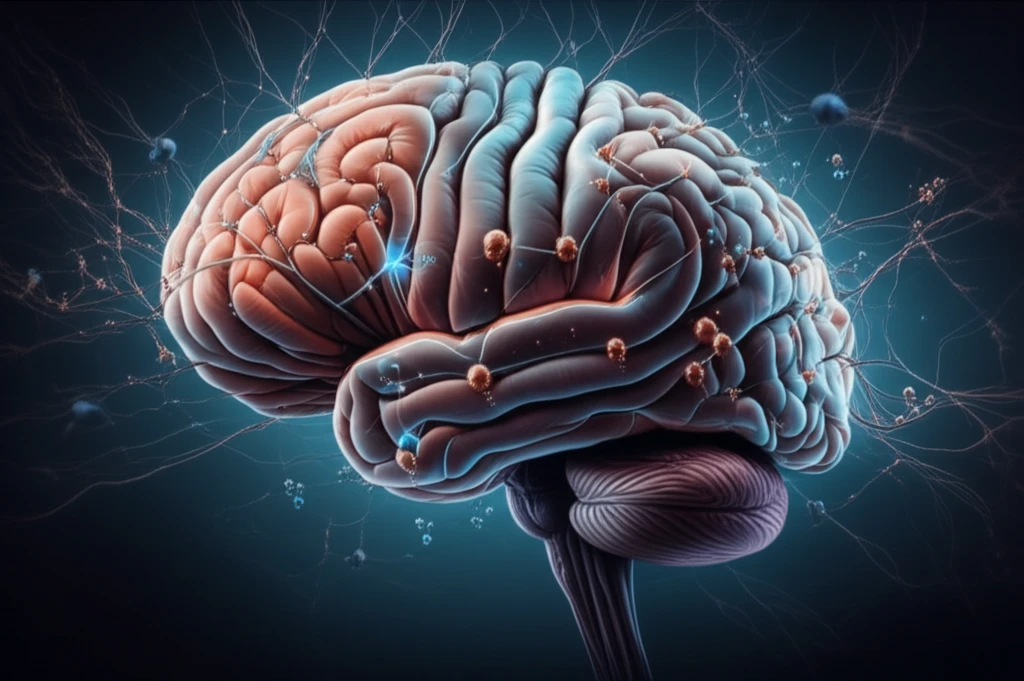
Surreal image representing altered brain connectivity and oxytocin's role in OCD.

OCD Under the Microscope: Unveiling Brain Differences & Oxytocin's Role

"New research sheds light on structural connectivity in OCD and the potential of oxytocin as a therapeutic target, offering hope for improved treatments."


Obsessive-compulsive disorder (OCD) is more than just a quirk; it's a chronic mental health condition characterized by persistent, intrusive thoughts and repetitive behaviors. These obsessions and compulsions can significantly interfere with daily life, making it crucial to understand the underlying mechanisms of this disorder.

Recent research has been focusing on the intricate workings of the brain in individuals with OCD, specifically examining the structural connections and chemical messengers that might be involved. These studies offer valuable insights into the biological basis of OCD and could potentially lead to more targeted and effective treatments.

This article will delve into two key areas of OCD research: alterations in white matter connectivity in the brain and the role of oxytocin, a hormone known for its involvement in social bonding and emotional regulation. By exploring these findings, we aim to provide a clearer picture of OCD's complexities and the potential avenues for future interventions.

Brain Connectivity and OCD: What's the Link?

Surreal image representing altered brain connectivity and oxytocin's role in OCD.

One study investigated the white matter connections in the brains of individuals with OCD, focusing on the pathways between the frontal cortex (responsible for decision-making and planning) and the striatum (involved in motor control and habit formation). Using diffusion-weighted imaging (DWI), researchers examined the structural integrity of these connections in OCD patients compared to healthy controls.

The results revealed a significant increase in RD value (a measure related to demyelination) between the right orbitofrontal cortex (OFC) and the putamen, a subcortical region within the striatum, in individuals with OCD. This suggests that there may be reduced insulation (demyelination) along this particular white matter tract in people with OCD.

  • Demyelination: Demyelination refers to damage to the myelin sheath, which insulates nerve fibers and helps to transmit signals quickly and efficiently. When demyelination occurs, communication between different brain regions can be disrupted.
  • Fronto-striatal circuits: These circuits play a critical role in regulating behavior, especially in tasks that require planning, decision-making, and habit formation. Dysfunction in these circuits is thought to contribute to the repetitive behaviors and intrusive thoughts seen in OCD.
  • Implications: These findings suggest that altered white matter connectivity in fronto-striatal circuits may play a role in the pathophysiology of OCD. Further research is needed to explore the functional consequences of these structural differences.
This study adds to the growing body of evidence suggesting that OCD is associated with structural and functional abnormalities in specific brain circuits. Understanding these neural underpinnings is essential for developing targeted therapies that can address the core symptoms of OCD.

Oxytocin and OCD: A Potential Therapeutic Target?

Another avenue of OCD research explores the potential role of oxytocin (OT), a hormone known for its involvement in social bonding, trust, and emotional regulation. Given that social and emotional processing can be affected in OCD, researchers have investigated whether oxytocin levels are altered in individuals with the disorder.

One study found that plasma oxytocin levels were significantly higher in OCD patients compared to healthy controls. Furthermore, the study found positive correlations between OT levels and certain attachment styles (fearful-avoidant and dismissing) in male patients. These findings suggest that oxytocin may play a complex role in OCD, potentially influencing social and emotional behaviors.

While these findings are intriguing, further research is needed to fully understand the role of oxytocin in OCD. It's possible that increased oxytocin levels reflect a compensatory mechanism or are related to specific subtypes or symptoms of OCD. Nevertheless, oxytocin remains a promising therapeutic target for future investigation, potentially offering a novel approach to managing the social and emotional challenges associated with OCD.

About this Article -

This article was crafted using a human-AI hybrid and collaborative approach. AI assisted our team with initial drafting, research insights, identifying key questions, and image generation. Our human editors guided topic selection, defined the angle, structured the content, ensured factual accuracy and relevance, refined the tone, and conducted thorough editing to deliver helpful, high-quality information.See our About page for more information.

Everything You Need To Know

1

What is obsessive-compulsive disorder, and what are the latest research focuses?

Obsessive-compulsive disorder involves persistent, intrusive thoughts and repetitive behaviors. Recent research focuses on altered brain connectivity, specifically between the frontal cortex and the striatum, and the potential of oxytocin to improve treatments. It is a chronic mental health condition where obsessions and compulsions interfere with daily life.

2

How does demyelination in the right orbitofrontal cortex and putamen relate to OCD?

Research indicates a significant increase in RD value, related to demyelination, between the right orbitofrontal cortex and the putamen in individuals with OCD. Demyelination refers to damage to the myelin sheath, disrupting communication between brain regions. This suggests that altered white matter connectivity in fronto-striatal circuits may contribute to OCD's development.

3

Why is oxytocin being researched as a potential treatment for OCD?

Oxytocin is being explored as a potential therapeutic target because of its role in social bonding, trust, and emotional regulation. Research is underway to understand if modulating oxytocin levels can alleviate some of the social and emotional processing difficulties experienced by those with OCD. However, the details of how oxytocin specifically impacts OCD symptoms are still being investigated.

4

What neuroimaging methods are being used to study brain connectivity in OCD, and what specific brain regions are being examined?

The study used diffusion-weighted imaging to examine the white matter connections in the brains of individuals with OCD, specifically focusing on the pathways between the frontal cortex and the striatum. By comparing the structural integrity of these connections in OCD patients to healthy controls, researchers identified differences like the increased RD value, providing insights into how brain connectivity is altered in OCD.

5

What role do fronto-striatal circuits play in OCD, and what are the implications of altered white matter connectivity in these circuits?

The fronto-striatal circuits are crucial for regulating behavior, especially in planning, decision-making, and habit formation. Dysfunction in these circuits is thought to contribute to the repetitive behaviors and intrusive thoughts seen in OCD. The research pinpointed altered white matter connectivity in these specific circuits. A future direction might be to develop targeted therapies aimed at normalizing function within these pathways.

Newsletter Subscribe

Subscribe to get the latest articles and insights directly in your inbox.