
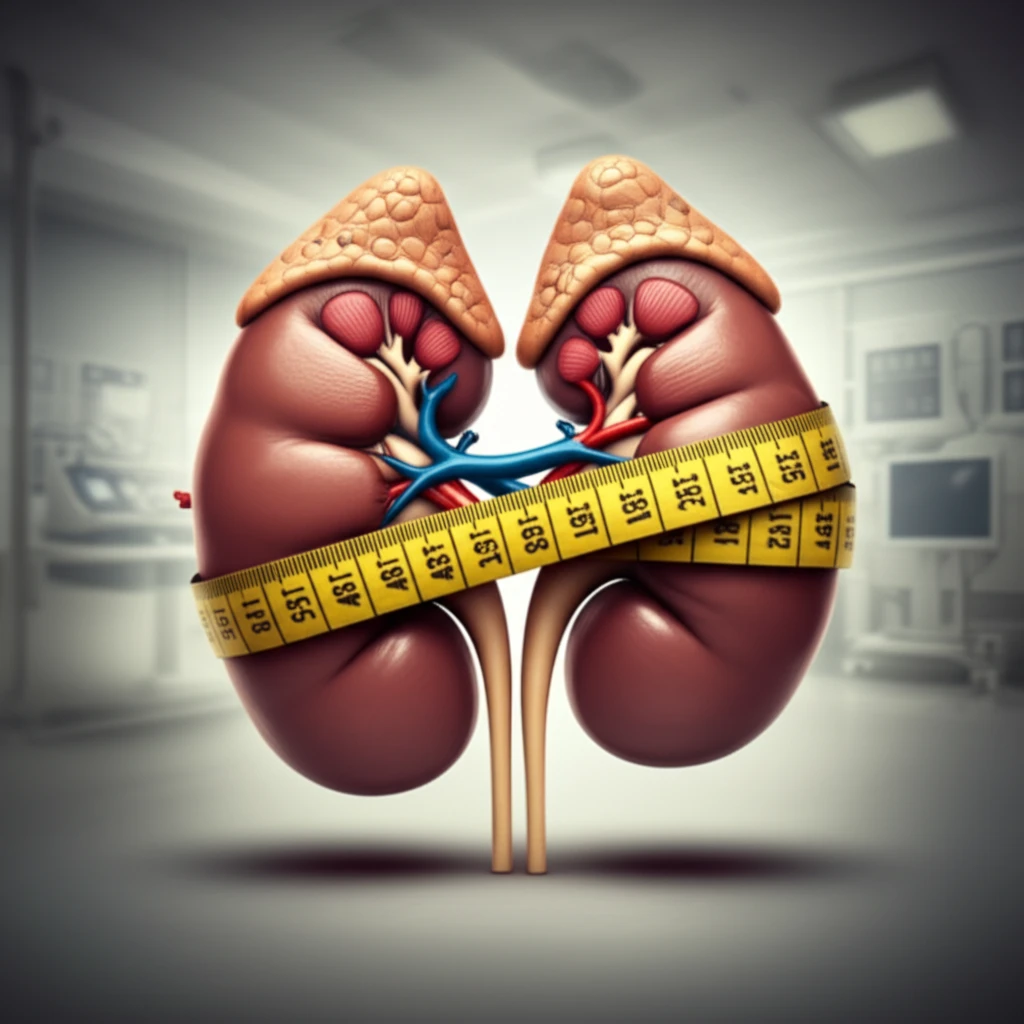
Illustration of kidneys intertwined with a measuring tape.

Obesity and Kidney Health: Unlocking the Link to Recovery

"Explore the crucial connection between obesity and acute kidney injury (AKI) recovery. Discover the latest insights and a feasibility study that sheds light on improving outcomes."


Acute kidney injury (AKI) is a serious condition characterized by a rapid decline in kidney function, often requiring hospitalization. In the UK alone, AKI affects over 5% of hospital admissions, highlighting its prevalence. What's more concerning is that AKI can lead to chronic kidney disease (CKD), an irreversible condition that progressively diminishes kidney function over time.

Obesity, a widespread health issue, has long been recognized as a significant risk factor for developing and worsening CKD. However, what remains unclear is how obesity impacts the recovery process following an AKI episode and whether the combined presence of obesity and AKI further accelerates the development of CKD. Understanding this complex relationship is crucial for devising effective prevention and treatment strategies.

To address this gap in knowledge, researchers conducted a feasibility study aimed at evaluating the practicality of conducting a larger-scale study on the impact of obesity on AKI recovery. The study focused on recruitment strategies, patient retention, and data collection methods, providing valuable insights for future research endeavors.

The Feasibility Study: Investigating Obesity and AKI Recovery

Illustration of kidneys intertwined with a measuring tape.

The feasibility study aimed to assess whether it was possible to effectively recruit, retain, and collect data from patients for a larger Ob-AKI cohort study. Researchers meticulously planned the study to include 100 patients hospitalized due to an AKI episode. The primary focus was to determine if monthly screening and recruitment could meet a target of at least 15% of eligible patients, if patient retention at 6 and 12 months could reach at least 80%, and if complete data collection was achievable.

The study involved several key steps:

  • Patient Identification: Potential participants were identified through referrals and electronic detection of AKI episodes during their hospital stay.
  • Recruitment and Consent: Eligible patients were recruited and provided consent either during their hospital stay or after discharge.
  • Inclusion Criteria: Participants had to be between 18 and 85 years old, have experienced an AKI episode as defined by KDIGO 2012 criteria, and have pre-AKI creatinine levels measured within the previous 12 months.
The results of the feasibility study provided valuable insights into the challenges and successes of conducting research in this area. The study successfully screened and recruited patients, although the recruitment process took longer than initially anticipated. While electronic identification of AKI was not consistently available, the study team adapted and continued recruitment efforts. On average, 54 patients were screened monthly, with approximately 7.5 patients consenting to participate, exceeding the feasibility target of 15% with a 41% conversion rate of the screened candidates.

Key Takeaways and Future Directions

The feasibility study demonstrated that conducting research on the combined impact of obesity and AKI is achievable. The study successfully met its retention targets and achieved a high level of data completeness. These findings pave the way for larger, more comprehensive studies to further investigate the complex relationship between obesity and AKI recovery, ultimately leading to improved clinical outcomes.

About this Article -

This article was crafted using a human-AI hybrid and collaborative approach. AI assisted our team with initial drafting, research insights, identifying key questions, and image generation. Our human editors guided topic selection, defined the angle, structured the content, ensured factual accuracy and relevance, refined the tone, and conducted thorough editing to deliver helpful, high-quality information.See our About page for more information.

Everything You Need To Know

1

Why is it important to study the connection between obesity and acute kidney injury (AKI)?

Understanding the link between obesity and acute kidney injury (AKI) is crucial because obesity is already known as a risk factor for chronic kidney disease (CKD). Research aims to clarify how obesity affects recovery from an acute kidney injury (AKI) episode and whether obesity, combined with acute kidney injury (AKI), accelerates the progression to chronic kidney disease (CKD). This knowledge gap needs to be addressed to create more effective prevention and treatment strategies. Specifically, further research is needed to devise targeted interventions for patients with obesity who experience acute kidney injury (AKI) to mitigate the risk of developing chronic kidney disease (CKD).

2

What were the primary goals of the feasibility study mentioned?

The main aims of the feasibility study were to evaluate the practicality of conducting a larger study on the impact of obesity on acute kidney injury (AKI) recovery. This included assessing whether it was possible to effectively recruit patients hospitalized with acute kidney injury (AKI), maintain patient retention over a specific period, and ensure comprehensive data collection. The feasibility study aimed to recruit at least 15% of eligible patients monthly and maintain a patient retention rate of at least 80% at the 6 and 12-month marks. The success of these goals determines if a larger, more comprehensive study focusing on the relationship between obesity and acute kidney injury (AKI) is viable.

3

How did the researchers identify and recruit participants for the feasibility study?

Researchers identified potential participants through referrals and electronic detection of acute kidney injury (AKI) episodes during their hospital stay. Eligible patients were then recruited and provided consent either while hospitalized or after discharge. The study included patients between 18 and 85 years old who experienced an acute kidney injury (AKI) as defined by KDIGO 2012 criteria, and who had pre-acute kidney injury (AKI) creatinine levels measured within the previous 12 months. Electronic identification of acute kidney injury (AKI) was not consistently available, the study team adapted and continued recruitment efforts by other means.

4

What were the key inclusion criteria for participants in the feasibility study?

To participate in the feasibility study, individuals had to be between 18 and 85 years of age and have experienced an episode of acute kidney injury (AKI) as defined by the Kidney Disease: Improving Global Outcomes (KDIGO) 2012 criteria. Additionally, they needed to have pre-acute kidney injury (AKI) creatinine levels measured within the previous 12 months. These criteria ensured that the participants had a documented history of kidney function prior to the acute kidney injury (AKI) event, which is important for assessing the impact of obesity on their recovery.

5

What does the feasibility study's success suggest for future research on obesity, acute kidney injury (AKI), and chronic kidney disease (CKD)?

The success of the feasibility study indicates that larger, more comprehensive studies on the impact of obesity on acute kidney injury (AKI) recovery are achievable. It demonstrated that patient recruitment, retention, and data collection are possible, paving the way for a deeper investigation into the complex relationship between obesity and acute kidney injury (AKI), which could ultimately lead to improved clinical outcomes and a better understanding of how to prevent the progression to chronic kidney disease (CKD). Future research should focus on identifying specific mechanisms by which obesity affects kidney recovery and developing targeted interventions for patients at high risk of developing chronic kidney disease (CKD) following acute kidney injury (AKI).

Newsletter Subscribe

Subscribe to get the latest articles and insights directly in your inbox.