
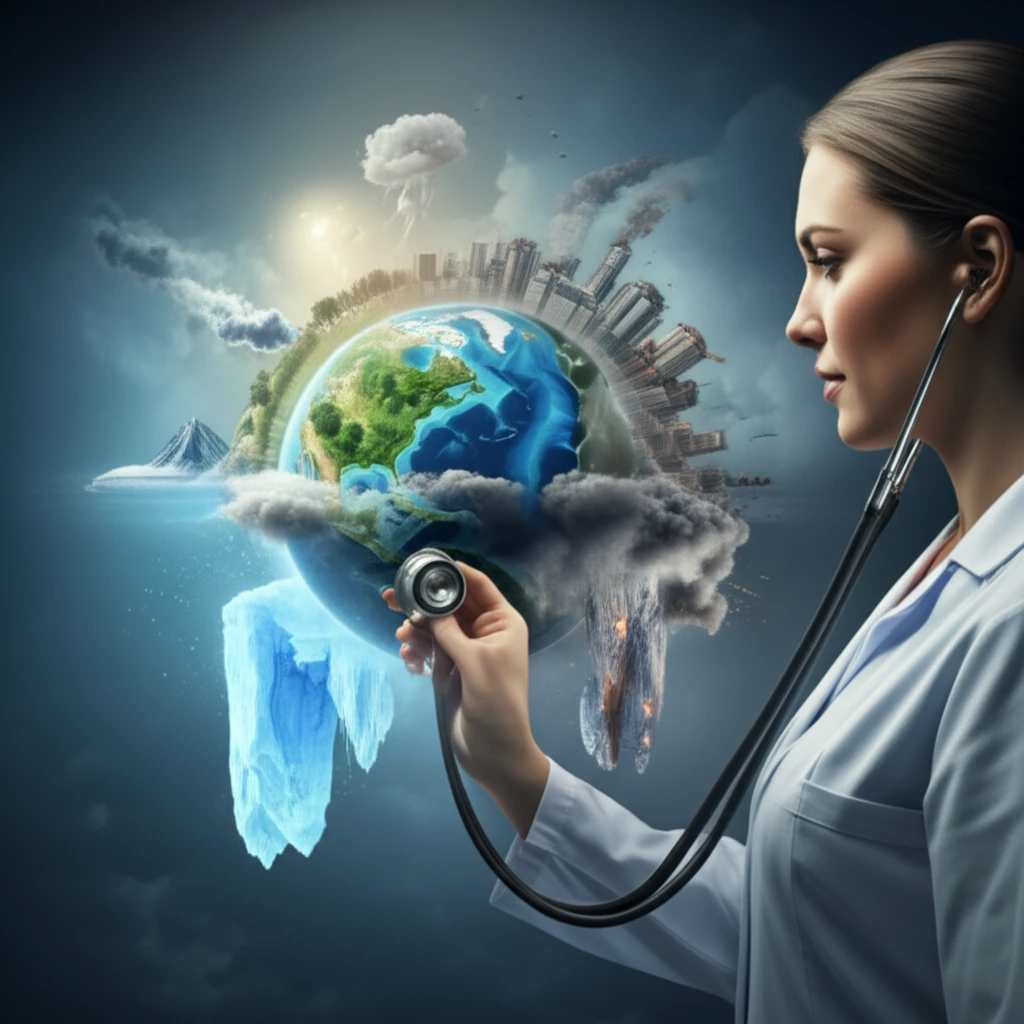
A nurse listening to the Earth's heartbeat, symbolizing the connection between human health and environmental health.

Nursing's Climate Mandate: How Education Can Drive a Healthier Planet

"Equipping nurses with climate change knowledge is no longer optional—it's essential for safeguarding public health in a rapidly changing world."


The intensifying health impacts of global climate change demand an immediate and comprehensive response from the nursing profession. Nurses, as frontline healthcare providers and trusted community figures, are uniquely positioned to lead this charge. This article examines the growing imperative for climate action, scrutinizes the integration of climate change education in nursing programs, and offers actionable recommendations to bridge the knowledge gap.

Calls to action from leading healthcare organizations and scientific bodies underscore the urgency of preparing nurses to address climate-related health threats. These calls span practice, research, advocacy, and, critically, education. Equipping nurses with the skills to influence policy, promote sustainable practices, and provide informed care is paramount. A critical piece of the solution involves expanding nursing's ability to act through comprehensive climate change education, which is the focus of this article.

We will explore the current status of climate change education within nursing, identify key challenges, and propose an Ecological Planetary Health Model as a guiding framework. This model emphasizes the interconnectedness of human health and the environment, promoting a holistic approach to nursing education that considers political, cultural, social, and economic factors. Finally, we present ten broad recommendations to guide curriculum design and empower nurses to become effective agents of change.

Why Climate Education Matters for Nurses: Understanding the Risks

A nurse listening to the Earth's heartbeat, symbolizing the connection between human health and environmental health.

The U.S. Global Change Research Program (USGCRP) and the Intergovernmental Panel on Climate Change (IPCC) have made it clear that the health effects of climate change are not a distant threat—they're already here and are expected to worsen. Extreme weather events, altered disease vectors, and air and water quality degradation disproportionately impact vulnerable populations, exacerbating existing health inequities. Nurses must understand these risks to provide effective and equitable care.

Climate change doesn't just create new health problems; it amplifies existing ones. Consider these critical areas:

  • Respiratory Illnesses: Increased air pollution and pollen seasons worsen asthma and other respiratory conditions.
  • Heat-Related Illnesses: Extreme heat events pose significant risks to older adults, children, and those with chronic diseases.
  • Waterborne Diseases: Flooding and altered water supplies increase the risk of diarrheal diseases and other waterborne illnesses.
  • Vector-Borne Diseases: Changing temperatures and precipitation patterns expand the range of mosquitoes and ticks, increasing the risk of diseases like Lyme disease and Zika virus.
  • Food Security: Droughts and extreme weather events disrupt food production, leading to malnutrition and food insecurity, especially in vulnerable communities.
Understanding the social determinants of health is equally crucial. Factors like income, education, housing, and access to healthcare significantly influence a community's vulnerability to climate-related health impacts. Nurses must be equipped to address these underlying factors and advocate for policies that promote environmental justice.

Empowering Nurses for a Sustainable Future

The time for incremental change has passed. Nursing education must evolve to meet the demands of a climate-changed world. By integrating climate change into curricula, fostering interdisciplinary collaboration, and empowering nurses to become advocates for environmental health, we can equip the next generation of healthcare leaders to build a more sustainable and equitable future.

The Ecological Planetary Health Model offers a valuable framework for this transformation, emphasizing the interconnectedness of human health and the environment. This approach encourages nurses to consider the broader social, economic, and political factors that influence health outcomes and to advocate for policies that promote both human and planetary well-being.

Nurses must be competent practitioners, advocates, and change agents to ensure the public's health in the face of climate threats. It is critical to address political, social, cultural, economic, and environmental interrelationships on human health and the health of the planet. The recommendations in this article offer a starting point for nursing organizations, educational programs, and practice settings to integrate climate change content into nursing education, ensuring a healthier future for all.

About this Article -

This article was crafted using a human-AI hybrid and collaborative approach. AI assisted our team with initial drafting, research insights, identifying key questions, and image generation. Our human editors guided topic selection, defined the angle, structured the content, ensured factual accuracy and relevance, refined the tone, and conducted thorough editing to deliver helpful, high-quality information.See our About page for more information.

This article is based on research published under:

DOI-LINK: 10.1111/jnu.12331, Alternate LINK

Title: Mandate For The Nursing Profession To Address Climate Change Through Nursing Education

Subject: General Nursing

Journal: Journal of Nursing Scholarship

Publisher: Wiley

Authors: Jeanne Leffers, Ruth Mcdermott Levy, Patrice K. Nicholas, Casey F. Sweeney

Published: 2017-08-14

Everything You Need To Know

1

What are the immediate health impacts of climate change that nurses need to understand?

The health effects of climate change are not a distant threat. They are already impacting communities, as indicated by the U.S. Global Change Research Program (USGCRP) and the Intergovernmental Panel on Climate Change (IPCC). Nurses must understand the risks, such as respiratory illnesses from increased air pollution, heat-related illnesses, waterborne diseases due to flooding, vector-borne diseases like Lyme disease, and food security issues stemming from droughts. These issues disproportionately affect vulnerable populations, making it essential for nurses to provide effective and equitable care.

2

Why is climate change education important for nurses?

Calls to action from healthcare organizations emphasize the need to prepare nurses to address climate-related health threats. This involves practice, research, advocacy, and education. Nurses must influence policy, promote sustainable practices, and provide informed care. Integrating climate change into nursing curricula is key to equipping nurses with the skills and knowledge needed to build a sustainable and equitable future.

3

What is the role of the Ecological Planetary Health Model?

An Ecological Planetary Health Model is proposed as a guiding framework. This model emphasizes the interconnectedness of human health and the environment, promoting a holistic approach to nursing education. This holistic approach considers political, cultural, social, and economic factors, which enables nurses to provide care that addresses underlying vulnerabilities and promote environmental justice.

4

How does climate change affect specific health issues?

Climate change exacerbates existing health problems and creates new ones. Respiratory illnesses are worsened by increased air pollution and pollen. Extreme heat events pose significant risks, particularly for older adults and those with chronic diseases. Flooding and altered water supplies increase the risk of waterborne illnesses. Changing temperatures and precipitation patterns expand the range of disease-carrying vectors. Droughts and extreme weather events disrupt food production, leading to malnutrition and food insecurity. Nurses must understand these complex health impacts to provide adequate care.

5

How can nursing education be adapted to address climate change?

The time for incremental change has passed. Nursing education must evolve to meet the demands of a climate-changed world. Expanding nursing's ability to act through comprehensive climate change education is paramount. Interdisciplinary collaboration and empowering nurses to become advocates for environmental health will help nurses lead in a sustainable and equitable future. The recommendations guide curriculum design and empower nurses to become effective agents of change.

Newsletter Subscribe

Subscribe to get the latest articles and insights directly in your inbox.