
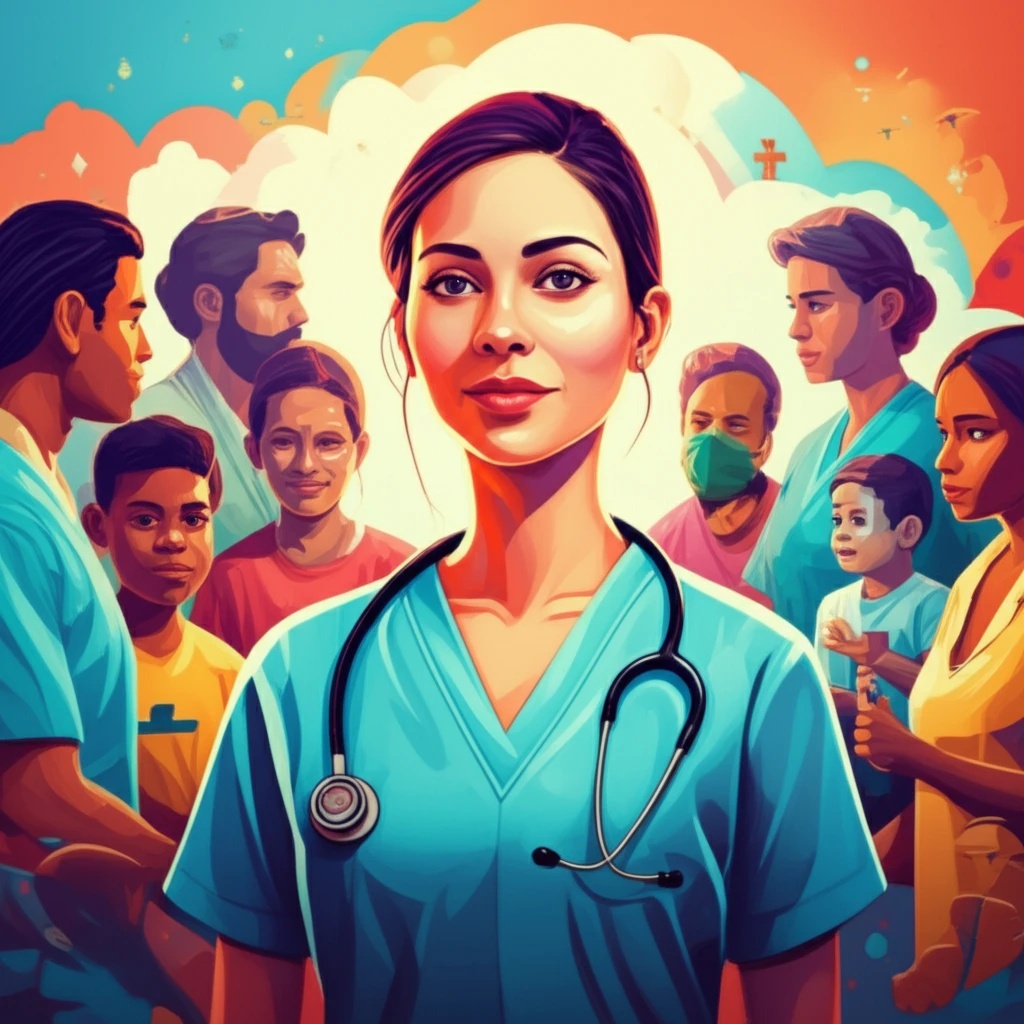
A nurse standing as a pillar of strength and support in a thriving community.

Nurses: The Unsung Heroes of Family Health

"Exploring the pivotal role of nurses in Brazil's Estratégia Saúde da Família and how their care management impacts community health."


In Brazil, healthcare delivery is increasingly focused on comprehensive, integrated care that prioritizes both curative treatments and proactive health promotion. The Estratégia Saúde da Família (ESF), or Family Health Strategy, aims to embody these principles by creating a healthcare system rooted in universality and equity. This approach emphasizes collaborative, interdisciplinary practices to ensure high-quality, problem-solving healthcare for individuals and communities.

Within the ESF model, nurses play a crucial role in directly influencing the health and autonomy of individuals and communities. They are tasked with disseminating an expanded concept of health that goes beyond simply treating illness. They work to address the social determinants of health and empower people to take control of their well-being. This involves a shift towards team-based care and participatory management, where the patient is at the center of the process.

While nursing practices within the ESF are evolving, they still face challenges in moving beyond traditional, top-down management approaches. There's a growing need for creative solutions that empower nurses and promote collaborative decision-making. This article explores the findings of a qualitative study that examines how different stakeholders – including healthcare teams, managers, and patients – perceive the role of nurses in care management within the ESF, shedding light on the complexities and opportunities for improvement.

The Nurse as Care Coordinator: Solving Problems and Educating Communities

A nurse standing as a pillar of strength and support in a thriving community.

A recent study explored how nurses are seen as central figures in Brazil's Estratégia Saúde da Família (ESF). Data was gathered through interviews with 102 people, including health professionals, managers, and patients, along with observations of 11 family health service units. The findings highlighted a recurring theme: nurses are often the go-to problem-solvers, developing care strategies based on both established healthcare programs and community health education.

This central role showcases the diverse responsibilities nurses undertake, suggesting a need for greater autonomy and shared accountability within the ESF. The study revealed that effective care management requires collaborative efforts between health and nursing teams, all grounded in a deep understanding of the patients' needs. The study identified specific actions highlighting nurse's responsibilities:

  • Guiding New Team Members: Nurses play a key role in orienting new staff, including doctors and community health agents.
  • Assessing Family Grant Programs: They evaluate eligibility for programs like the Bolsa Família.
  • Elaborating Reports & Planning Actions: Nurses are heavily involved in creating reports, requesting resources, and planning healthcare initiatives.
  • Supervising Community Health Agents (CHAs): They provide oversight and guidance to CHAs in the field.
  • Solving Community Problems: Nurses actively address health-related issues within the community.
  • Providing Individual and Group Education: They offer tailored health instructions to both individuals and groups.
However, the study also revealed some discrepancies. While nurses see themselves as heavily involved in these areas, users reported that home visits, once a key part of the ESF, were becoming less frequent due to transportation limitations. This highlights the challenges of resource constraints and the potential for disconnects between the intended model of care and the reality on the ground.

Empowering Nurses for a Healthier Future

The study underscores the critical need to empower nurses within the ESF model. While they already function as key care coordinators, problem-solvers, and educators, their effectiveness is often hampered by resource constraints, top-down management approaches, and a lack of true collaboration.

To unlock the full potential of nurses in community health, several key steps are needed. This includes fostering a more collaborative environment where decision-making is shared among team members, investing in ongoing training and development to enhance nurses' skills, and addressing the logistical challenges that limit their ability to provide comprehensive care, such as transportation for home visits.

Ultimately, by recognizing and supporting the vital role of nurses, Brazil can strengthen its primary healthcare system and improve the health and well-being of its communities. Future research should focus on developing and evaluating innovative management strategies that empower nurses, promote teamwork, and ensure that care is truly centered on the needs of the patient.

About this Article -

This article was crafted using a human-AI hybrid and collaborative approach. AI assisted our team with initial drafting, research insights, identifying key questions, and image generation. Our human editors guided topic selection, defined the angle, structured the content, ensured factual accuracy and relevance, refined the tone, and conducted thorough editing to deliver helpful, high-quality information.See our About page for more information.

Everything You Need To Know

1

What key roles do nurses play within Brazil's Estratégia Saúde da Família (ESF)?

Within the Estratégia Saúde da Família (ESF) in Brazil, nurses are central to ensuring community health. They're responsible for more than just treating illnesses; they address the social determinants of health, empowering individuals to manage their well-being. This includes orienting new team members, assessing eligibility for programs like Bolsa Família, creating reports, supervising Community Health Agents (CHAs), solving community problems, and providing education.

2

What is the overarching goal of the Estratégia Saúde da Família (ESF), and how do nurses contribute to achieving it?

The Estratégia Saúde da Família (ESF) aims to create a healthcare system in Brazil that is both universal and equitable. Nurses are tasked with delivering an expanded concept of health that goes beyond treating illness to address the social determinants of health, empowering people to take control of their well-being. This is achieved through team-based care and participatory management, with the patient at the center.

3

What challenges do nurses face within the Estratégia Saúde da Família (ESF) that impact their ability to provide care, specifically regarding home visits?

While nurses in the Estratégia Saúde da Família (ESF) are heavily involved in various community health activities, users have reported a decrease in the frequency of home visits due to transportation limitations. This disconnect highlights challenges in resource allocation, and the need to empower nurses to more effectively perform their duties within the constraints of the ESF model.

4

What are the implications of the study's findings regarding the empowerment of nurses within the Estratégia Saúde da Família (ESF)?

The study suggests that despite nurses functioning as key care coordinators, problem-solvers, and educators within the Estratégia Saúde da Família (ESF), their effectiveness is often limited by resource constraints, top-down management approaches, and a lack of genuine collaboration. Empowering nurses involves addressing these limitations to enhance their ability to deliver comprehensive care effectively.

5

How does the nurse's role in Brazil's Estratégia Saúde da Família (ESF) bridge the gap between healthcare programs and community well-being?

Nurses in Brazil's Estratégia Saúde da Família (ESF) are essential for connecting healthcare programs with community needs, developing care strategies, and educating the community. This central role requires autonomy and shared accountability. Effective management requires collaborative efforts between health teams, grounded in a deep understanding of patients’ needs, reinforcing the nurse's role as a bridge between clinical care and community well-being.

Newsletter Subscribe

Subscribe to get the latest articles and insights directly in your inbox.