
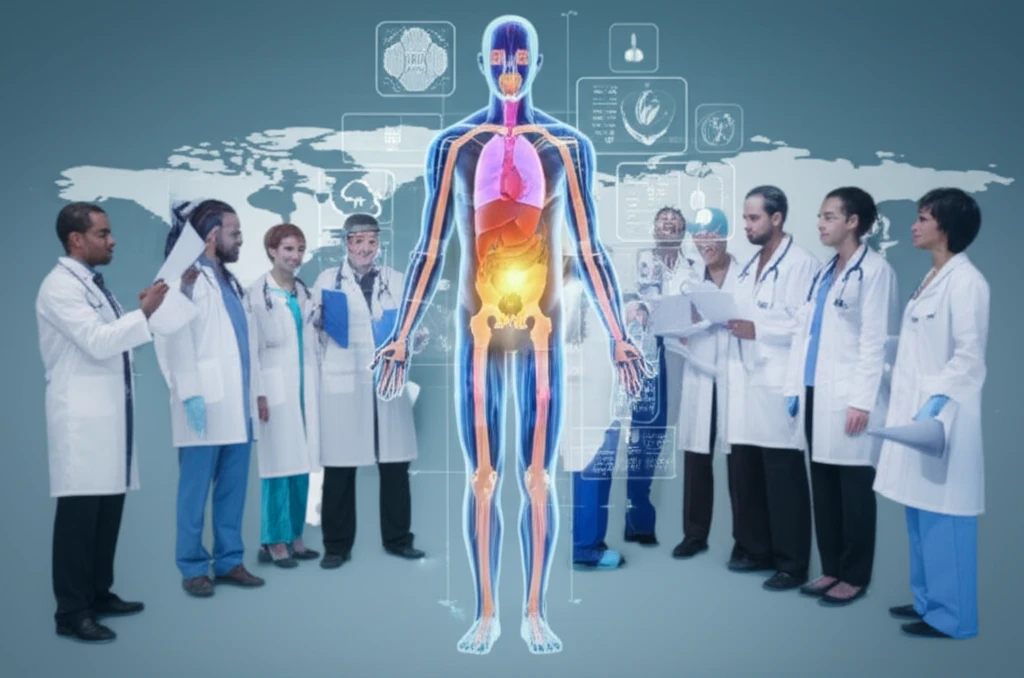
Global healthcare professionals collaborating on nuclear medicine advancements.

Nuclear Medicine: Bridging Global Healthcare Gaps for a Healthier Future

"Discover how the World Federation of Nuclear Medicine and Biology (WFNMB) is tackling global healthcare disparities through innovative solutions and international collaboration."


The 12th Asia Oceania Congress of Nuclear Medicine highlighted a critical reality: despite significant efforts, nuclear medicine remains in its early stages across much of Asia and Oceania. This is happening even as the world advances toward precision and personalized medicine. Many countries still struggle with the fundamental infrastructure needed to support nuclear medicine, revealing a substantial disparity in healthcare capabilities.

While nations like Japan, Korea, and China perform millions of nuclear medicine procedures annually, others face unique obstacles. Bangladesh has strong infrastructure but struggles with economic development, whereas Mongolia, Yemen, and Nepal need to cultivate their own nuclear medicine experts. China must dramatically increase its numbers of trained professionals to meet clinical demands across all regions. Even developed countries like Japan and Korea face challenges, including declining practices and reimbursement issues, demonstrating that advancements are not uniform or without setbacks.

These challenges aren't new; they have been persistent since the inception of nuclear medicine. Addressing them requires a global perspective focused on sharing successes and strategic plans to overcome current and future hurdles. The World Federation of Nuclear Medicine and Biology (WFNMB) is actively fostering a relationship with the World Health Organization (WHO) to address these global needs collaboratively.

Why is Nuclear Medicine Recognition by WHO a Game Changer?

Global healthcare professionals collaborating on nuclear medicine advancements.

The WFNMB has applied for recognition as an official Non-Governmental Organization (NGO) by the WHO, marking a pivotal step towards integrating nuclear medicine into global healthcare frameworks. This recognition is more than just a title; it signifies that nuclear medicine is considered a vital clinical entity on an international stage.

Once approved, the WFNMB will work closely with WHO regional offices to devise working plans and allocate resources effectively. The WHO operates through six regional offices, each responsible for specific geographic areas. For example, Asia is covered by the Western Pacific RO (WPRO), South Eastern Asian RO (SEARO), and Eastern Mediterranean RO (EMRO). This structured approach ensures that initiatives are tailored to meet the unique needs of each region.

  • Global Reach: The WHO's recognition enables WFNMB to influence healthcare policies and practices worldwide.
  • Regional Customization: Collaborating with regional offices ensures that nuclear medicine initiatives are relevant and effective in diverse settings.
  • Resource Optimization: WHO's structured resource allocation supports the implementation of nuclear medicine programs in areas where they are most needed.
With WHO's acknowledgement of nuclear medicine’s role in maintaining human health, nuclear medicine and the WFNMB will support the United Nations' Sustainable Development Goal 3 (SDG3), which focuses on ensuring healthy lives and promoting well-being for all. Under this unified umbrella, entities like the Asia Regional Cooperative Council for Nuclear Medicine (ARCCNM) and the Arabic Society of Nuclear Medicine will begin collaborations with WPRO, SEARO, and EMRO, creating a cohesive global network.

What Future Innovations are on the Horizon?

To truly integrate nuclear medicine into global healthcare, efforts must focus on being part of the Integrated Service Delivery framework promoted by the WHO. This includes addressing the shortage of healthcare workers in developing countries and expanding access to secondary care aspects like therapy and theranostics. While cutting-edge technologies like PET/MRI and PET/CT are valuable, the emphasis should be on radionuclide therapy and dosimetry, which offer essential diagnostic and treatment capabilities.

About this Article -

This article was crafted using a human-AI hybrid and collaborative approach. AI assisted our team with initial drafting, research insights, identifying key questions, and image generation. Our human editors guided topic selection, defined the angle, structured the content, ensured factual accuracy and relevance, refined the tone, and conducted thorough editing to deliver helpful, high-quality information.See our About page for more information.

Everything You Need To Know

1

What exactly is Nuclear Medicine and why should I care?

Nuclear medicine uses radioactive materials to diagnose and treat diseases. It's important because it offers unique insights into the body's functions at a molecular level, allowing for early disease detection and personalized treatment plans. The implications of nuclear medicine are vast, impacting areas from cardiology and oncology to neurology. Addressing the disparities in its availability and expertise is crucial for global health equity.

2

What is the World Federation of Nuclear Medicine and Biology (WFNMB) and why is it important?

The World Federation of Nuclear Medicine and Biology (WFNMB) is an organization that aims to advance nuclear medicine worldwide through education, research, and collaboration. It's significant because it acts as a central hub for sharing knowledge and resources, especially in regions where nuclear medicine is still developing. This helps in standardizing practices, improving the quality of care, and promoting innovation in the field. It also facilitates partnerships between different countries and organizations involved in nuclear medicine.

3

Why is it a big deal for the World Health Organization (WHO) to recognize Nuclear Medicine?

WHO recognition is important because it elevates nuclear medicine to a vital component of global healthcare frameworks. It signifies that nuclear medicine is seen as crucial for maintaining human health. This recognition helps the WFNMB work with WHO regional offices to implement programs and allocate resources effectively, ensuring that nuclear medicine initiatives are tailored to meet the specific needs of different regions. It also supports the United Nations' Sustainable Development Goal 3 (SDG3), focusing on ensuring healthy lives and promoting well-being for all.

4

What is the Asia Regional Cooperative Council for Nuclear Medicine (ARCCNM)?

The Asia Regional Cooperative Council for Nuclear Medicine (ARCCNM) is a regional organization that fosters collaboration and cooperation in nuclear medicine within Asia. Its significance lies in its ability to address specific challenges and needs within the Asian region, promoting the adoption and advancement of nuclear medicine practices. The Arabic Society of Nuclear Medicine does a similar job but for the Arabic speaking countries. These societies can address and create specialized solutions.

5

What does it mean for Nuclear Medicine to be part of an Integrated Service Delivery framework?

Integrated Service Delivery framework is a comprehensive approach promoted by the WHO to ensure healthcare services are well-coordinated and accessible to everyone. Nuclear medicine's role in this framework involves addressing the shortage of healthcare workers and expanding access to vital services like radionuclide therapy and dosimetry. This ensures that nuclear medicine is not just about cutting-edge technologies but also about providing essential diagnostic and treatment capabilities to those who need them most, contributing to the overall goal of equitable healthcare access.

Newsletter Subscribe

Subscribe to get the latest articles and insights directly in your inbox.