
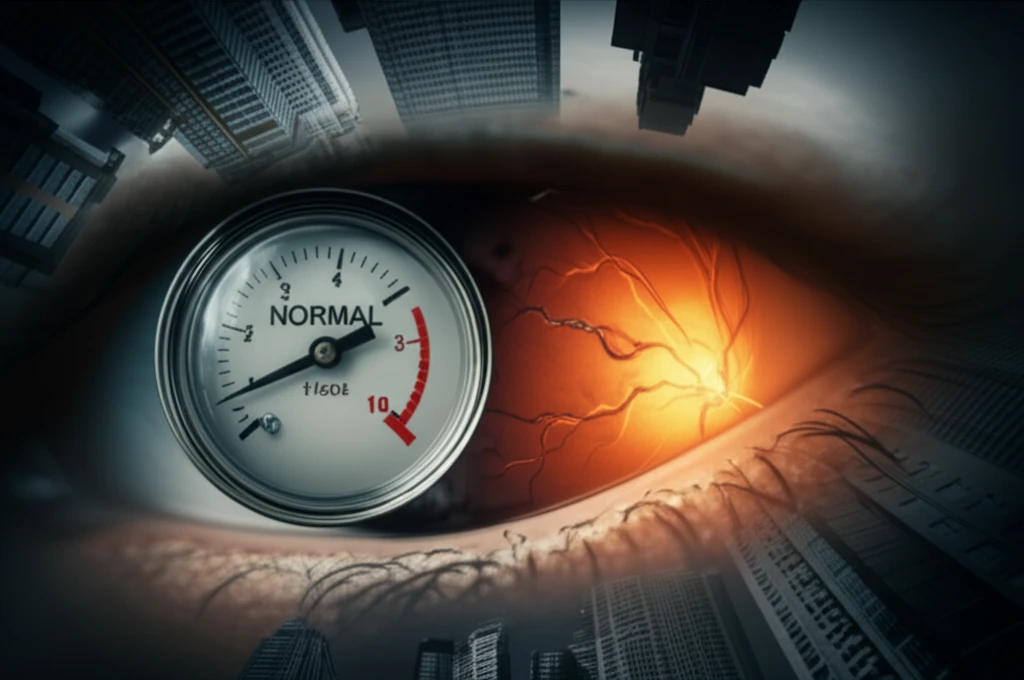
Normal Eye Pressure, Hidden Threat: Understanding Normal-Tension Glaucoma

"Uncover the Surprising Prevalence and Characteristics of Primary Angle Closure Glaucoma with Normal Intraocular Pressure."
Glaucoma, often associated with elevated intraocular pressure (IOP), is a leading cause of irreversible blindness worldwide. However, a significant subset of glaucoma patients presents with normal IOP, a condition known as normal-tension glaucoma (NTG) or primary angle closure glaucoma with normal intraocular pressure. This article explores the complexities of NTG, shedding light on its prevalence, characteristics, and the importance of comprehensive eye examinations for early detection and management.
Primary angle closure glaucoma (PACG) occurs when the angle between the iris and cornea narrows, blocking fluid drainage and increasing eye pressure. In many cases, PACG is asymptomatic until significant damage has occurred, making early detection crucial. While elevated IOP is a hallmark of PACG, it's increasingly recognized that a substantial number of individuals with PACG exhibit normal IOP at their initial examination.
This article provides a comprehensive look into normal-tension glaucoma, drawing upon recent research to explain the condition, its risk factors, diagnostic challenges, and management strategies. It emphasizes the importance of regular eye exams, including gonioscopy, to identify angle closure and other subtle signs of glaucoma, even when eye pressure is within the normal range. By understanding the nuances of NTG, individuals can take proactive steps to protect their vision and prevent irreversible sight loss.
What is Normal-Tension Glaucoma?
Normal-tension glaucoma (NTG), also known as primary angle closure glaucoma with normal intraocular pressure, is a type of glaucoma in which damage to the optic nerve occurs despite having IOP within the normal statistical range. This challenges the traditional understanding of glaucoma as solely a pressure-related disease. While the exact cause of NTG is unknown, several factors are believed to contribute to its development.
- Vascular Factors: Reduced blood flow to the optic nerve may play a role in NTG. Conditions like migraines, Raynaud's phenomenon, and sleep apnea have been associated with an increased risk of NTG.
- Optic Nerve Sensitivity: Some individuals have optic nerves that are inherently more vulnerable to damage from pressure, even within the normal range.
- Anatomical Factors: Specific anatomical features of the eye, such as a narrow angle between the iris and cornea, may contribute to NTG.
- Systemic Conditions: Certain systemic diseases, such as autoimmune disorders, may increase the risk of NTG.
The Importance of Early Detection and Comprehensive Eye Exams
Normal-tension glaucoma can be challenging to diagnose, as it often presents without the typical symptom of elevated eye pressure. This is why regular, comprehensive eye examinations are so important. These exams should include gonioscopy to evaluate the drainage angle, as well as optic nerve imaging and visual field testing to assess for any signs of glaucoma damage. Early detection and management of NTG can help prevent further vision loss and maintain quality of life. If you have any risk factors for glaucoma, such as a family history of the disease, it's especially important to have regular eye exams, even if your eye pressure is normal. Protecting your vision starts with proactive care.