
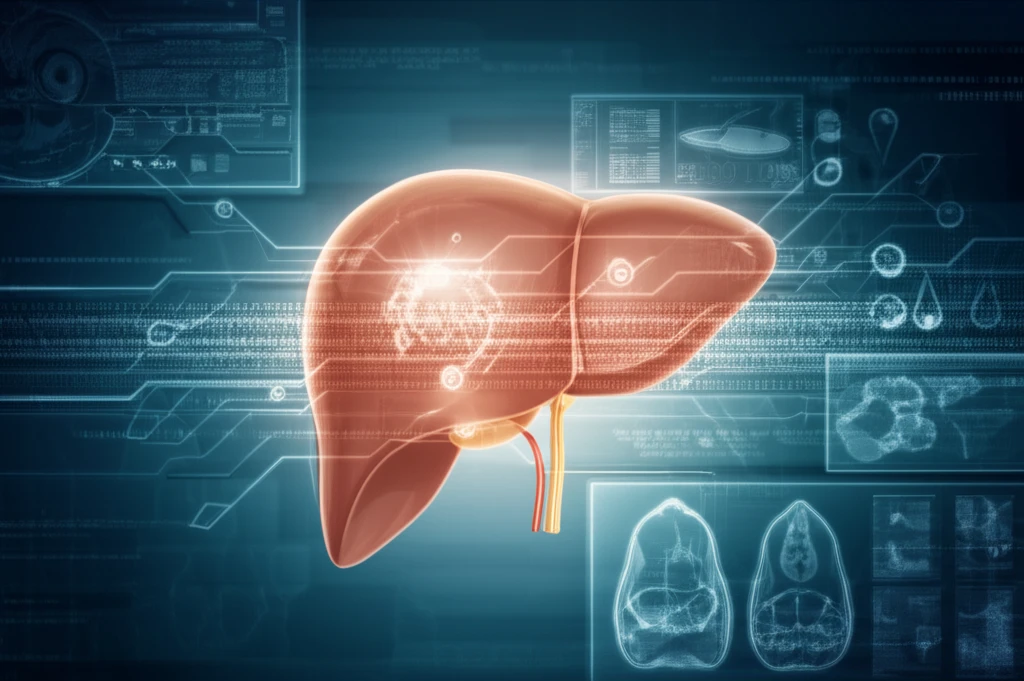
Next-Gen Phantoms: Revolutionizing Low-Contrast Detection in Liver Imaging

"A new digital tool sharpens the focus on liver tumors, enhancing detection and transforming dynamic CT scans."
Multi-detector row computed tomography (MDCT) is a cornerstone in liver imaging, particularly for spotting and diagnosing liver malignancies. The challenge? Detecting lesions with only slight differences in contrast from the surrounding tissue. Imagine trying to find a pebble on a speckled beach – that's the level of subtlety radiologists often face. The ability to reliably identify these subtle differences, often as small as 15 Hounsfield units (HU), is crucial for early and accurate diagnosis.
But here's the rub: there hasn't been a standardized way to assess or ensure this low-contrast detectability. Evaluating the effectiveness of different imaging techniques and reconstruction methods has been like navigating uncharted waters. The ideal scenario would involve using real clinical images, but the inherent variability in tumor size, contrast, and patient-specific factors makes direct comparison incredibly difficult. You simply can't get two identical tumors to test different imaging approaches.
Enter the digital phantom – a computer-generated model that mimics the properties of a liver and potential lesions. While existing phantoms have been useful, they often fall short in replicating the complexities of real-world imaging, especially when it comes to newer reconstruction techniques like iterative reconstruction. A recent study introduces a novel digital phantom creation tool designed to overcome these limitations, offering a more accurate and reliable way to evaluate low-contrast detectability in liver CT imaging.
A Phantom with Depth: The New Tool's Edge
The core innovation lies in the tool's ability to create phantoms that extend beyond a single slice, accounting for the Z-axis – the depth dimension. Traditional digital phantoms were essentially 2D, failing to capture the partial volume effect, where the apparent contrast of a small object changes depending on how much of it is within the slice thickness. Think of trying to judge the size of an iceberg from just above the waterline – you're missing crucial information.
- Can it accurately assess low-contrast detectability when used with iterative reconstruction, a technique increasingly common in clinical practice?
- Does it realistically reproduce the partial volume effect?
- How does the visibility of the digital phantom compare to actual low-contrast modules used in physical phantoms?
Sharper Images, Earlier Detection: The Future of Liver CT
The study's findings suggest that this new digital phantom tool holds significant promise for optimizing liver CT imaging protocols. The researchers found that stronger levels of AIDR 3D, while reducing radiation dose, could also decrease detection sensitivity. This highlights the need for careful balancing between dose reduction and image quality.
Moreover, the tool's ability to replicate the partial volume effect and its compatibility with iterative reconstruction make it a valuable asset for assessing and improving low-contrast detectability. By providing a more realistic and standardized way to evaluate imaging techniques, this tool can help radiologists make more informed decisions about scan parameters and reconstruction settings.
Ultimately, this translates to earlier and more accurate diagnoses of liver tumors, potentially leading to improved patient outcomes. While further research is needed to refine and validate the tool, this innovative approach represents a significant step forward in the quest for sharper images and earlier detection in liver imaging.