
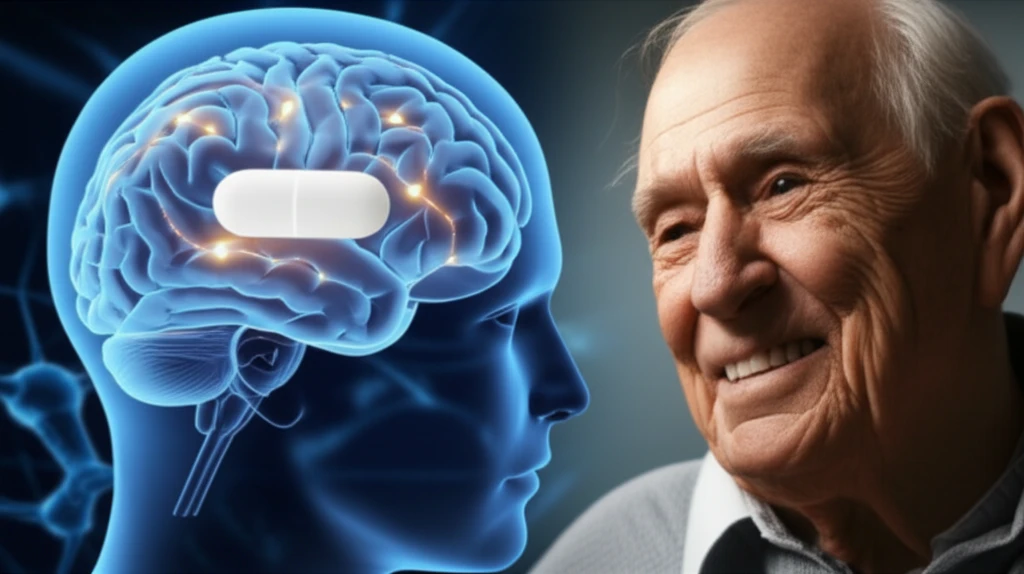
Illustration representing Vilazodone's potential to reduce L-DOPA-induced dyskinesia in Parkinson's disease.

New Hope for Parkinson's: How a Common Drug Could Reduce Dyskinesia

"Groundbreaking research reveals that Vilazodone, a drug currently used for depression, shows promising results in alleviating the debilitating involuntary movements associated with Parkinson's disease treatment."


Parkinson's disease, a progressive neurological disorder, affects millions worldwide. While treatments like L-DOPA have been instrumental in managing symptoms, a significant challenge remains: L-DOPA-induced dyskinesia (LID). This condition causes involuntary, often disabling, movements, making life even more challenging for those battling Parkinson's.

In a promising development, recent research has highlighted the potential of Vilazodone, a medication currently used to treat depression. The study reveals that Vilazodone could be a key player in reducing the severity of LID. This exciting news offers a new avenue for managing the side effects of Parkinson's treatment, improving the quality of life for those affected.

This article will delve into the science behind this discovery, exploring how Vilazodone works, what the research shows, and the implications for the future of Parkinson's disease treatment. We'll examine the potential of this drug to reduce the debilitating involuntary movements that often accompany L-DOPA use.

Understanding L-DOPA-Induced Dyskinesia: The Challenge of Parkinson's Treatment

Illustration representing Vilazodone's potential to reduce L-DOPA-induced dyskinesia in Parkinson's disease.

L-DOPA (levodopa) has been a cornerstone in the treatment of Parkinson's disease, helping to alleviate motor symptoms like tremors, rigidity, and slowness of movement. However, prolonged use of L-DOPA often leads to LID. This is characterized by uncontrolled movements, such as jerking, writhing, or fidgeting, that can significantly impact a person's daily life. LID arises from complex changes in the brain's dopamine pathways.

The development of LID is not fully understood, but it is believed to involve the brain's response to the fluctuating levels of dopamine caused by L-DOPA. Over time, the brain becomes more sensitive to dopamine, leading to these involuntary movements. The current strategies to combat LID are often limited in their effectiveness and can sometimes worsen motor symptoms.

  • Dopamine Fluctuations: L-DOPA's impact on dopamine levels is a key factor.
  • Brain Plasticity: The brain's adaptation to L-DOPA contributes to LID.
  • Motor Control Challenges: LID significantly impairs quality of life.
The search for effective treatments for LID has been ongoing, with researchers exploring different avenues to reduce or prevent these involuntary movements. These include adjusting L-DOPA dosage, using other medications, and exploring novel therapeutic approaches. Vilazodone's potential role in this landscape marks a significant step forward.

Looking Ahead: The Future of Vilazodone in Parkinson's Treatment

The research on Vilazodone is a significant step towards improving the lives of individuals with Parkinson's disease. By targeting LID while preserving the benefits of L-DOPA, Vilazodone holds promise for a more comprehensive approach to Parkinson's treatment. Further research, including clinical trials, will be essential to fully understand its efficacy and safety. The potential of Vilazodone provides a renewed sense of hope for those managing Parkinson's, signaling a promising path toward improved quality of life and better management of treatment side effects. This research reinforces the importance of continued investigation into novel therapeutics to improve the lives of those impacted by this difficult condition.

About this Article -

This article was crafted using a human-AI hybrid and collaborative approach. AI assisted our team with initial drafting, research insights, identifying key questions, and image generation. Our human editors guided topic selection, defined the angle, structured the content, ensured factual accuracy and relevance, refined the tone, and conducted thorough editing to deliver helpful, high-quality information.See our About page for more information.

Everything You Need To Know

1

What is L-DOPA-induced dyskinesia (LID) and why is it a problem for Parkinson's patients?

L-DOPA-induced dyskinesia (LID) is a condition characterized by involuntary movements, such as jerking, writhing, or fidgeting, that can arise as a side effect of long-term treatment with L-DOPA for Parkinson's disease. While L-DOPA helps manage motor symptoms like tremors and rigidity, its prolonged use can lead to LID, significantly impairing a person's daily life and quality of life because of these uncontrolled movements. Current strategies to combat LID have limited effectiveness.

2

How does Vilazodone potentially help with Parkinson's disease, and what was it originally developed for?

Vilazodone, originally developed as a medication to treat depression, has shown promise in reducing the severity of L-DOPA-induced dyskinesia (LID) in Parkinson's disease. The research indicates that Vilazodone could play a key role in managing the side effects of L-DOPA treatment, thus improving the quality of life for those affected by Parkinson's. The exact mechanism is still under investigation, but it offers a new avenue for managing a challenging aspect of Parkinson's treatment.

3

Why does L-DOPA, a treatment for Parkinson's, sometimes cause involuntary movements?

L-DOPA can lead to involuntary movements, known as L-DOPA-induced dyskinesia (LID), due to the brain's complex response to fluctuating dopamine levels caused by L-DOPA. Over time, the brain becomes more sensitive to dopamine, leading to these uncontrolled movements. This is related to the brain's adaptation, or brain plasticity, in response to L-DOPA.

4

What are the next steps in researching Vilazodone's effectiveness for Parkinson's disease?

The next steps in researching Vilazodone's effectiveness involve conducting further research, including clinical trials. These trials are essential to fully understand Vilazodone's efficacy in reducing L-DOPA-induced dyskinesia (LID), as well as to assess its safety for individuals with Parkinson's disease. This research will help determine if Vilazodone can be integrated into a more comprehensive approach to Parkinson's treatment, improving the quality of life for patients.

5

Besides Vilazodone, what other approaches are being explored to manage L-DOPA-induced dyskinesia (LID)?

Besides Vilazodone, other approaches to manage L-DOPA-induced dyskinesia (LID) include adjusting L-DOPA dosage and using other medications. Researchers are continuously exploring novel therapeutic approaches to reduce or prevent these involuntary movements. These strategies aim to address the complex changes in the brain's dopamine pathways that contribute to LID, with the goal of improving motor control and quality of life for individuals with Parkinson's disease.

Newsletter Subscribe

Subscribe to get the latest articles and insights directly in your inbox.