
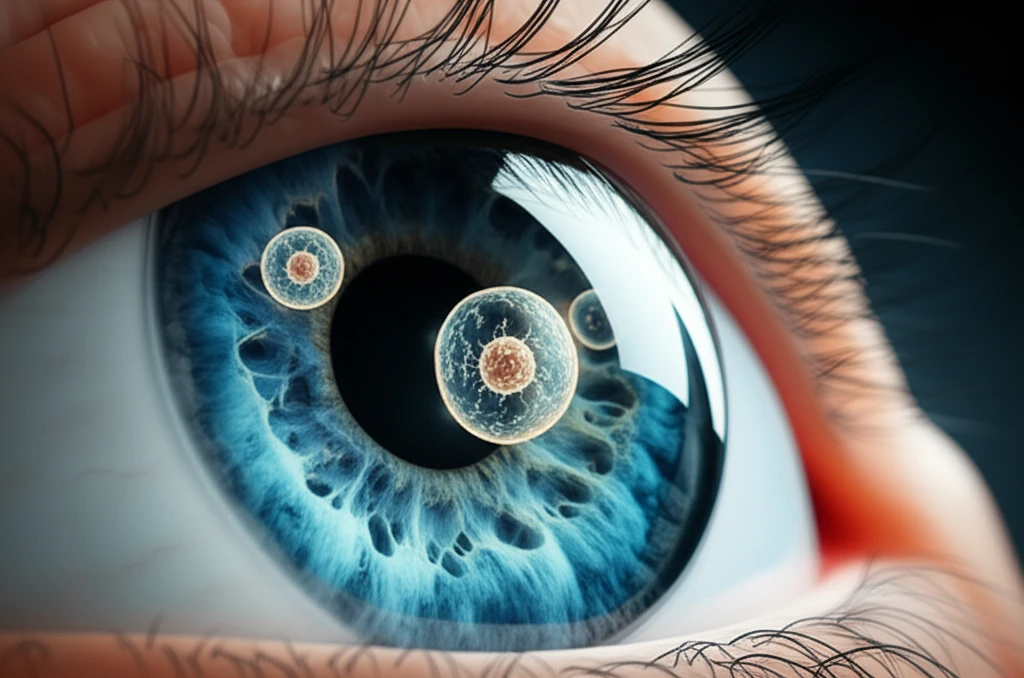
New Hope for Eyesight: Pioneering Stem Cell Breakthrough Could Revolutionize Corneal Treatment

"Scientists discover a new method to isolate and expand stem cells from the lacrimal canaliculus, paving the way for groundbreaking treatments for corneal diseases and vision loss."
The world of medicine is constantly evolving, and every so often, a breakthrough emerges that promises to redefine how we understand and treat diseases. In the realm of ophthalmology, a recent study published in the International Journal of Medical Sciences has unveiled a groundbreaking method for isolating and expanding human lacrimal canaliculus epithelial stem cells (LCESCs). This discovery holds immense promise for individuals suffering from corneal diseases, offering a potential new avenue for restoring vision and improving quality of life.
The cornea, the transparent front part of the eye, plays a critical role in vision, acting as a protective barrier and allowing light to enter. However, various conditions, such as injuries, burns, and genetic disorders, can damage the cornea, leading to vision impairment or blindness. Traditional treatments often involve corneal transplants, but this approach faces challenges like donor tissue scarcity and immune rejection.
This study introduces a novel approach by focusing on the lacrimal canaliculus, a small structure in the eye responsible for tear drainage. Researchers have discovered a way to isolate and culture stem cells from this area, potentially offering a readily available and effective source for corneal repair and regeneration.
Unveiling the Power of LCESCs: A Deep Dive into the Science
The research team, led by Weikun Hu and colleagues, embarked on a mission to explore the potential of LCESCs in addressing corneal diseases. The lacrimal canaliculus, previously overlooked as a source of stem cells, was meticulously examined. Using advanced techniques, the researchers isolated epithelial cells from the lacrimal canaliculus while preserving their close association with the surrounding niche cells, which are crucial for stem cell maintenance and function.
- Isolation Method: The study highlights a novel method for isolating LCESCs, which involves digesting the lacrimal canaliculus tissue with enzymes to release the epithelial cells.
- Stem Cell Characteristics: The isolated LCESCs exhibited stem cell characteristics, including the expression of specific markers like p63a, SCF, and c-Kit.
- Clonal Growth: The LCESCs demonstrated the ability to form colonies, indicating their capacity for self-renewal and expansion.
- Comparison to Limbal Stem Cells: The study compared the LCESCs to limbal stem cells, the existing standard for corneal repair, and found that LCESCs exhibited similar stem cell properties.
- Potential Applications: The research suggests that LCESCs could serve as a promising resource for treating corneal diseases, offering a new approach to vision restoration.
Looking Ahead: The Future of Corneal Regeneration
This pioneering study marks a significant advancement in the field of ophthalmology. As researchers continue to build on this foundation, the potential for LCESCs to revolutionize corneal treatments becomes increasingly apparent. The ability to harness the regenerative power of these stem cells opens doors to new therapies for individuals suffering from corneal diseases, ultimately offering the hope of restored vision and a brighter future. Further research, including clinical trials, will be essential to fully realize the potential of LCESCs and translate this exciting discovery into effective treatments for patients in need.