
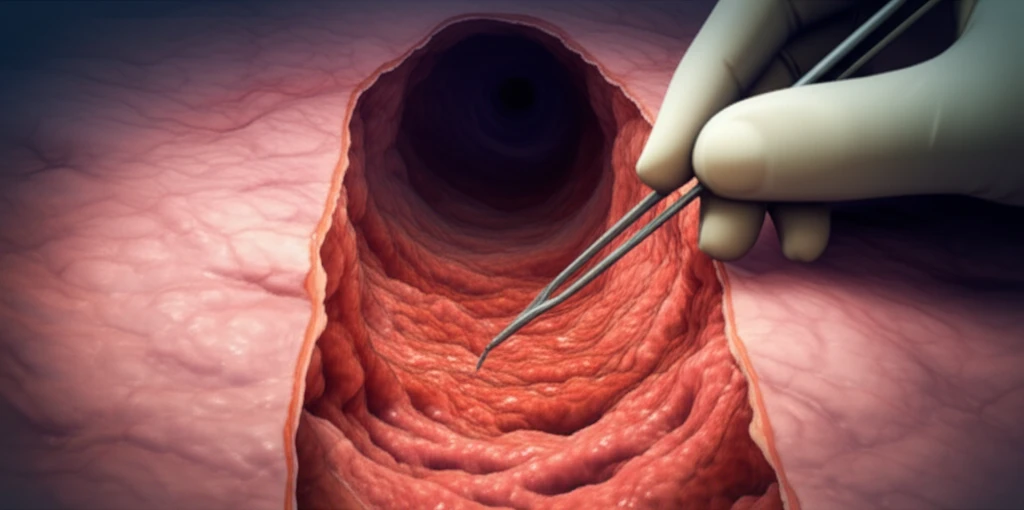
Microscopic view of esophagus transitioning to Barrett's Esophagus, with surgeon's hand performing microsurgery.

New Hope for Barrett's Esophagus: An Improved Surgical Model

"Scientists develop a more effective way to study and potentially treat this precursor to esophageal cancer."


Barrett's esophagus (BE) is a serious condition where the lining of the esophagus changes, increasing the risk of esophageal adenocarcinoma. Current animal models used to study BE often have low success rates and require lengthy observation periods. This makes researching new treatments and understanding the disease's progression challenging.

Now, researchers have developed an improved surgical procedure that significantly increases the incidence of BE in rats. This breakthrough promises to accelerate research and provide a more reliable platform for testing potential therapies.

This article will explain the new surgical model, its advantages over previous methods, and its potential impact on the future of BE research and treatment.

The Breakthrough: A Modified Surgical Approach

Microscopic view of esophagus transitioning to Barrett's Esophagus, with surgeon's hand performing microsurgery.

The researchers modified a previously existing surgical model (EJGJ) to create a more effective method for inducing BE in rats. The key modifications involved:

These modifications resulted in a significantly higher incidence of BE in the rat models, reaching 100% compared to the 47% achieved with the original EJGJ model.

  • Shortening the Distance: The distance between the Treitz ligament and the gastro-jejunal anastomosis was reduced to 3 cm.
  • Lengthening the Distance: The distance between the stomach-jejunal anastomosis (SJA) and the esophagus-jejunal anastomosis (EJA) was increased to 1-1.5 cm.
While the new model showed a higher success rate in inducing BE, it also presented some challenges. The initial mortality rate was relatively high (37.5%) due to post-surgical complications. However, the researchers noted that with increased surgical experience, the mortality rate could be reduced. Further studies are underway to refine the surgical technique and improve post-operative care.

Implications for Future Research

This improved surgical model represents a significant step forward in BE research. Its higher success rate and faster induction time will enable scientists to:

This research offers hope for more effective treatments and a better understanding of this complex disease. This model offers a reliable method for further investigation and potential therapeutic breakthroughs, ultimately benefiting patients at risk of esophageal cancer.

The team has continued to refine this technique, and future work will focus on reducing post-surgical complications to create a reliable tool for BE research.

About this Article -

This article was crafted using a human-AI hybrid and collaborative approach. AI assisted our team with initial drafting, research insights, identifying key questions, and image generation. Our human editors guided topic selection, defined the angle, structured the content, ensured factual accuracy and relevance, refined the tone, and conducted thorough editing to deliver helpful, high-quality information.See our About page for more information.

This article is based on research published under:

DOI-LINK: 10.3892/etm.2018.6712, Alternate LINK

Title: An Improved Surgical Procedure To Establish A Gastroesophageal Reflux Model With A High Incidence Of Barrett'S Esophagus In Rats

Subject: Cancer Research

Journal: Experimental and Therapeutic Medicine

Publisher: Spandidos Publications

Authors: Hui Wen, Tao Liu, Hua Liu, Jing‑Hua Teng, Sheng‑Bao Li

Published: 2018-09-10

Everything You Need To Know

1

How does the new surgical technique improve the modeling of Barrett's Esophagus in rats?

The novel surgical technique enhances the success of modeling Barrett's Esophagus in rats by modifying the existing EJGJ model. This involves shortening the distance between the Treitz ligament and the gastro-jejunal anastomosis to 3 cm, and lengthening the distance between the stomach-jejunal anastomosis (SJA) and the esophagus-jejunal anastomosis (EJA) to 1-1.5 cm. These specific adjustments significantly improve the incidence of BE in rat models compared to the original EJGJ model.

2

How does the success rate of this new model compare to previous methods like the original EJGJ model?

The previous EJGJ model had a success rate of only 47% in inducing Barrett's Esophagus in rats. The modified surgical approach achieves a 100% incidence rate. This enhancement accelerates research by providing a more consistent and reliable platform for studying potential treatments and understanding the progression of Barrett's Esophagus.

3

Were there any challenges associated with this new surgical model for Barrett's Esophagus?

While the improved surgical model significantly increases the incidence of Barrett's Esophagus in rat models, it initially showed a relatively high mortality rate of 37.5% due to post-surgical complications. Researchers believe that with increased surgical experience and refinements to post-operative care, the mortality rate can be reduced, making the model more viable for widespread research applications.

4

What are the implications of this improved surgical model for future research into Barrett's Esophagus and related conditions?

This improved surgical model allows scientists to more effectively study Barrett's Esophagus, a precursor to esophageal adenocarcinoma. By consistently inducing BE in rat models, researchers can accelerate the testing of potential therapies and gain a deeper understanding of the disease's development. This can lead to more effective treatments and preventive strategies for individuals at risk of esophageal cancer. Further, this advancement could lead to studies on biomarkers.

5

Besides Barrett's Esophagus, how might this surgical model impact our understanding and treatment of related conditions like esophageal adenocarcinoma?

The success of the modified EJGJ surgical model in inducing Barrett's Esophagus in rats has implications for studying related conditions, such as esophageal adenocarcinoma, a type of cancer that can arise from BE. While this model specifically addresses BE, it provides a foundation for developing models to study the progression from BE to cancer and the effectiveness of interventions at different stages. This approach facilitates the investigation of molecular mechanisms involved in disease progression and the identification of potential therapeutic targets for both BE and esophageal cancer.

Newsletter Subscribe

Subscribe to get the latest articles and insights directly in your inbox.