
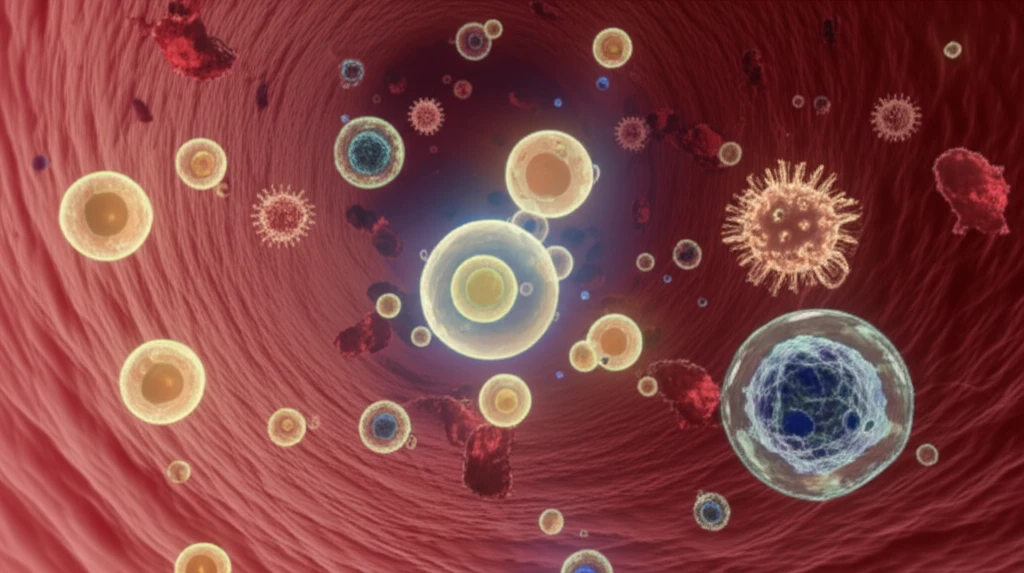
Microvesicles interacting with immune cells

Neutrophil-Derived Microvesicles: Tiny Messengers in Your Body's Immune Chat

"Unlocking the Secrets of How These Microvesicles Mediate Inflammation and Impact Disease"


When your body faces infection or injury, a precisely controlled inflammatory response is crucial to fight off invaders and minimize harm to your own tissues. White blood cells, or leukocytes, are essential players in this process, acting as first responders that can later become less responsive or even undergo programmed cell death (apoptosis).

Intriguingly, leukocytes, at various stages from activation to apoptosis, release tiny vesicles called microvesicles (MVs). Ranging in size from 0.1 to 1.0 micrometer, these vesicles carry proteins, RNA, and DNA from their parent cells. Neutrophil-derived microvesicles (NDMVs), in particular, are found to increase significantly under inflammatory conditions.

This article explores the current research on NDMVs, detailing the conditions in which they increase, the mechanisms behind their formation, and how they affect other cells in the body. Understanding NDMVs better could lead to new diagnostic tools and therapies for infections and injuries.

When Do NDMVs Show Up? Increased Numbers in Disease States

Microvesicles interacting with immune cells

Under normal, healthy conditions, NDMVs are present in the body in very small numbers. However, their levels rise significantly in various inflammatory disorders, suggesting they play a role in these conditions.

Here are some conditions where NDMV levels are known to increase:

  • Cardiovascular Disease/Atherosclerosis: Elevated levels suggest a link between NDMVs and the progression of atherosclerosis.
  • Systemic Lupus Erythematosus, Anti-phospholipid Syndrome: Increased NDMVs are associated with these autoimmune conditions affecting blood vessels.
  • ANCA-associated vasculitis: NDMVs contribute to inflammation of blood vessels in this condition.
  • Pneumonia/ARDS: Higher NDMV levels are found in lung fluid samples from patients with pneumonia and ARDS (Acute Respiratory Distress Syndrome).
  • Tubulo-interstitial nephritis, Vasculitis, IgA Nephropathy: Patients with these kidney disorders show increased NDMV populations.
  • Sepsis: Both in blood and at sites of infection (peritoneal lavage), NDMVs are elevated.
  • Localized Infection: Higher concentrations of NDMVs are found at the site of infection, such as in blister fluid.
The presence of NDMVs in these conditions might serve as a rapid marker for inflammation or infection. However, it's important to note that quantifying NDMV levels in patients has been done using various methods. Standardizing these methods will be crucial for reliable clinical use.

The Future of NDMV Research: New Avenues for Treatment?

The field of NDMVs is still relatively new, with many questions remaining. The impact of these microvesicles on the body's inflammatory response highlights the need for more research in this area.

NDMVs hold promise as biomarkers for disease and as targets for medical intervention. A standardized method for qualifying and quantifying NDMVs is essential.

Further research to clarify the molecular mechanisms of NDMV generation and their effects on target cells, understanding the effects of NDMVs and target cells, and identifying molecular targets involved in NDMV generation, the clinician will potentially be able to modulate the immune system through control of NDMV production.

About this Article -

This article was crafted using a human-AI hybrid and collaborative approach. AI assisted our team with initial drafting, research insights, identifying key questions, and image generation. Our human editors guided topic selection, defined the angle, structured the content, ensured factual accuracy and relevance, refined the tone, and conducted thorough editing to deliver helpful, high-quality information.See our About page for more information.

This article is based on research published under:

DOI-LINK: 10.2174/1871530314666140722083717, Alternate LINK

Title: Neutrophil Derived Microvesicles: Emerging Role Of A Key Mediator To The Immune Response

Subject: Immunology and Allergy

Journal: Endocrine, Metabolic & Immune Disorders - Drug Targets

Publisher: Bentham Science Publishers Ltd.

Authors: Bobby L. Johnson, Iii, Josh W. Kuethe, Charles C. Caldwell

Published: 2014-09-29

Everything You Need To Know

1

What exactly are Neutrophil-derived microvesicles (NDMVs)?

Neutrophil-derived microvesicles (NDMVs) are tiny vesicles released by neutrophils, a type of white blood cell (leukocyte). They range in size from 0.1 to 1.0 micrometer and carry proteins, RNA, and DNA from their parent cells. NDMVs are released during various stages of a neutrophil's life cycle, including activation, and even during programmed cell death (apoptosis). Their presence in the body fluctuates, but are notably increased during inflammatory conditions. These microvesicles act as messengers, influencing the behavior of other cells and contributing to the inflammatory response.

2

Why are Neutrophil-derived microvesicles (NDMVs) important?

NDMVs are significant because they act as key communicators within the immune system, particularly during inflammation. Their increased presence in various disease states indicates a role in these conditions. When the body experiences infection or injury, the inflammatory response is crucial. NDMVs, released by neutrophils, contribute to this response by carrying signals that can influence the behavior of other cells. Understanding their role can help improve diagnostics, as well as lead to new therapeutic strategies.

3

In which conditions are the levels of Neutrophil-derived microvesicles (NDMVs) increased?

Several conditions show increased levels of NDMVs. These include Cardiovascular Disease/Atherosclerosis, Systemic Lupus Erythematosus, Anti-phospholipid Syndrome, ANCA-associated vasculitis, Pneumonia/ARDS, Tubulo-interstitial nephritis, Vasculitis, IgA Nephropathy, Sepsis, and localized infections. The rise in NDMV levels in these diseases suggests a link between these microvesicles and disease progression or inflammation. The presence of NDMVs in these conditions might also be used as a rapid marker for inflammation or infection.

4

How do Neutrophil-derived microvesicles (NDMVs) impact the body's inflammatory response?

The impact of NDMVs on the body's inflammatory response is multifaceted. These microvesicles carry various components, including proteins, RNA, and DNA, which can influence other cells in the body. This can either exacerbate the inflammatory response, or potentially signal the cells to try and repair the damage. The exact mechanisms of how NDMVs influence the immune system are still under investigation, but the current research suggests that they play a key role in mediating inflammation and disease progression.

5

What does the future of research look like for Neutrophil-derived microvesicles (NDMVs)?

Research on NDMVs is relatively new. The future may involve the use of NDMVs as diagnostic markers for inflammation and infection. The ongoing research aims to understand the mechanisms of their formation and how they influence other cells in the body. This could lead to new diagnostic tools and therapies for infections and injuries. Standardizing the methods used to quantify NDMV levels will be crucial for reliable clinical use. Understanding the role of NDMVs may also lead to therapeutic interventions.

Newsletter Subscribe

Subscribe to get the latest articles and insights directly in your inbox.