
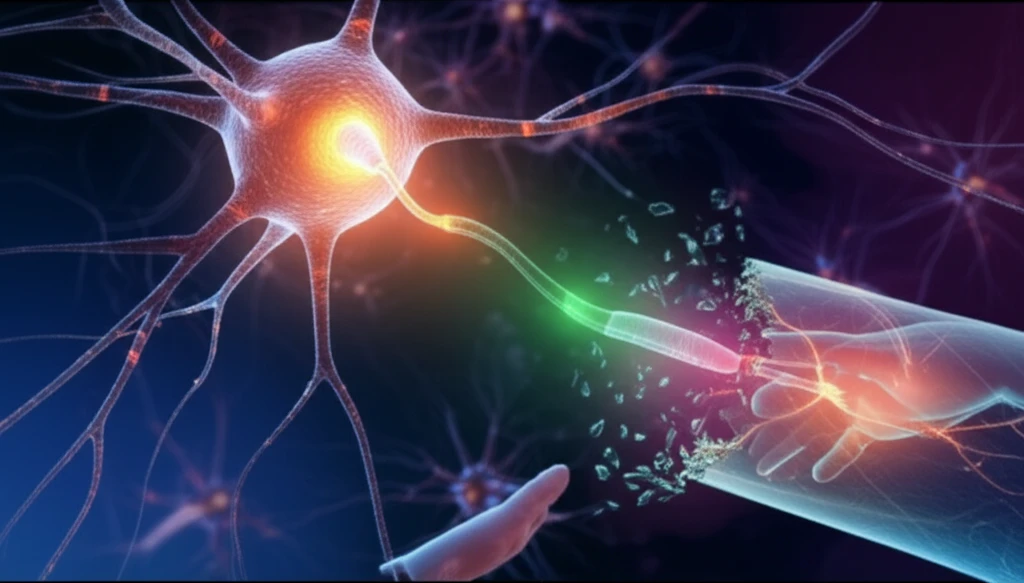
Illustration of nerve regeneration and reconnection in a limb.

Nerve Repair Revolution: Can This Breakthrough End Limb Paralysis?

"A new approach to peripheral nerve repair is showing promise, offering hope for those with stroke, cerebral palsy, and traumatic injuries."


Limb paralysis affects millions worldwide, often resulting from stroke, cerebral palsy, or traumatic nerve injuries. Traditional treatments have limitations, leaving many patients with persistent disability. However, a revolutionary approach is emerging that offers renewed hope: bi-directional nerve induction combined with biodegradable conduit tubulization.

This innovative technique, detailed in a recent study, focuses on repairing damaged peripheral nerves by not only reconnecting them but also encouraging systematic remodeling of the nervous system. The goal is to restore effective communication between the brain and the affected limbs, leading to functional recovery.

Imagine regaining the ability to move your arm after a stroke or helping a child with cerebral palsy grasp a toy. This new method aims to make these dreams a reality by going beyond conventional nerve repair.

What is Bi-Directional Nerve Induction and How Does It Work?

Illustration of nerve regeneration and reconnection in a limb.

The traditional view of nerve regeneration often focuses solely on reconnecting the damaged nerve ends. However, the bi-directional induction concept recognizes that nerve recovery is a two-way street. It acknowledges the crucial interplay between the central nervous system (the brain and spinal cord) and the peripheral nerves that extend to the limbs and organs.

The study highlights that after a nerve injury, both the brain and the peripheral nerves undergo changes. The brain needs to 're-learn' how to control the affected limb, and the peripheral nerves need to regenerate and re-establish connections with the target muscles. This process involves a complex exchange of signals and structural remodeling.

  • Central Nervous System Influence: The brain adapts and reorganizes its motor cortex to initiate movement in the paralyzed limb.
  • Peripheral Nerve Regeneration: Damaged nerves regenerate, guided by growth factors and the surrounding environment.
  • Target Organ Feedback: Muscles and other tissues send signals back to the nervous system, influencing the regeneration process.
  • Systemic Remodeling: Both the central and peripheral nervous systems undergo structural and functional changes to optimize recovery.
This approach uses biodegradable conduits – tiny, biocompatible tubes – to bridge the gap between severed nerve ends. These conduits provide a protected environment for nerve regeneration, guiding the growth of new nerve fibers. Importantly, the conduits are designed to be absorbed by the body over time, eliminating the need for a second surgery to remove them.

A Future of Hope: From Research to Real-Life Recovery

The bi-directional induction and biodegradable conduit approach represents a significant step forward in nerve repair. While further research and clinical trials are necessary, the initial results are encouraging, offering a potential pathway to restore function and improve the quality of life for millions affected by limb paralysis. As research continues, there's growing hope that this innovative technique will revolutionize the treatment of nerve injuries and provide new possibilities for recovery.

About this Article -

This article was crafted using a human-AI hybrid and collaborative approach. AI assisted our team with initial drafting, research insights, identifying key questions, and image generation. Our human editors guided topic selection, defined the angle, structured the content, ensured factual accuracy and relevance, refined the tone, and conducted thorough editing to deliver helpful, high-quality information.See our About page for more information.

This article is based on research published under:

DOI-LINK: 10.1080/21691401.2017.1373658, Alternate LINK

Title: Peripheral Nerve Intersectional Repair By Bi-Directional Induction And Systematic Remodelling: Biodegradable Conduit Tubulization From Basic Research To Clinical Application

Subject: Pharmaceutical Science

Journal: Artificial Cells, Nanomedicine, and Biotechnology

Publisher: Informa UK Limited

Authors: Zhang Peixun, Han Na, Yuhui Kou, Yin Xiaofeng, Baoguo Jiang

Published: 2017-09-08

Everything You Need To Know

1

What is bi-directional nerve induction, and why is it considered a significant advancement in treating limb paralysis?

Bi-directional nerve induction is a novel approach to nerve repair that recognizes nerve recovery as a two-way street between the central nervous system (brain and spinal cord) and the peripheral nerves. Unlike traditional methods that focus solely on reconnecting damaged nerve ends, bi-directional nerve induction acknowledges the crucial interplay between the brain, spinal cord and peripheral nerves. This technique promotes nerve regeneration by encouraging a complex exchange of signals and structural remodeling, potentially restoring effective communication between the brain and affected limbs. This is a significant advancement because it aims to address both the nerve damage and the brain's ability to 're-learn' control of the affected limb, offering hope for functional recovery and systematic remodeling of the nervous system.

2

How do biodegradable conduits contribute to the process of nerve repair in this new technique?

Biodegradable conduits are tiny, biocompatible tubes used in conjunction with bi-directional nerve induction to repair damaged peripheral nerves. These conduits bridge the gap between severed nerve ends, providing a protected environment for nerve regeneration. They guide the growth of new nerve fibers and are designed to be absorbed by the body over time, eliminating the need for a second surgery to remove them. This allows the body to heal naturally and prevents further complications.

3

What are the key components of the bi-directional nerve induction process?

The bi-directional nerve induction process involves several key components: the influence of the central nervous system where the brain adapts and reorganizes its motor cortex to initiate movement in the paralyzed limb, peripheral nerve regeneration where damaged nerves regenerate, guided by growth factors and the surrounding environment, target organ feedback where muscles and other tissues send signals back to the nervous system, influencing the regeneration process, and systemic remodeling where both the central and peripheral nervous systems undergo structural and functional changes to optimize recovery.

4

What is the role of the central nervous system in the bi-directional nerve induction process, and why is this important for recovery from limb paralysis?

In bi-directional nerve induction, the central nervous system, specifically the brain, plays a crucial role. After a nerve injury, the brain adapts and reorganizes its motor cortex to re-establish control over the affected limb. This 're-learning' process is essential because the brain needs to initiate movement and coordinate signals with the regenerating peripheral nerves. Without this central nervous system adaptation, even successful nerve reconnection may not result in functional recovery. The brain's ability to remap and send appropriate signals is vital for restoring movement and coordination, working in tandem with peripheral nerve regeneration.

5

What types of conditions could potentially benefit from the bi-directional nerve induction and biodegradable conduit approach, and what are the long-term implications?

The bi-directional nerve induction and biodegradable conduit approach offers potential benefits for individuals affected by limb paralysis resulting from stroke, cerebral palsy, and traumatic nerve injuries. The long-term implications include the possibility of restoring function, improving quality of life, and reducing the burden of disability for millions worldwide. By addressing both nerve regeneration and the brain's ability to relearn motor control, this technique could provide more effective and lasting solutions compared to traditional treatments. Further research and clinical trials are crucial to fully understand the extent of its capabilities and to refine the approach for different types of nerve injuries.

Newsletter Subscribe

Subscribe to get the latest articles and insights directly in your inbox.