
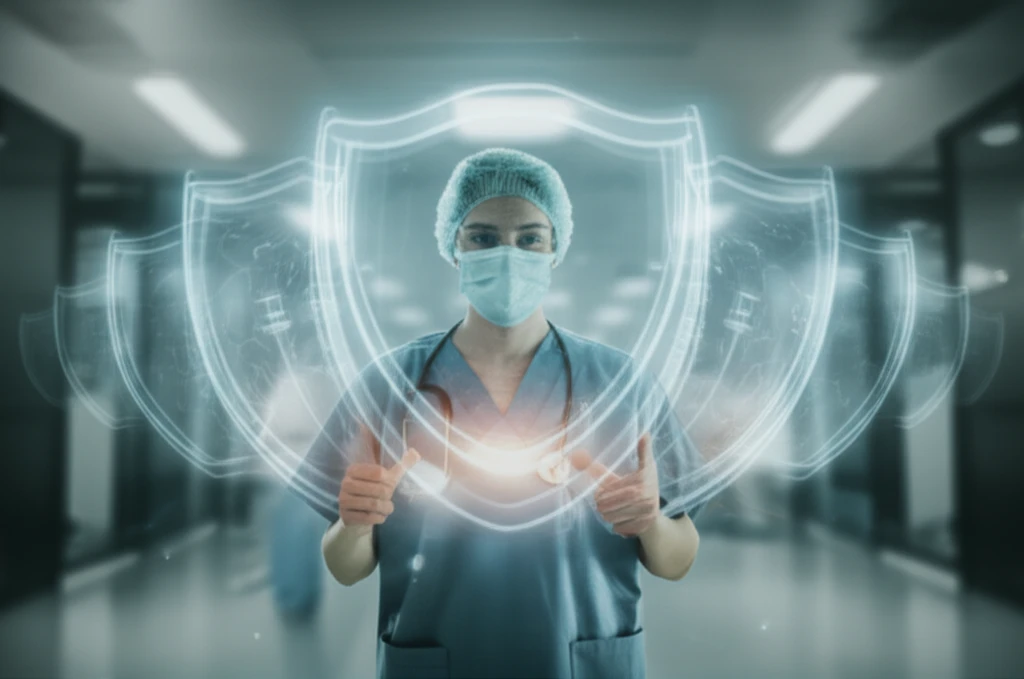
Healthcare worker protected by glowing shields from viruses and needle stick injuries in a modern hospital setting.

Needle Sticks and Beyond: Protecting Healthcare Heroes from Workplace Hazards

"Uncover the risks of biological material exposure in healthcare and learn essential strategies for a safer work environment."


In the demanding world of healthcare, professionals face numerous challenges daily, with one significant concern being the risk of exposure to biological materials. These exposures, often resulting from workplace accidents, pose serious health risks and highlight the need for stringent safety measures. This article delves into the complexities of these incidents, examining their impact on healthcare workers and exploring strategies to mitigate such risks.

Workplace accidents involving biological materials are a global issue, affecting healthcare workers across various settings. The nature of their work, which involves direct contact with patients and potentially infectious substances, places them at a higher risk of exposure to pathogens such as HIV, Hepatitis B (HBV), and Hepatitis C (HCV). Understanding the scope and nature of these risks is crucial for developing effective prevention strategies.

Recent studies and data analyses shed light on the prevalence and characteristics of these accidents, emphasizing the importance of systematic data collection and analysis to inform targeted interventions. By examining factors such as the types of exposures, the occupations most affected, and the circumstances surrounding these incidents, healthcare organizations can better protect their workforce and create a safer environment for both healthcare providers and patients.

Understanding the Scope of Biological Material Exposure

Healthcare worker protected by glowing shields from viruses and needle stick injuries in a modern hospital setting.

Exposure to biological materials in healthcare settings can occur through various routes, with percutaneous injuries (such as needle sticks) being the most common. Mucous membrane contact and non-intact skin exposure to blood or other potentially infectious fluids also present significant risks. These fluids include semen, vaginal secretions, cerebrospinal fluid, synovial fluid, pleural fluid, peritoneal fluid, pericardial fluid, and amniotic fluid.

While some organic fluids like sweat, tears, feces, urine, and saliva are generally considered non-infectious unless contaminated with blood, the potential for exposure to infectious agents remains a constant concern. The viruses HIV, HBV, and HCV are of particular importance due to their high prevalence and the potential for chronic infection.

  • HIV: The risk of occupational acquisition of HIV from a percutaneous exposure to contaminated blood is estimated to be approximately 1 in 300.
  • HBV: The risk of infection from Hepatitis B can range from 6.0% to 30.0%, and may reach up to 60.0% depending on the circumstances and vaccination status.
  • HCV: The risk of infection from Hepatitis C through percutaneous exposure to contaminated blood is estimated at 1.8%.
Given these risks, healthcare organizations must implement robust surveillance and reporting systems to monitor incidents and identify trends. In Brazil, the implementation of the Notifiable Health Problems Information System (SINAN) has been a crucial step in tracking and addressing these incidents. This system allows for the systematic collection and analysis of data related to workplace accidents involving biological materials, providing valuable insights for prevention efforts.

Moving Forward: Strengthening Prevention and Protection

Addressing the challenges of workplace accidents involving biological materials requires a multi-faceted approach that includes implementing standard precautions, providing safety-engineered medical devices, promoting vaccination, and ensuring appropriate post-exposure prophylaxis. By prioritizing prevention and creating a culture of safety, healthcare organizations can better protect their workers and create a healthier environment for everyone.

About this Article -

This article was crafted using a human-AI hybrid and collaborative approach. AI assisted our team with initial drafting, research insights, identifying key questions, and image generation. Our human editors guided topic selection, defined the angle, structured the content, ensured factual accuracy and relevance, refined the tone, and conducted thorough editing to deliver helpful, high-quality information.See our About page for more information.

Everything You Need To Know

1

What are the primary risks healthcare workers face concerning biological materials exposure?

Healthcare workers are at significant risk of exposure to various pathogens due to the nature of their work. Percutaneous injuries, like needle sticks, are the most common route of exposure. Additionally, contact with mucous membranes and non-intact skin with blood or other potentially infectious fluids presents risks. This includes exposure to fluids like semen, vaginal secretions, cerebrospinal fluid, synovial fluid, pleural fluid, peritoneal fluid, pericardial fluid, and amniotic fluid. These exposures can lead to infections from pathogens like HIV, HBV, and HCV, which are of particular concern.

2

What are the estimated risks of contracting HIV, HBV, and HCV following a percutaneous exposure in a healthcare setting?

The risk of acquiring HIV from a percutaneous exposure to contaminated blood is approximately 1 in 300. The risk of Hepatitis B infection ranges from 6.0% to 30.0%, but can reach up to 60.0% depending on the specific circumstances and the healthcare worker's vaccination status. The risk of contracting Hepatitis C through a similar exposure is estimated at 1.8%. These figures highlight the importance of rigorous safety protocols and prompt medical intervention following any potential exposure.

3

What are the less obvious sources of potential infection in healthcare?

Beyond needle sticks, healthcare workers face risks from exposure to various body fluids. Exposure can occur through mucous membranes or non-intact skin. While fluids like sweat, tears, feces, urine, and saliva are generally considered non-infectious unless contaminated with blood, the presence of blood in these fluids can carry infectious agents. The main pathogens to be concerned about are HIV, HBV, and HCV due to their prevalence and ability to cause chronic infections.

4

How can healthcare organizations effectively protect their workers from biological material exposure?

Healthcare organizations can protect their workers through a multi-faceted approach. This includes implementing standard precautions, such as using personal protective equipment. Providing safety-engineered medical devices, like those with retractable needles, can significantly reduce the risk of percutaneous injuries. Promoting vaccination against Hepatitis B and ensuring appropriate post-exposure prophylaxis (PEP) for those exposed to HIV, HBV, or HCV are also critical. Furthermore, organizations must establish robust surveillance and reporting systems to monitor and analyze incidents. The implementation of systems like the Notifiable Health Problems Information System (SINAN) in Brazil demonstrates the importance of systematic data collection for prevention efforts.

5

What role does the Notifiable Health Problems Information System (SINAN) play in preventing workplace accidents involving biological materials?

The Notifiable Health Problems Information System (SINAN) in Brazil is a crucial tool for tracking and addressing workplace accidents involving biological materials. It allows for the systematic collection and analysis of data related to such incidents. By gathering detailed information on the types of exposures, the occupations most affected, and the circumstances surrounding each incident, SINAN provides valuable insights for targeted prevention efforts. This data helps healthcare organizations to identify trends, understand the risks, and implement effective strategies to protect their workforce and create a safer environment for both healthcare providers and patients.

Newsletter Subscribe

Subscribe to get the latest articles and insights directly in your inbox.