
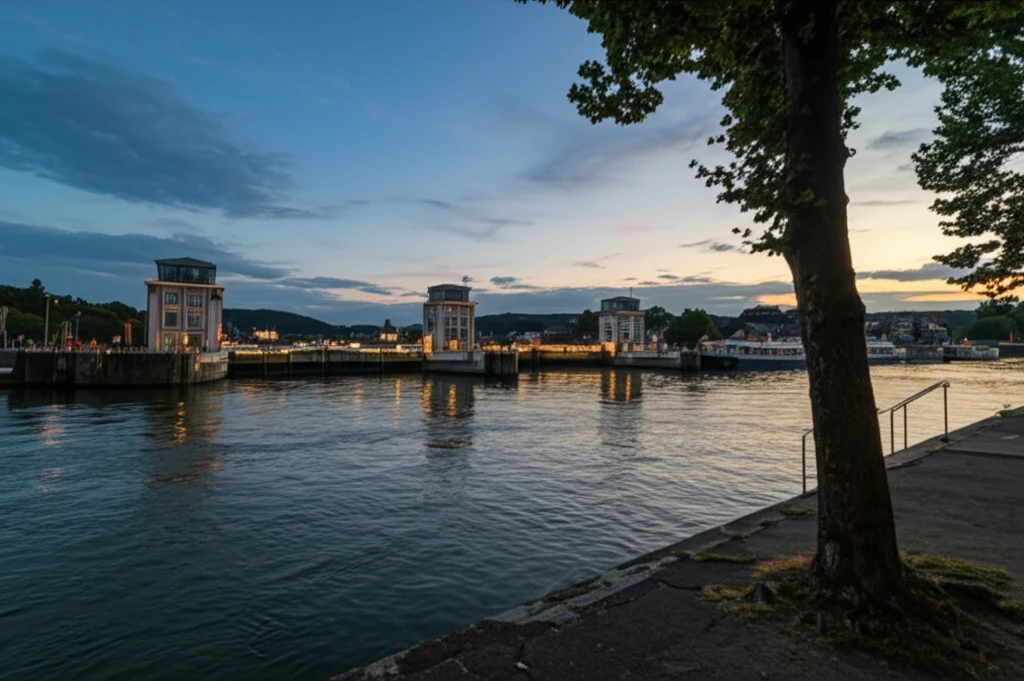
Aldingen Lock Refurbishment on the Neckar River

Neckar's Lifeline: How Revamping Historic Locks Keeps Germany Flowing

"A deep dive into the massive project modernizing the Aldingen lock and the Neckar River's vital waterway system."


For over a century, the Neckar River has been a crucial artery for transportation in Germany, its transformation into a major federal waterway between 1921 and 1968 forever altering the landscape. Integral to this transformation were a series of locks, including the Aldingen lock, constructed in the 1930s and 50s. Now, these structures, vital to the region's economy, are showing their age, prompting extensive renovation and modernization efforts.

The Aldingen lock, like many of its counterparts along the Neckar, faces the challenges of aging infrastructure. With chambers measuring 110 meters long and 12 meters wide, and a head of 3.60 meters, the lock has served its purpose well. However, decades of constant use and exposure to the elements have taken their toll. This article delves into the intricate planning and execution of a major overhaul of the Aldingen lock's left chamber, along with key upgrades to the upstream harbor.

This extensive project includes not only the repair of the lock chamber itself, but also the replacement of critical components like gates and drives, updates to electrical and control systems, and reinforcement of the upstream harbor's slope revetment. This complex undertaking relies on both established engineering principles and innovative solutions, guided by a study on standardizing Neckar lock extensions. The project aims to ensure the Aldingen lock continues to function efficiently and safely for decades to come, supporting the vital flow of commerce and transportation along the Neckar River.

Why Modernizing the Neckar Locks Matters

Aldingen Lock Refurbishment on the Neckar River

The Neckar River, stretching over 200 kilometers, is a critical commercial waterway in southwestern Germany. Its 27 locks, many built between 50 and 90 years ago, manage a total height difference of around 160 meters. Upgrading these locks is not just about maintenance; it's about ensuring the Neckar remains a viable transportation route in the face of increasing demands and evolving standards.

The project to revamp the Aldingen lock highlights several key needs:

  • Extending Lock Capacity: Modern inland vessels are getting longer. The current locks, designed for ships up to 105.5 meters, need to accommodate vessels of 135 meters, as mandated by recent legislation.
  • Standardizing Lock Systems: The original locks were built at different times, using varied standards and materials. This creates complexity in maintenance, repair, and resource allocation. Standardization aims to streamline these processes.
  • Addressing Aging Infrastructure: Decades of use have led to significant wear and tear, requiring comprehensive repairs and upgrades to ensure structural integrity and operational efficiency.
  • Improving Efficiency: Modernizing the locks allows for remote operation, optimized water management, and faster processing times, reducing delays and improving overall waterway efficiency.
Ultimately, modernizing the Neckar locks is an investment in the region's economic vitality. By ensuring the smooth and reliable flow of goods, the project supports local industries, reduces transportation costs, and enhances the Neckar's competitiveness as a vital transportation corridor.

Looking Ahead: Smooth Sailing on the Neckar

The Aldingen lock refurbishment project represents a significant undertaking to modernize critical infrastructure. Scheduled for completion in 2018, the upgraded lock promises enhanced efficiency, safety, and capacity, ensuring the Neckar River remains a vital transportation artery for Germany. By embracing innovation and standardization, this project sets a precedent for future infrastructure upgrades, contributing to the long-term sustainability and economic prosperity of the region.

About this Article -

This article was crafted using a human-AI hybrid and collaborative approach. AI assisted our team with initial drafting, research insights, identifying key questions, and image generation. Our human editors guided topic selection, defined the angle, structured the content, ensured factual accuracy and relevance, refined the tone, and conducted thorough editing to deliver helpful, high-quality information.See our About page for more information.

Everything You Need To Know

1

Why is the Aldingen lock on the Neckar River being modernized?

The Aldingen lock, along with other locks on the Neckar River, is being modernized due to aging infrastructure. After decades of constant use, critical components like gates and drives require replacement, and the electrical and control systems need updates. The modernization aims to ensure the Aldingen lock continues to function efficiently and safely, supporting commerce and transportation along the Neckar River for decades to come. The lock chambers measure 110 meters long and 12 meters wide, with a head of 3.60 meters, but the refurbishment is essential for long-term reliability.

2

What are the key benefits of standardizing lock systems on the Neckar River?

Standardizing lock systems on the Neckar River offers several key benefits. The original locks were built at different times with varied standards and materials, creating complexity in maintenance, repair, and resource allocation. Standardization streamlines these processes, making maintenance more efficient and cost-effective. While the specifics of what standardization entails aren't detailed, it is implied to allow for a more unified approach to maintaining the 27 locks.

3

How does the Aldingen lock refurbishment project address the need for increased lock capacity?

The Aldingen lock refurbishment project addresses the need for increased lock capacity to accommodate modern inland vessels. Current locks are designed for ships up to 105.5 meters, but recent legislation mandates accommodating vessels of 135 meters. While it's not explicitly stated how the Aldingen lock will be altered, the project is intended to support larger vessels. This extension is essential for the Neckar to remain competitive as a transportation route, as larger ships contribute to more efficient and cost-effective goods transport.

4

What impact does modernizing the Neckar locks have on the region's economy?

Modernizing the Neckar locks is an investment in the region's economic vitality. By ensuring the smooth and reliable flow of goods, the project supports local industries, reduces transportation costs, and enhances the Neckar's competitiveness as a vital transportation corridor. The refurbishment of the Aldingen lock contributes to this broader economic impact, although specific economic benefits are not detailed. The project will help ensure the Neckar River continues to serve as a crucial commercial waterway in southwestern Germany.

5

What does the Aldingen lock refurbishment involve beyond repairing the lock chamber?

Beyond repairing the lock chamber, the Aldingen lock refurbishment involves several critical upgrades. This includes replacing components like gates and drives, updating electrical and control systems, and reinforcing the upstream harbor's slope revetment. The project also aims to standardize lock systems along the Neckar, streamlining maintenance and improving overall efficiency. While the study on standardizing Neckar lock extensions guided the project, the article lacks specific information about the nature of these standardizations.

Newsletter Subscribe

Subscribe to get the latest articles and insights directly in your inbox.