
Neck Swelling? Understanding and Managing Jugular Vein Aneurysms

"Learn about jugular vein aneurysms, including causes, symptoms, diagnosis, and treatment options for this rare condition."
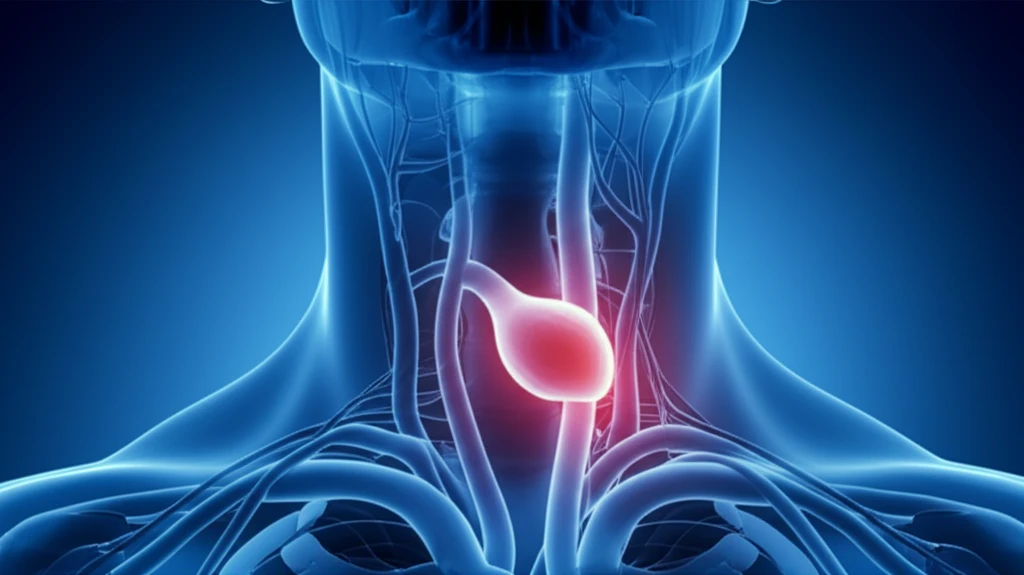
Venous aneurysms, particularly those affecting the head and neck region, are rare. A saccular aneurysm of the external jugular vein with thrombus is exceptionally uncommon. This article explores a case of saccular aneurysm of the external jugular vein with partial thrombosis in a 30-year-old woman, diagnosed and treated by surgical excision.
Jugular venous aneurysms and phlebectasias are rare venous malformations. Phlebectasia typically presents as a fusiform dilatation without tortuosity, often congenital and seen in childhood. In contrast, venous aneurysms, often saccular, usually occur in adulthood, frequently secondary to trauma or vein-related diseases.
Jugular venous aneurysms typically manifest as soft, compressible, painless neck swellings that enlarge with straining or the Valsalva maneuver. Accurate diagnosis requires differentiating them from other cystic neck swellings that also increase in size under strain, often using imaging technologies such as ultrasound with color Doppler, computed tomography, or magnetic resonance imaging.
What are the Symptoms and Diagnosis of Jugular Vein Aneurysms?
A key symptom of a jugular venous aneurysm is a soft, compressible swelling in the neck. This swelling often becomes more prominent when straining or performing the Valsalva maneuver, which involves attempting to exhale against a closed airway. It's important to note that these aneurysms are generally painless.
- Ultrasound with Color Doppler: This is often the first step, as it can show the structure of the vein and blood flow.
- Computed Tomography (CT): Provides detailed cross-sectional images of the neck.
- Magnetic Resonance Imaging (MRI): Offers even more detailed views of soft tissues and blood vessels.
When is Surgery Necessary for Jugular Vein Aneurysms?
While jugular phlebectasia is often managed conservatively, surgical excision is typically recommended for saccular aneurysms to prevent potential complications such as thrombosis or thromboembolism. Surgery involves removing the affected section of the vein, a procedure that has proven effective in resolving symptoms and preventing future issues. If you notice unusual swelling in your neck, prompt medical evaluation can lead to an accurate diagnosis and appropriate treatment, ensuring peace of mind and long-term health.