
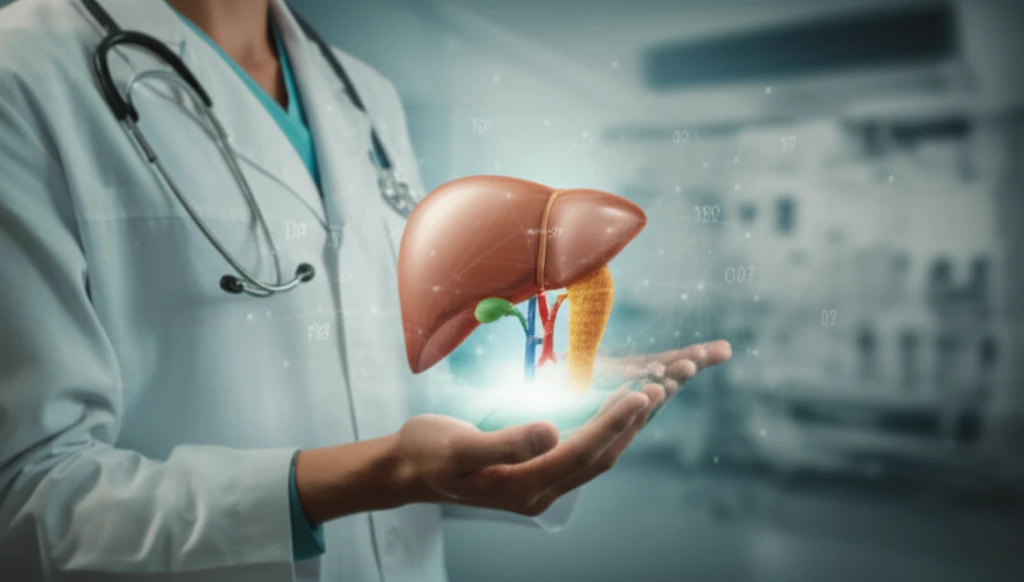
Digital illustration depicting non-operative management of liver and spleen injuries. A doctor gently holding a 3D model of the liver and spleen with a calming atmosphere.

Navigating Trauma: A Modern Guide to Treating Liver and Spleen Injuries

"From battlefield to bedside: Understanding the latest approaches to non-operative management, and why it's changing how we heal."


In the wake of severe trauma, the body embarks on a complex journey of healing, often complicated by injuries to vital organs like the liver and spleen. For years, the standard approach to these injuries involved immediate surgery, but a paradigm shift has occurred. Today, a growing number of medical professionals are embracing non-operative management (NOM) as a primary treatment strategy. This evolving approach, backed by scientific advancements and clinical expertise, has significantly improved outcomes and changed the landscape of trauma care.

This shift towards NOM isn't merely a trend; it represents a fundamental rethinking of how we approach injuries. It's a testament to our ability to understand the intricacies of the human body and leverage technology to foster better, more tailored healing paths. This article dives into the essentials of this groundbreaking shift. We'll explore the decision-making processes, the pivotal role of diagnostic tools, and the criteria that guide patient care. Whether you're a medical professional, a patient, or simply someone interested in health, this exploration offers critical insights into modern trauma care.

This shift is fueled by advancements in medical technology and a deeper understanding of the body's healing processes. Instead of immediately resorting to surgery, medical professionals are turning to NOM, a sophisticated approach that involves careful monitoring, advanced imaging, and sometimes, minimally invasive interventions. The aim? To provide the best possible outcomes with the least invasive methods. For many, NOM is becoming the preferred path towards recovery.

Understanding Non-Operative Management: A New Era in Trauma Care

Digital illustration depicting non-operative management of liver and spleen injuries. A doctor gently holding a 3D model of the liver and spleen with a calming atmosphere.

Non-operative management has quickly become a leading approach in treating liver and spleen injuries in hemodynamically stable patients. The concept involves a range of strategies, including careful observation, advanced imaging techniques, and interventions like angiography. It's about giving the body a chance to heal itself, aided by medical expertise and support, rather than immediately opting for surgery. The adoption of NOM is not just changing the way we treat patients, but it's also changing the experience of trauma for patients, offering less invasive options that can lead to quicker recoveries.

The increasing adoption of NOM is supported by a growing body of evidence demonstrating its effectiveness, particularly in selected cases. Patients who undergo NOM often experience reduced hospital stays, fewer complications, and a lower need for blood transfusions. However, this isn't a one-size-fits-all solution. The success of NOM hinges on several key factors, including:

  • Patient Stability: NOM is typically reserved for patients who are hemodynamically stable, meaning their vital signs are normal and there are no signs of active bleeding.
  • Injury Severity: While NOM can be effective for various grades of injuries, the severity of the injury is a key factor. Less severe injuries are more likely to be managed non-operatively.
  • Expertise and Resources: Success with NOM requires a multidisciplinary team, including experienced surgeons, radiologists, and critical care specialists, as well as access to advanced imaging and supportive care.
  • Monitoring and Follow-up: NOM involves continuous monitoring and follow-up care to assess the patient's condition and ensure the healing process.
Despite these advantages, NOM is not appropriate for all patients. Those with severe injuries, ongoing bleeding, or other complications may require immediate surgical intervention. The decision to pursue NOM requires careful evaluation, considering all the above elements to determine the best course of treatment.

A Promising Future for Trauma Care

The shift toward non-operative management of liver and spleen injuries shows the medical community's evolving focus on providing effective care while minimizing invasiveness. By staying informed about the latest advancements and treatment strategies, patients and healthcare professionals can make better choices and create a brighter future for trauma care. As research continues, we can anticipate even greater refinements in these techniques, leading to even better outcomes for those impacted by trauma.

About this Article -

This article was crafted using a human-AI hybrid and collaborative approach. AI assisted our team with initial drafting, research insights, identifying key questions, and image generation. Our human editors guided topic selection, defined the angle, structured the content, ensured factual accuracy and relevance, refined the tone, and conducted thorough editing to deliver helpful, high-quality information.See our About page for more information.

This article is based on research published under:

DOI-LINK: 10.1007/s10353-018-0545-x, Alternate LINK

Title: Non-Operative Management Of Blunt Hepatic And Splenic Injuries–Practical Aspects And Value Of Radiological Scoring Systems

Subject: Surgery

Journal: European Surgery

Publisher: Springer Science and Business Media LLC

Authors: Margot Fodor, Florian Primavesi, Dagmar Morell-Hofert, Matthias Haselbacher, Eva Braunwarth, Benno Cardini, Eva Gassner, Dietmar Öfner, Stefan Stättner

Published: 2018-07-20

Everything You Need To Know

1

What is non-operative management (NOM) and how does it apply to treating liver and spleen injuries?

Non-operative management (NOM) is a treatment approach that emphasizes careful observation, advanced imaging techniques, and interventions like angiography to allow the body to heal itself, rather than immediately resorting to surgery for liver and spleen injuries. It's mainly used for hemodynamically stable patients.

2

What are the key benefits of using non-operative management (NOM) for liver and spleen injuries compared to immediate surgery?

Non-operative management (NOM) offers several benefits, including reduced hospital stays, fewer complications, and a lower need for blood transfusions. It's a less invasive approach that aims to support the body's natural healing processes. However, it's important to note that these benefits are typically observed in carefully selected cases and require continuous monitoring.

3

What specific factors determine whether a patient is a suitable candidate for non-operative management (NOM) of liver or spleen injuries?

Several factors determine if a patient is suitable for non-operative management (NOM). These include the patient's hemodynamic stability, the severity of the liver or spleen injury, the availability of expertise and resources (experienced surgeons, radiologists, critical care specialists, and advanced imaging), and the ability to provide continuous monitoring and follow-up care. Patients with severe injuries or ongoing bleeding may require immediate surgical intervention instead.

4

How has the shift towards non-operative management (NOM) impacted the field of trauma care, and what role does technology play in this evolution?

The shift towards non-operative management (NOM) reflects a fundamental rethinking of trauma care, focusing on minimizing invasiveness while providing effective treatment. Medical technology, particularly advanced imaging techniques such as CT scans and angiography, plays a crucial role in monitoring the healing process and guiding interventions. This approach has led to improved outcomes, reduced complications, and shorter hospital stays for appropriately selected patients.

5

What are the potential implications of the increasing adoption of non-operative management (NOM) on future research and advancements in trauma care for liver and spleen injuries?

The increasing adoption of non-operative management (NOM) implies a need for ongoing research to refine patient selection criteria, optimize monitoring protocols, and develop less invasive interventions. Future research will likely focus on identifying biomarkers that can predict the success of NOM, as well as developing advanced imaging techniques to assess the extent of injury and healing more accurately. These advancements could further improve outcomes and expand the applicability of NOM in trauma care, potentially minimizing the need for surgery and improving the quality of life for patients with liver and spleen injuries.

Newsletter Subscribe

Subscribe to get the latest articles and insights directly in your inbox.